
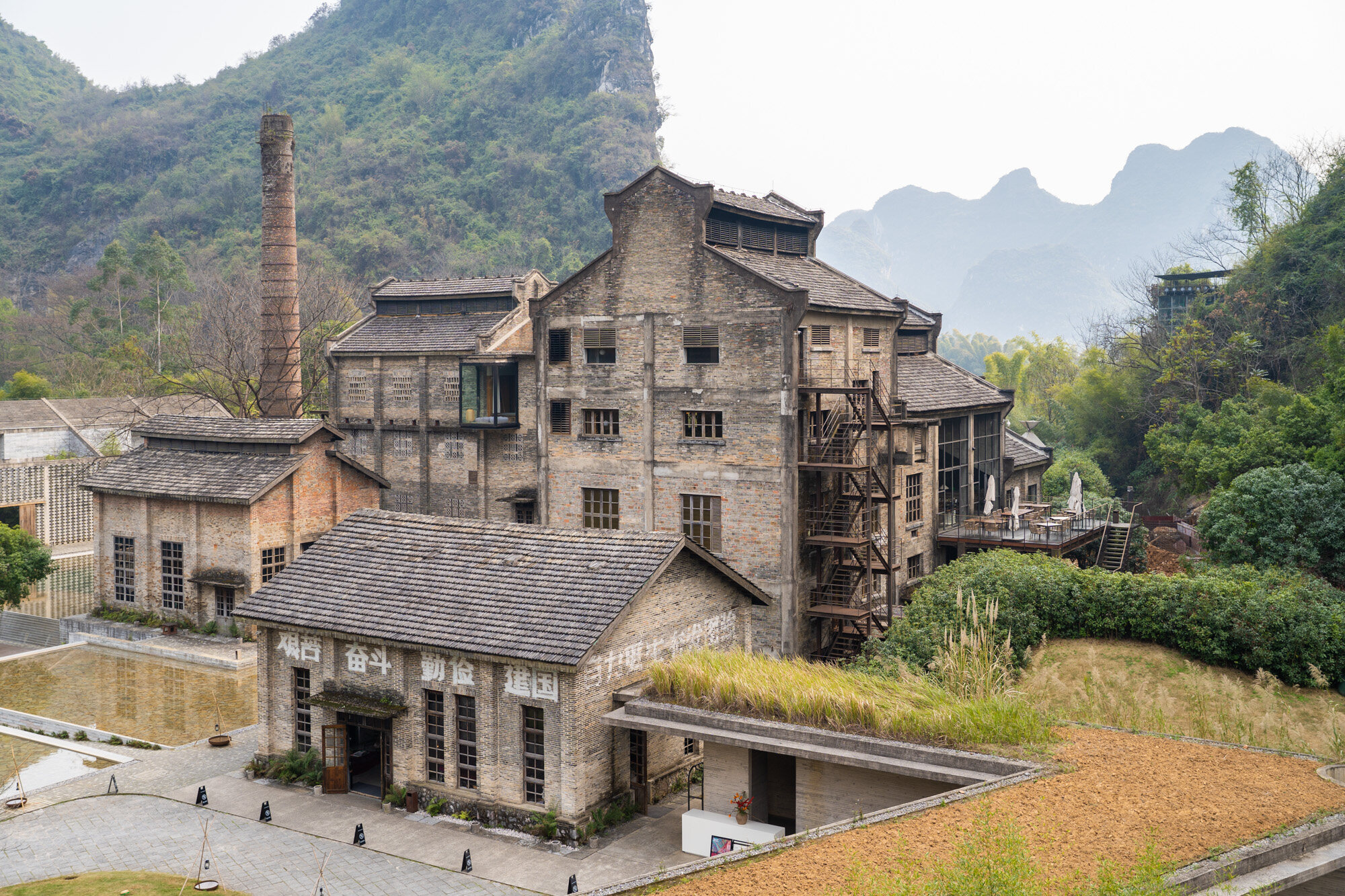
Yangshuo Sugar House is a renowned hotel converted from an old sugar factory built in the 1960s. It retains the main structure of the original building and the industrial trusses once used for sugarcane transport. Originally one of Alila’s well-known design hotels in China, it is now managed under the owner’s self-created brand and was designed by masters Ju Bin and Dong Gong. The hotel enjoys a prime location, nestled among mountains and situated along the banks of the Li River.
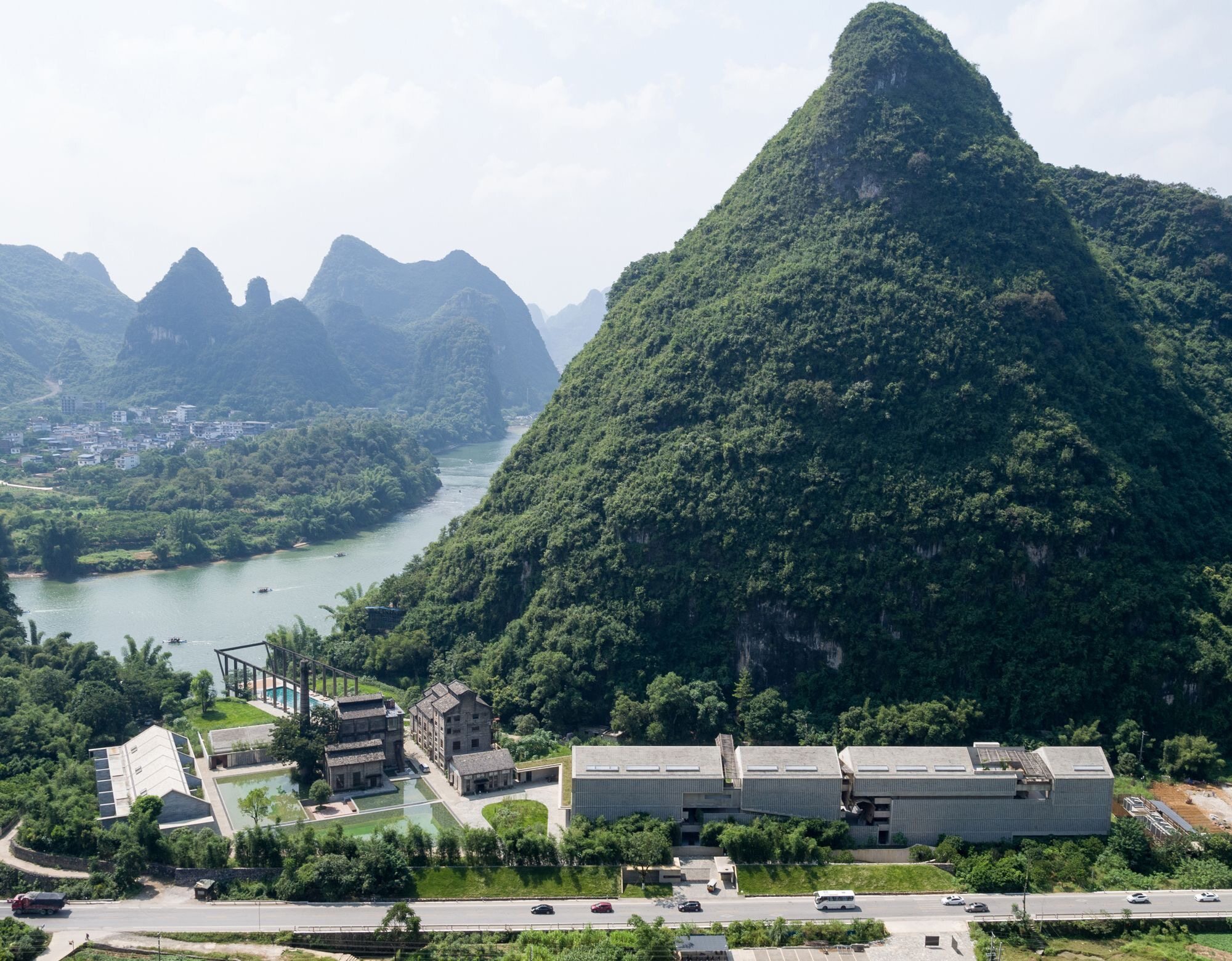
As seen in this official aerial view, the hotel sits right beside the Li River. The main guest room wing on the right is newly constructed, while the villa area on the left was converted from former employee dormitories. The central public area includes the lobby, restaurant, library, gift shop, bar, and swimming pool. With the exception of the swimming pool, which was excavated later, all other facilities were renovated based on the original old structures. The renovation was carried out with great restraint; not only were many interior elements of the old sugar factory preserved, but the new buildings were also designed to echo the characteristics of the original architecture.
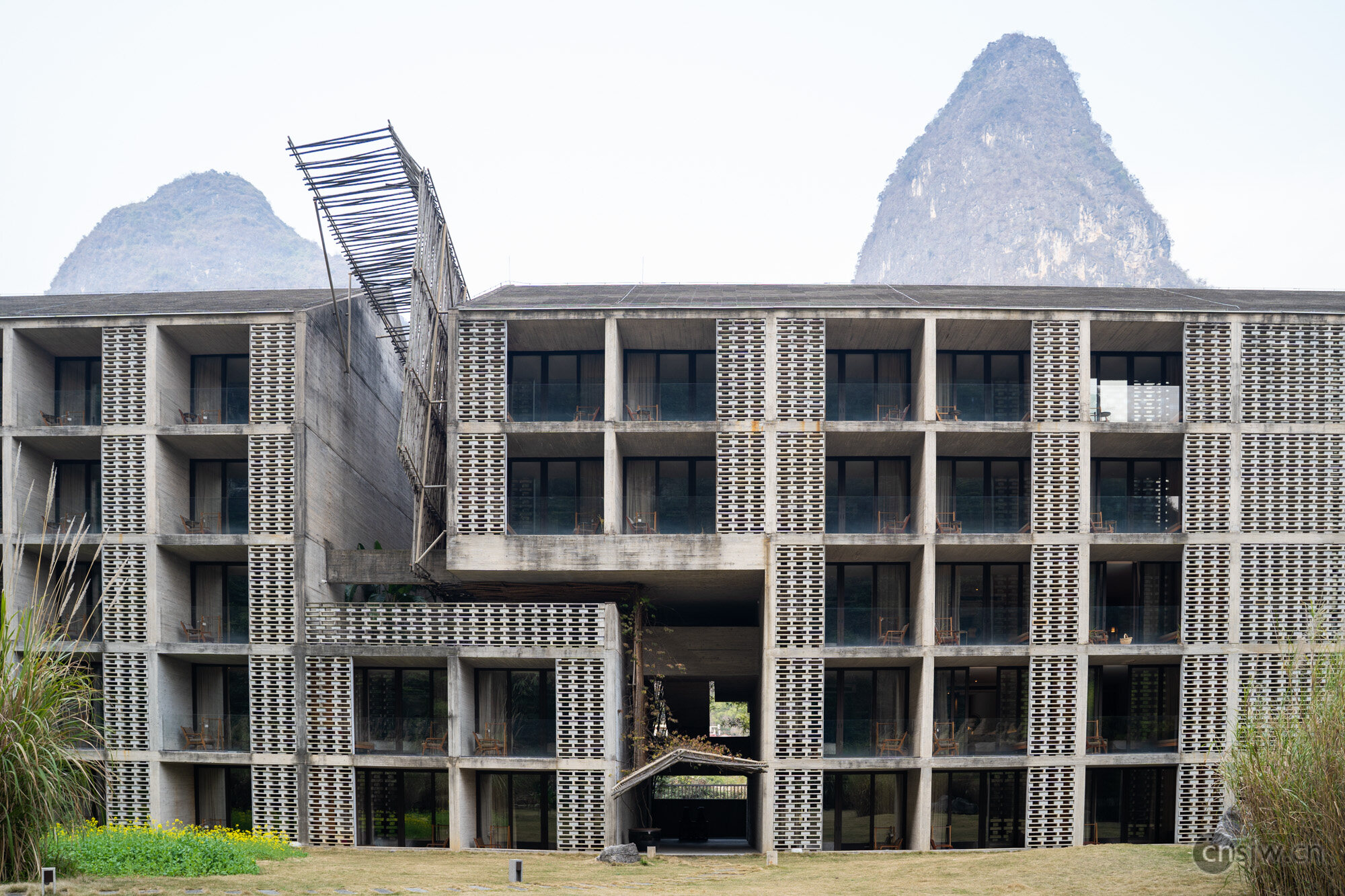
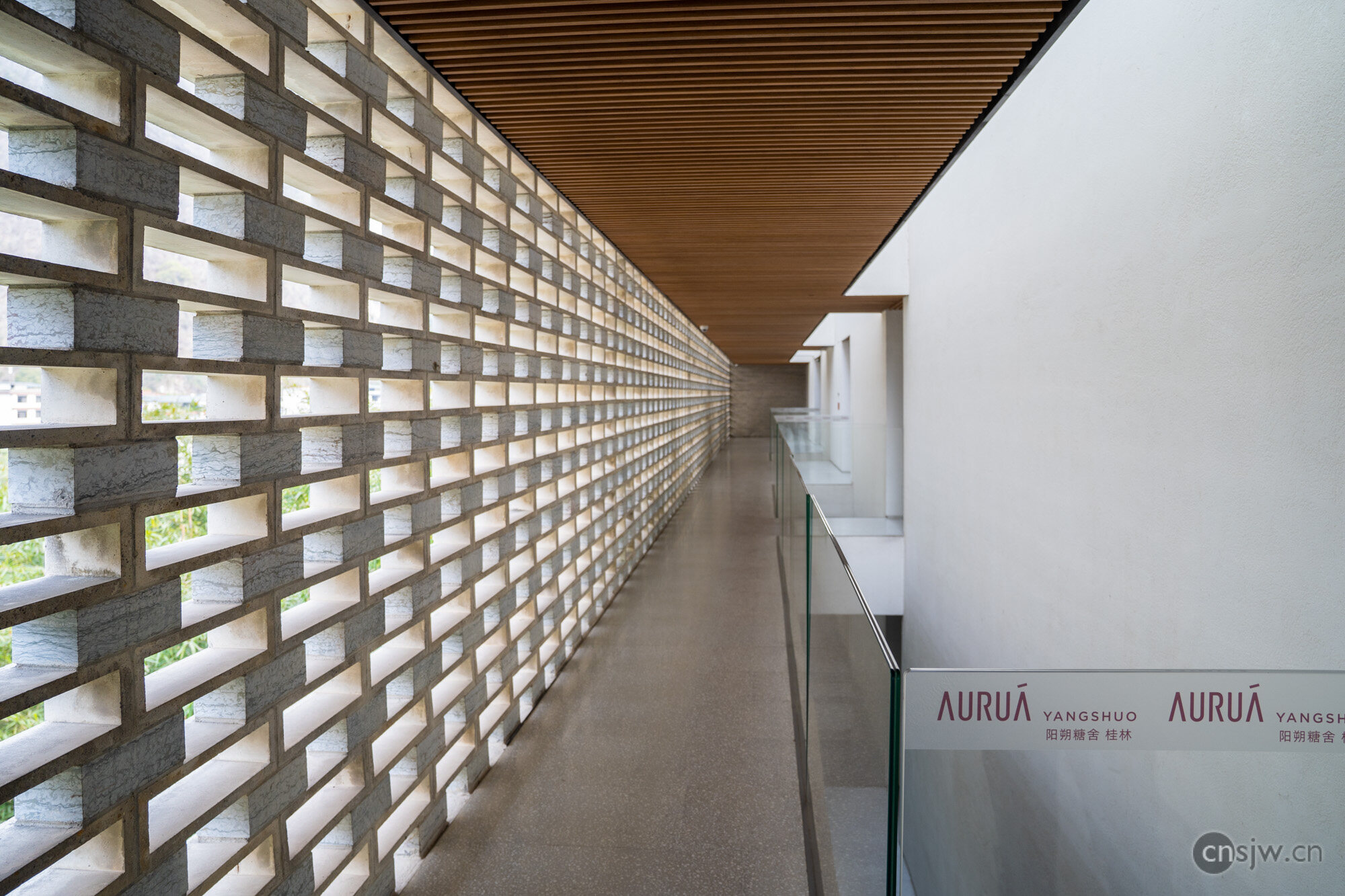
In the first section, let’s take a look at the guest rooms, located in the newly built main building. According to the introduction, inspired by the mountain trail systems carved into karst landscapes and natural caves, a gradually ascending linear public walkway connects three “cave” spaces with strong spatial orientation. The guest rooms span five floors, with a terrace on the sixth floor, totaling approximately 100 rooms. All rooms start at 66 square meters and face the hotel’s interior; different categories vary only by floor level. The basement houses the parking lot. The hotel entrance is located on a provincial highway—convenient for transportation but quite inconspicuous. If you are driving, be sure to watch carefully, as it is easy to miss.
Opened in 2017, the hotel is neither very new nor old. Its interior style is highly modern, featuring extensive use of wood elements. The rooms are spacious, and although they lack motorized curtains, they are equipped with Bose Bluetooth speakers, double sinks, and large balconies. The toiletries are from Grown Alchemist, a botanical skincare brand from Melbourne, and have a delightful scent. The mattresses and linens are impeccable. The turndown service includes lighting aromatherapy, so returning to your room feels soothing and fragrant, perfect for relaxation and sleep.
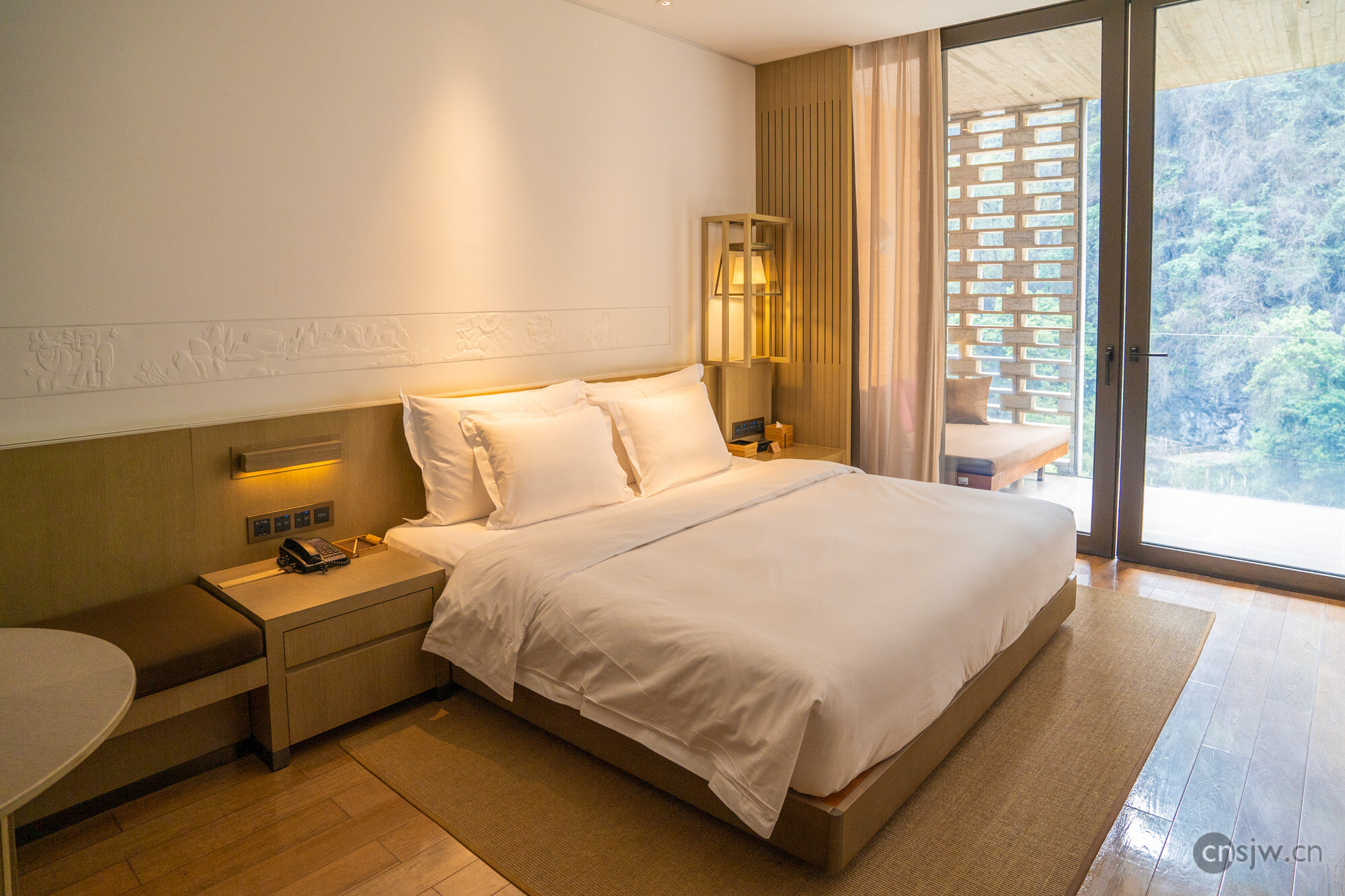

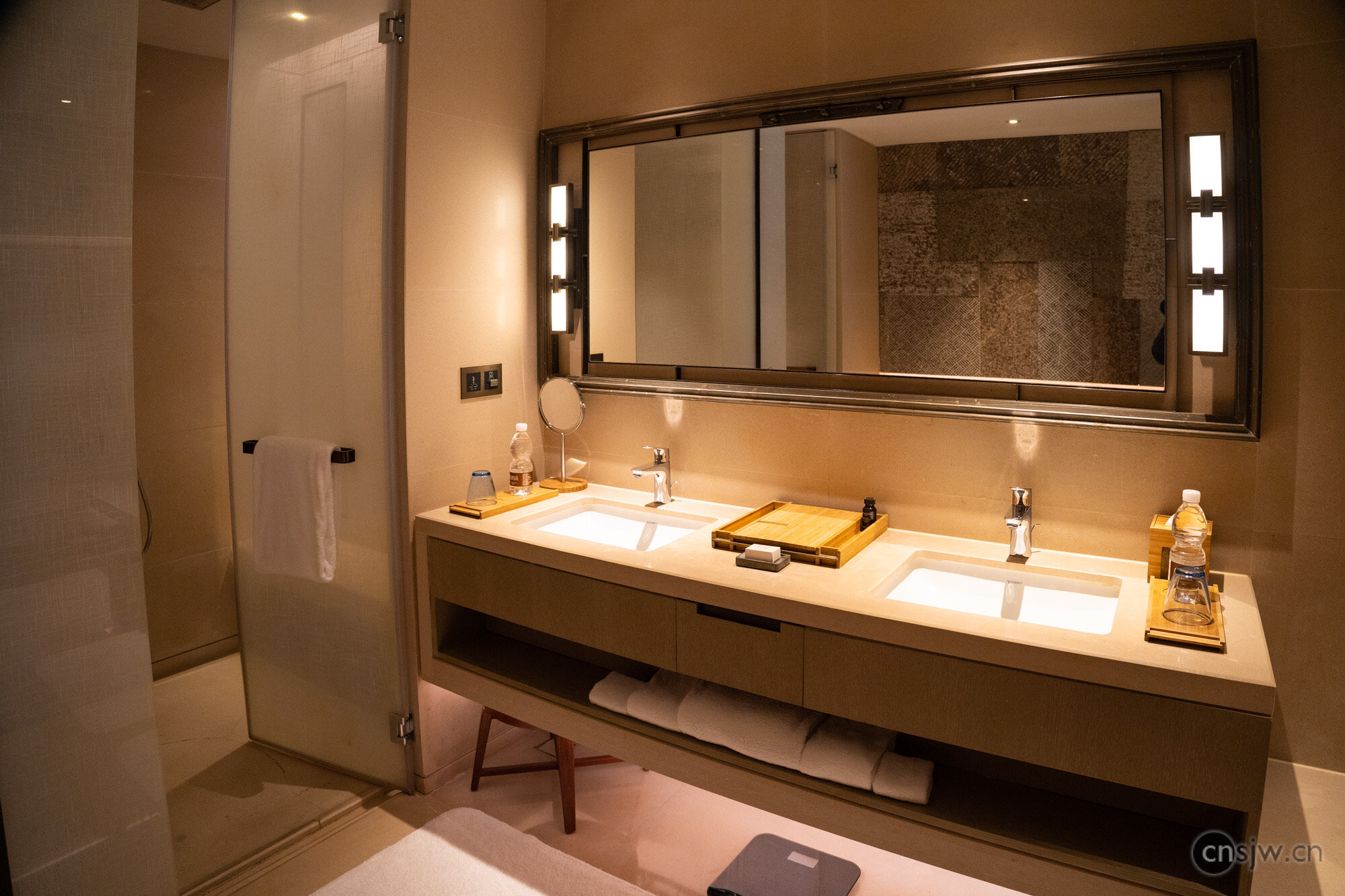
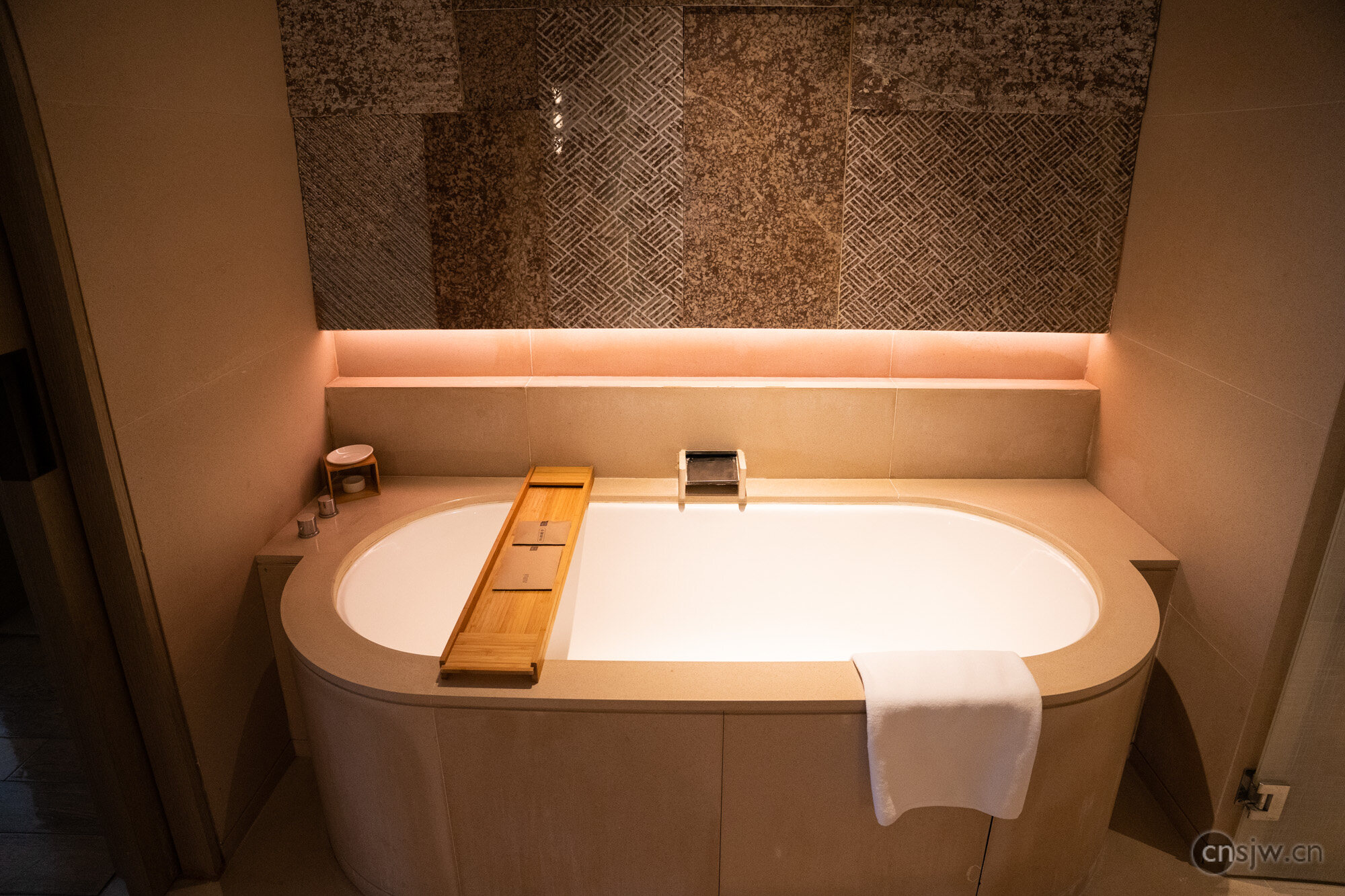
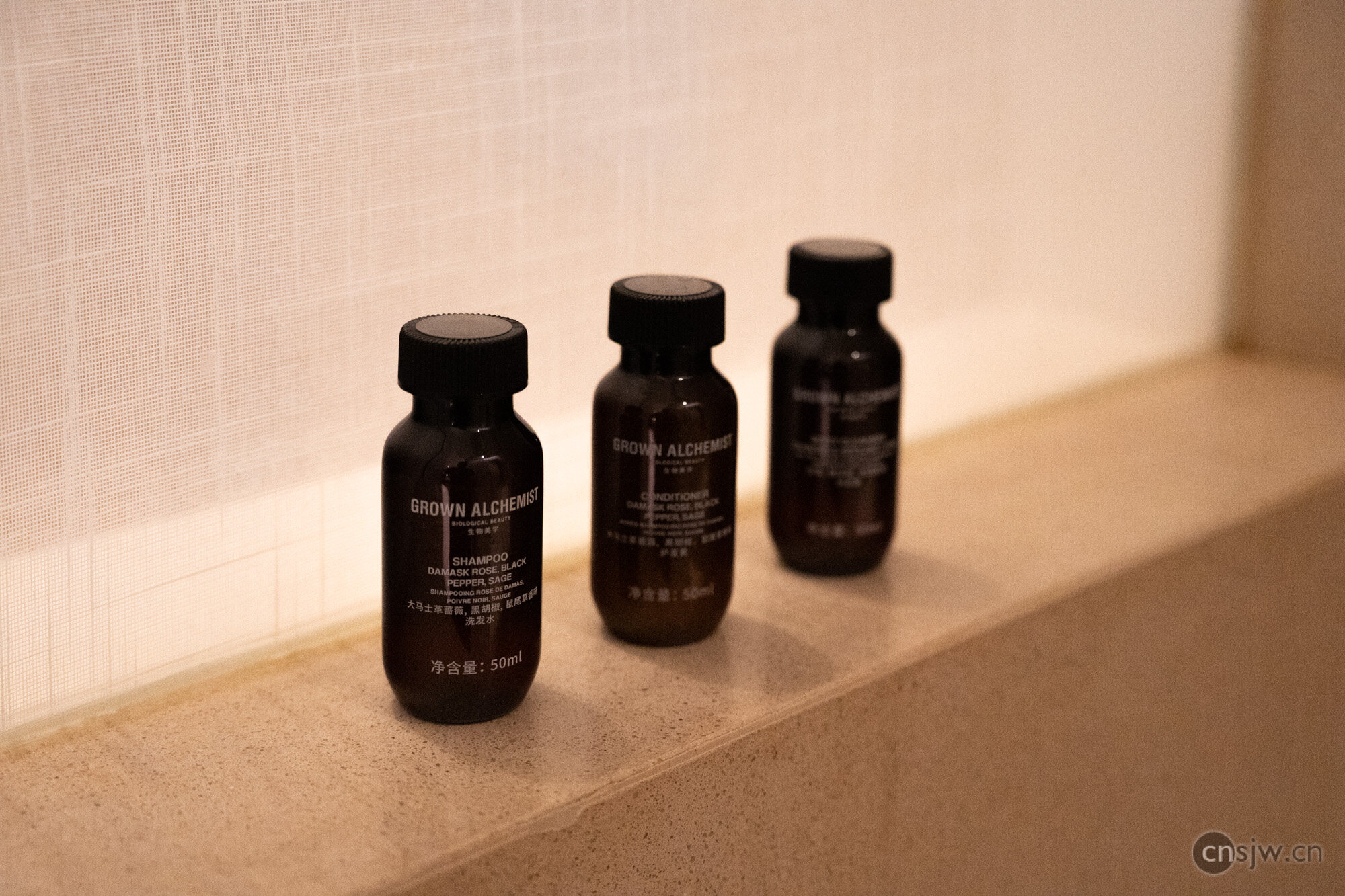
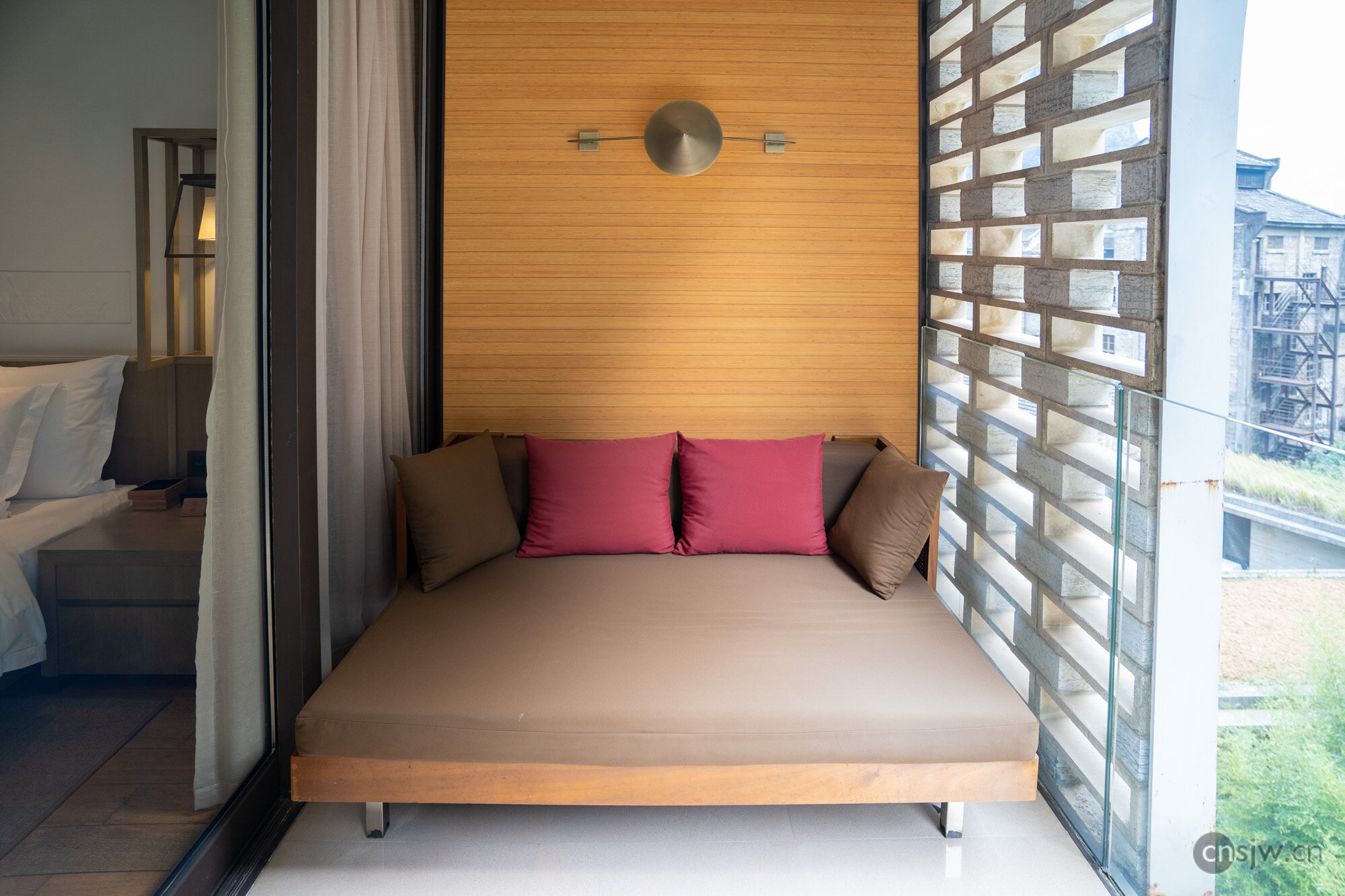
The hotel makes bold use of glass, with many areas featuring single, uninterrupted panes, so please pay close attention to safety.
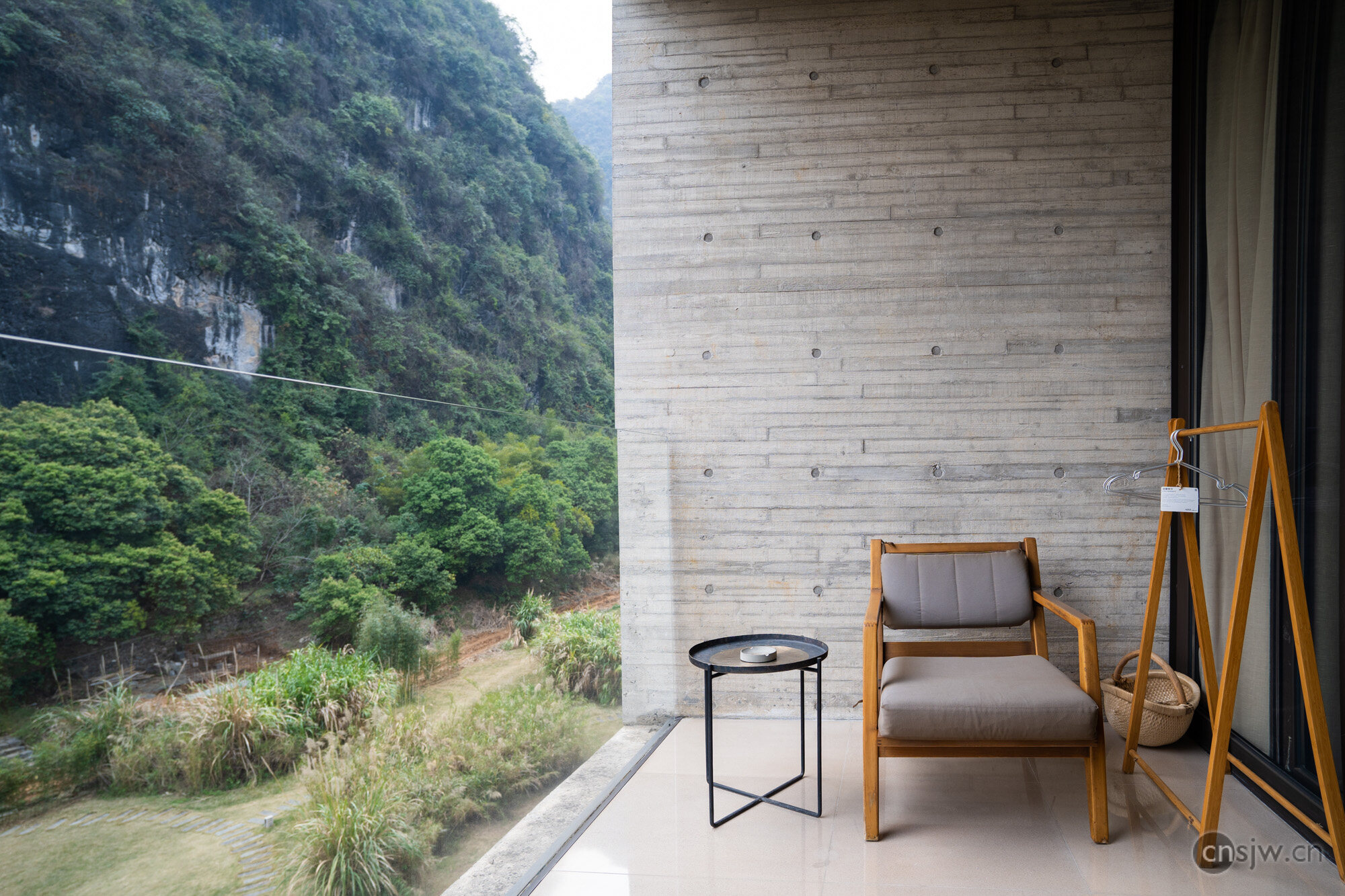
The drawbacks are also quite obvious. The hotel is located next to a provincial highway, where heavy trucks pass by continuously at night. Although the guest rooms face the mountains, the corridor facing the road has no solid walls, only hollow bricks. Consequently, if a truck honks its horn, it can be quite noisy. However, wearing earplugs minimizes the disturbance significantly. Since you wouldn’t wear earplugs during the day, working quietly in your room might be difficult; heading to the hotel library may be a better option.
Viewed from the room balcony, the hotel’s historic buildings preserve the old sugar factory almost entirely intact, offering a unique sense of history that new constructions simply cannot replicate.
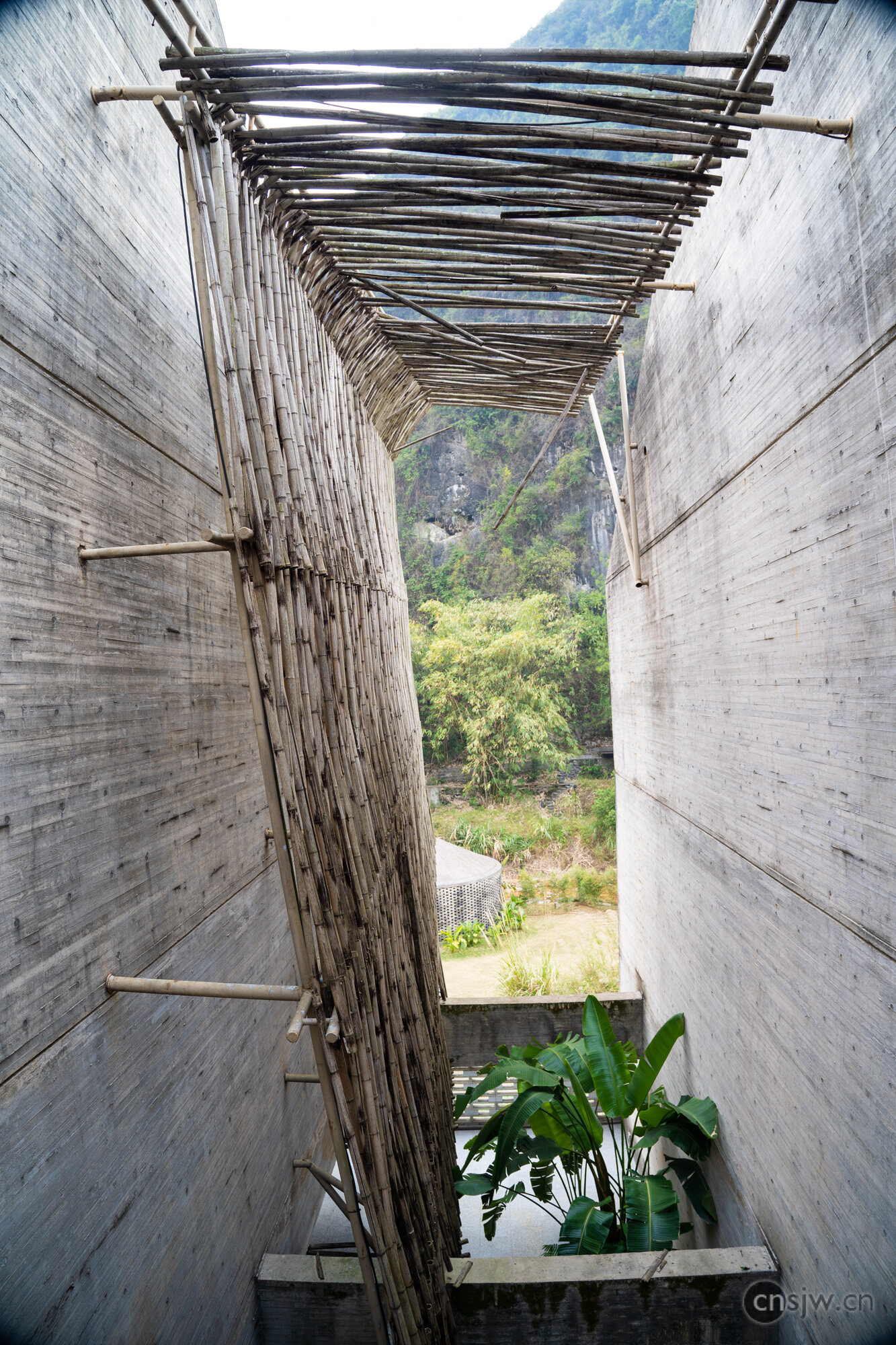
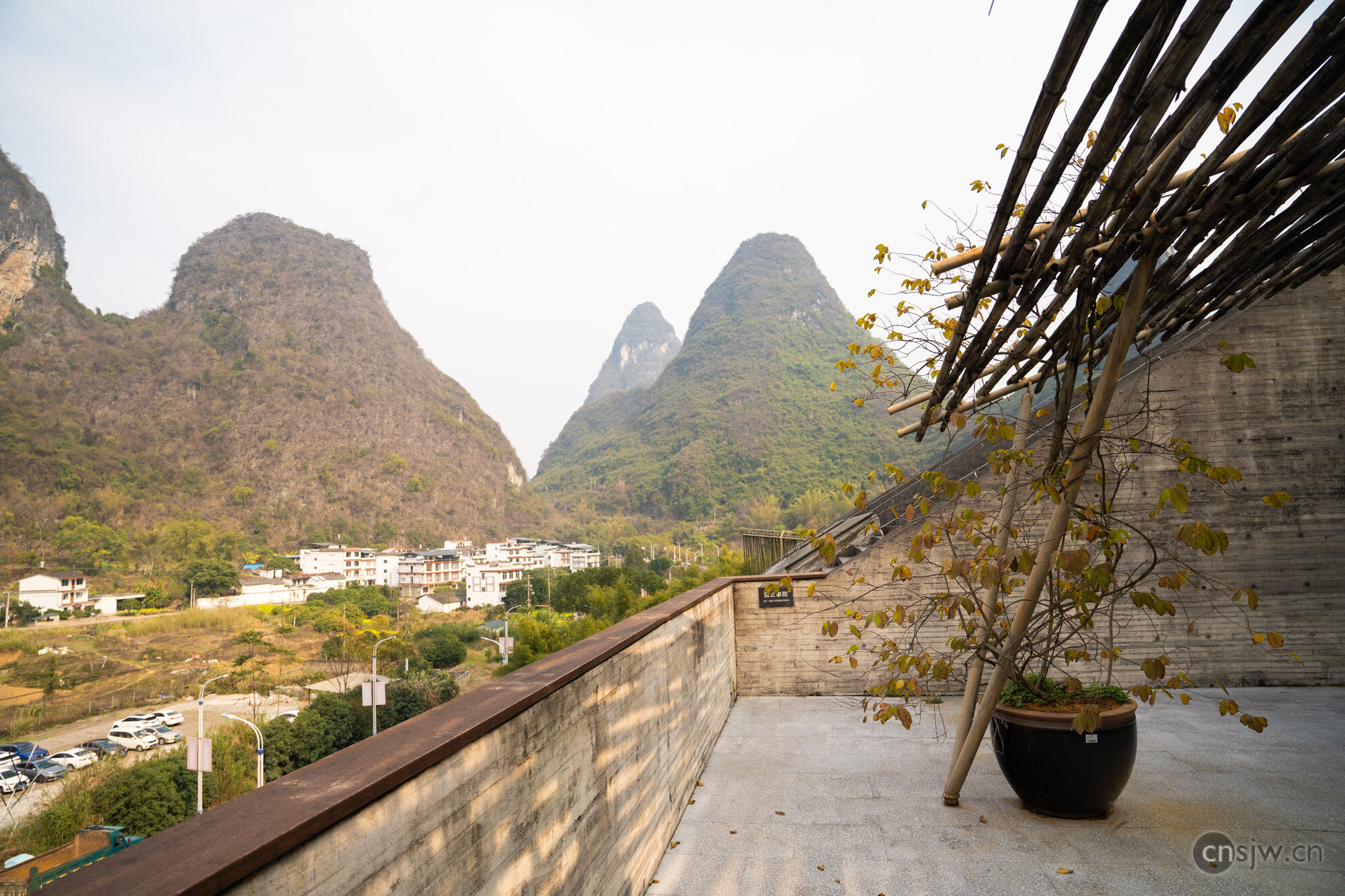
Located on the 6th floor, this small terrace is accessible via stairs from the 5th floor.
In the next post, we will introduce the hotel’s public areas.




Support



Read this article on WeChat