
I’ve been in Shanghai for so many years, yet surprisingly I had never been to Jinshan. One of my college roommates was from Jinshan, and the other local Shanghai roommates always teased that his dialect sounded like a foreign language, haha. I didn’t have much of an impression of the place; it just felt incredibly far away. I knew it had roasted frogs, the Petrochemical complex, and the sea, but the sea in Shanghai—whether in Fengxian or Pudong Lingang—is quite dreadful. There are no sandy beaches, just mudflats, and the seawater is heavily polluted.
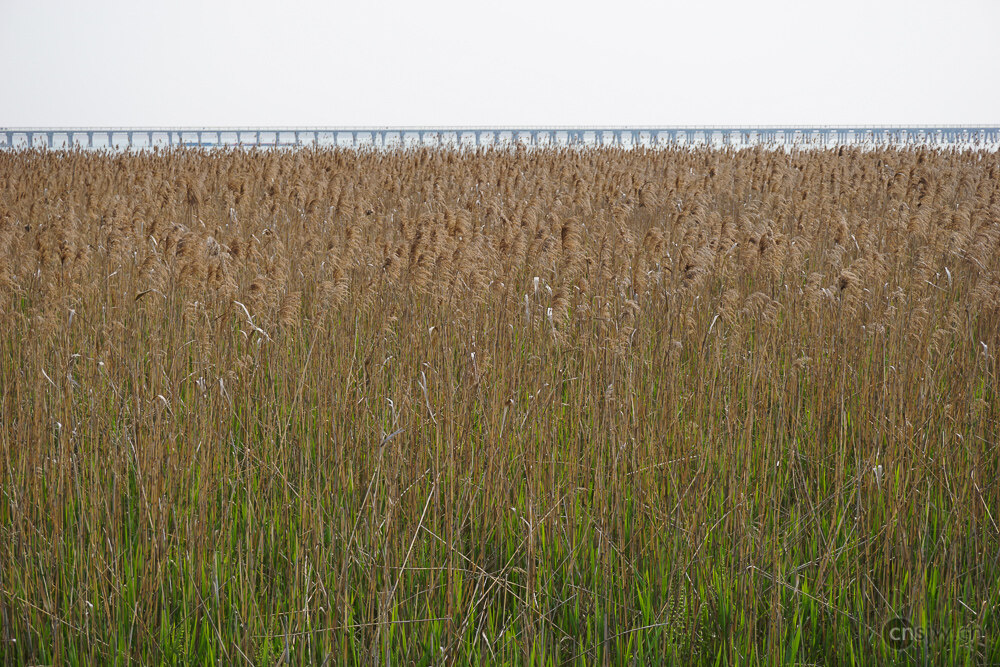
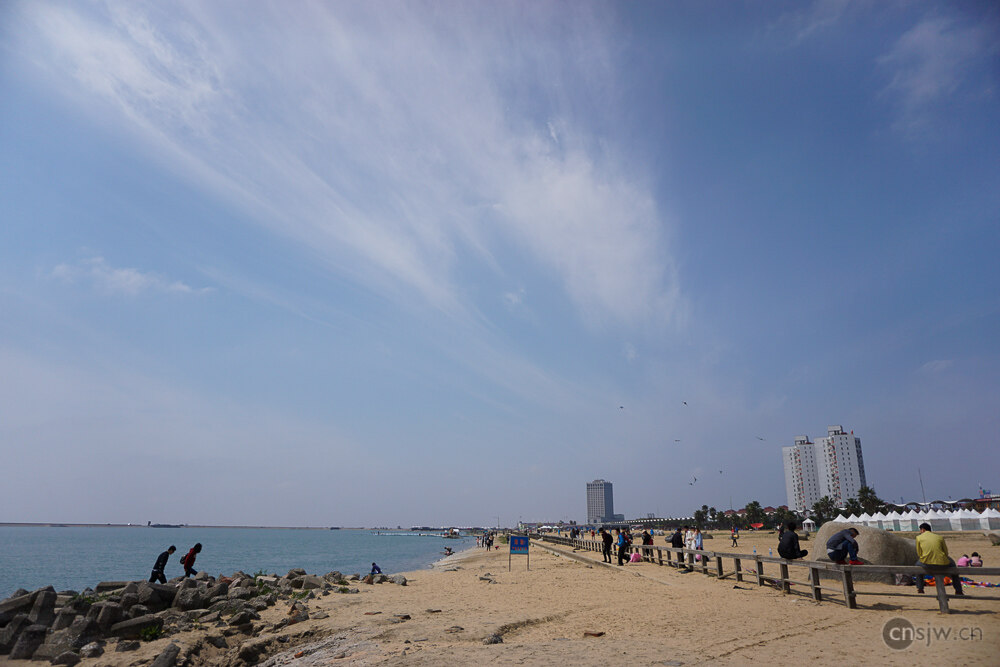
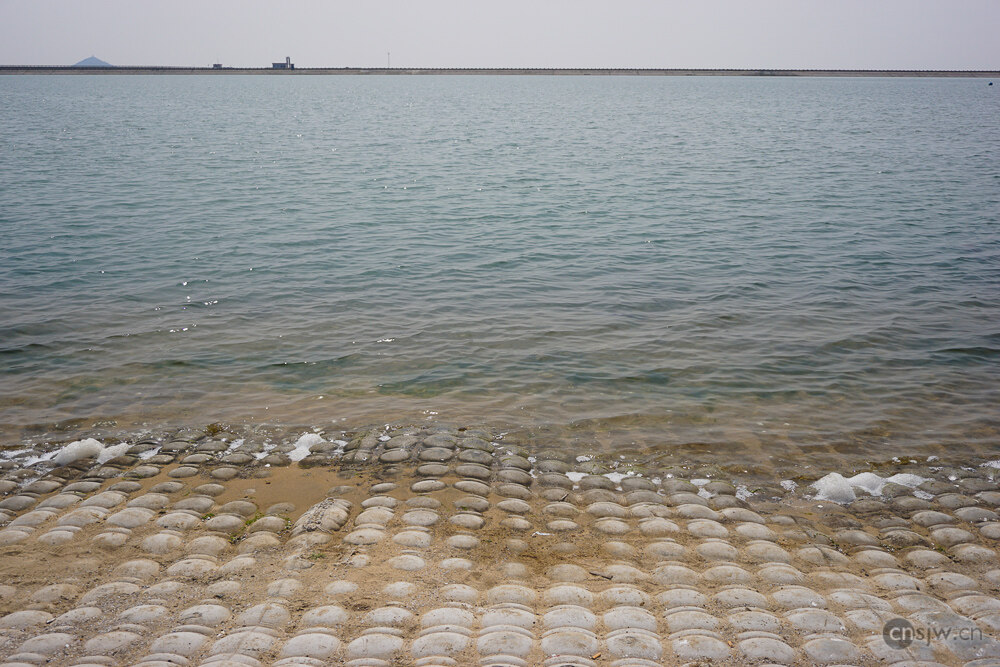
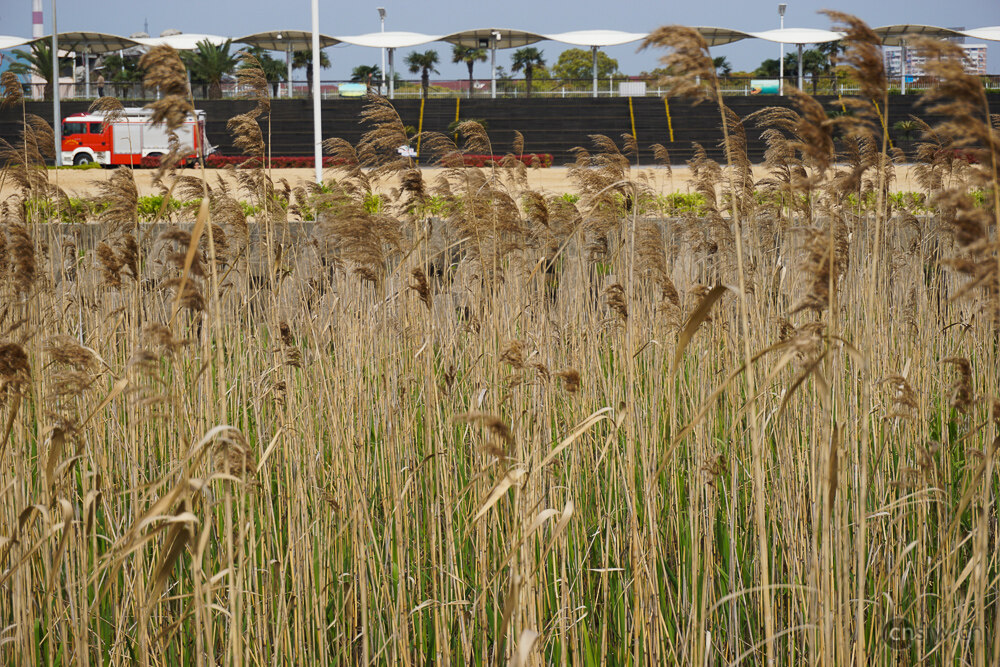
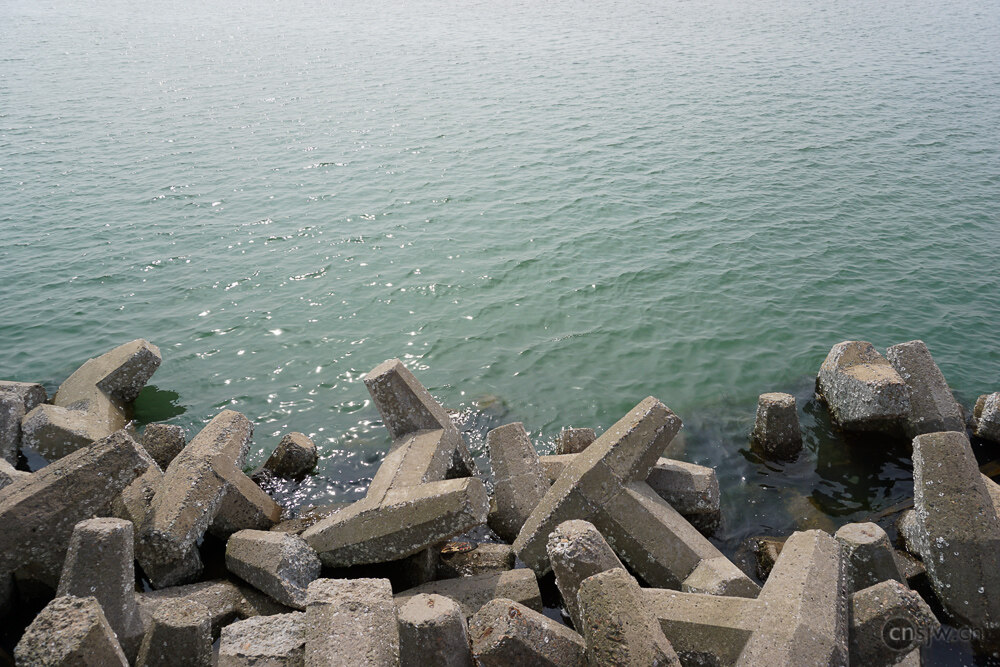
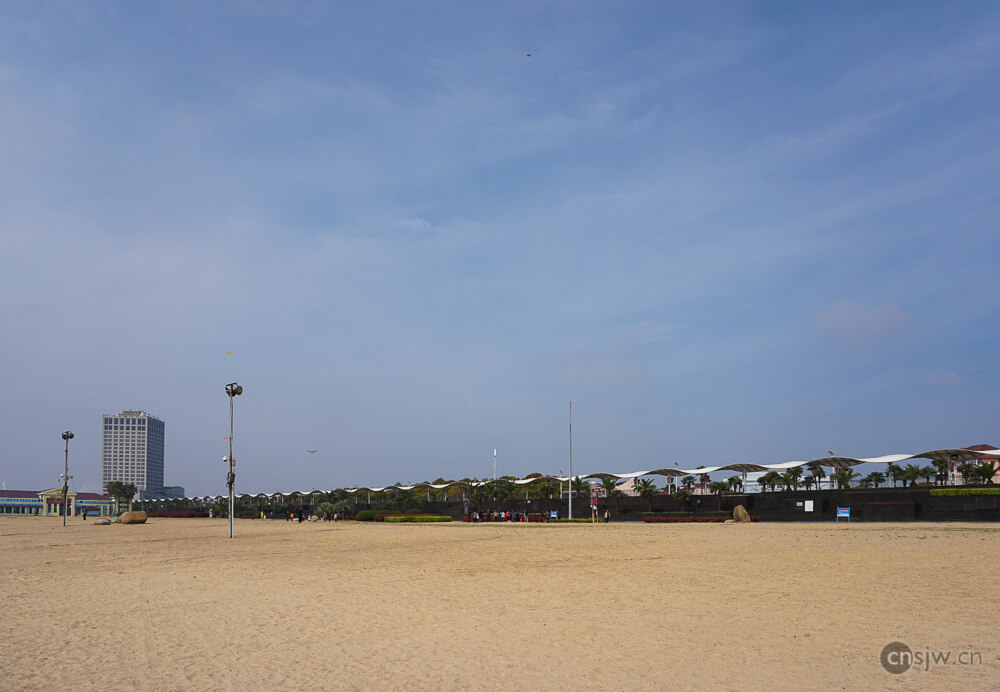
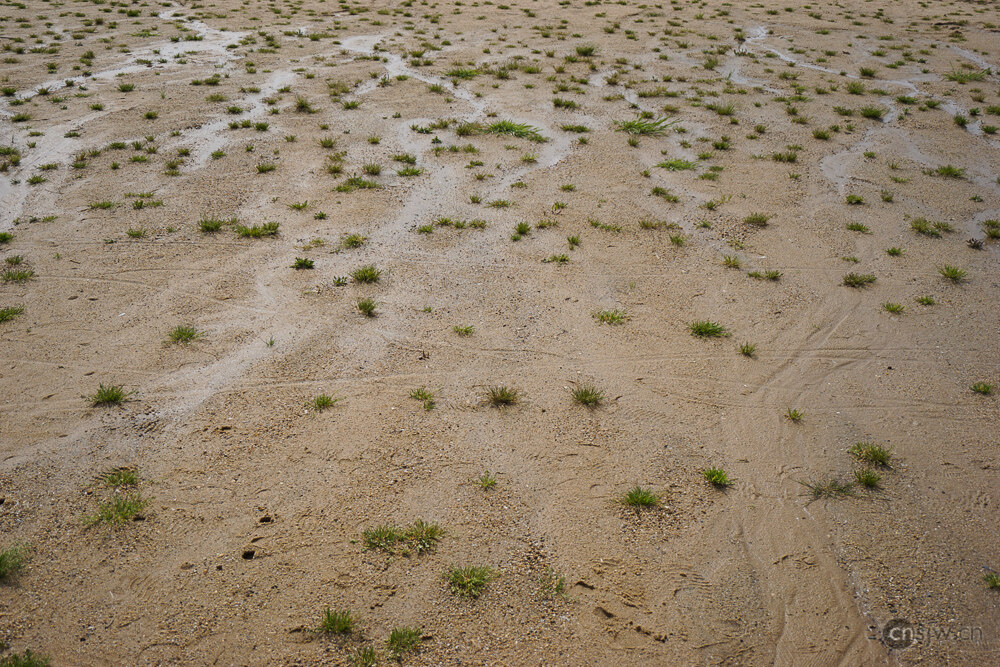
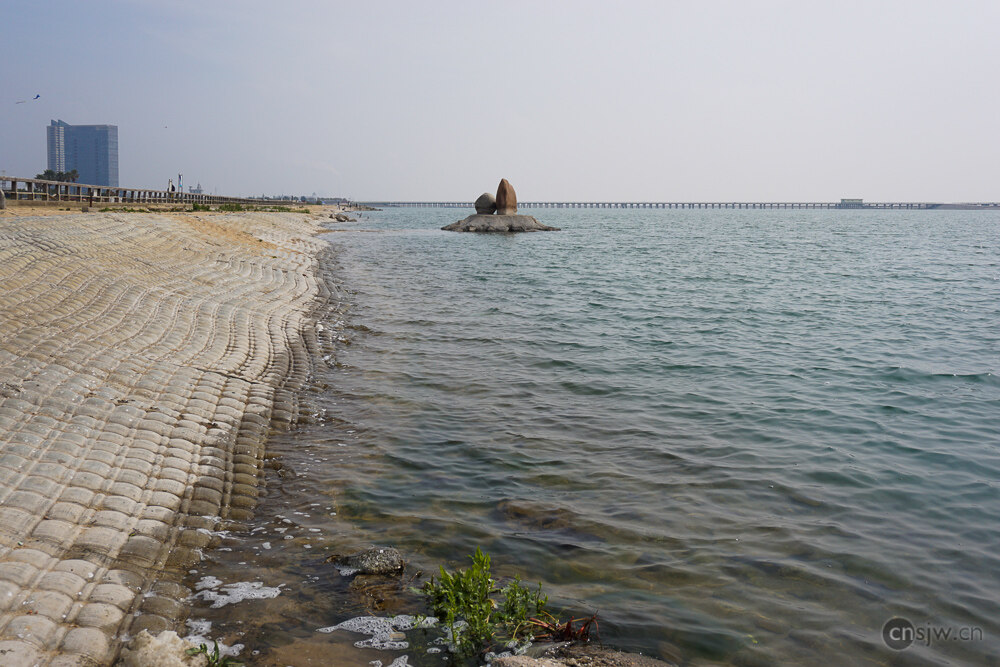
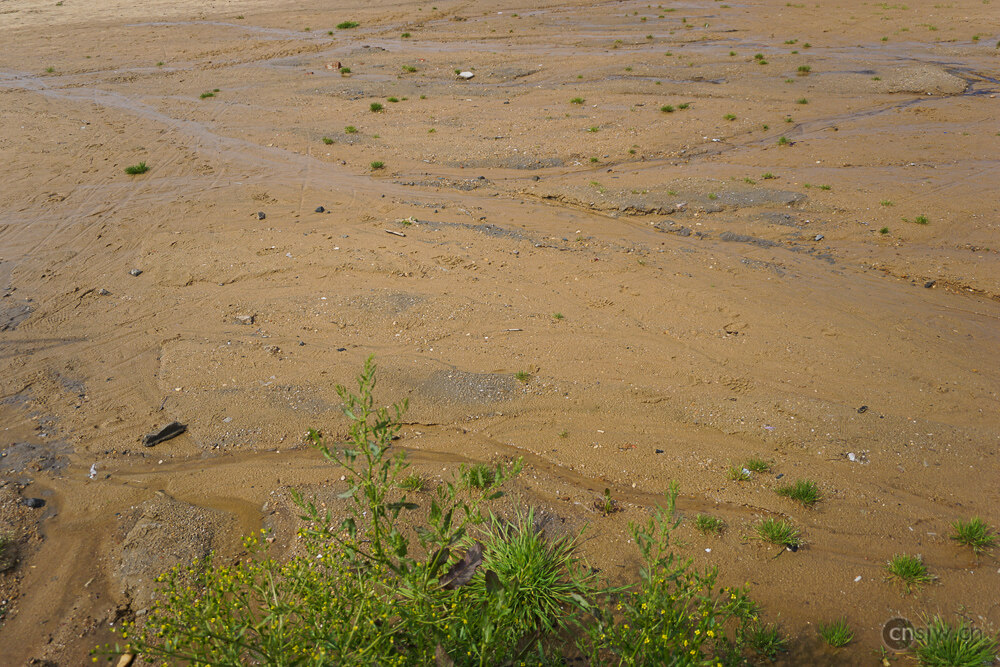
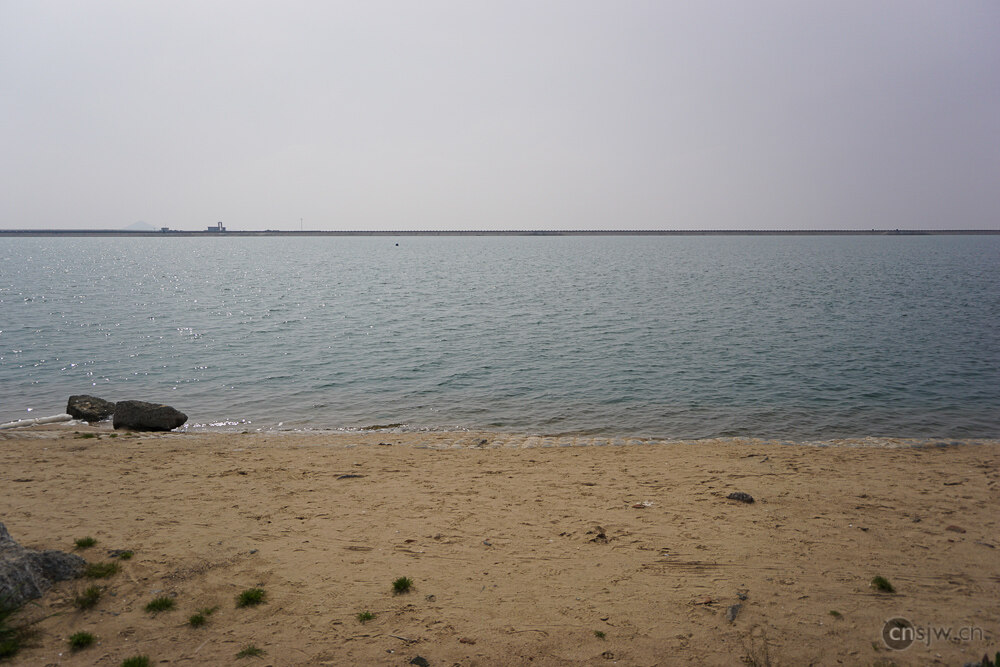
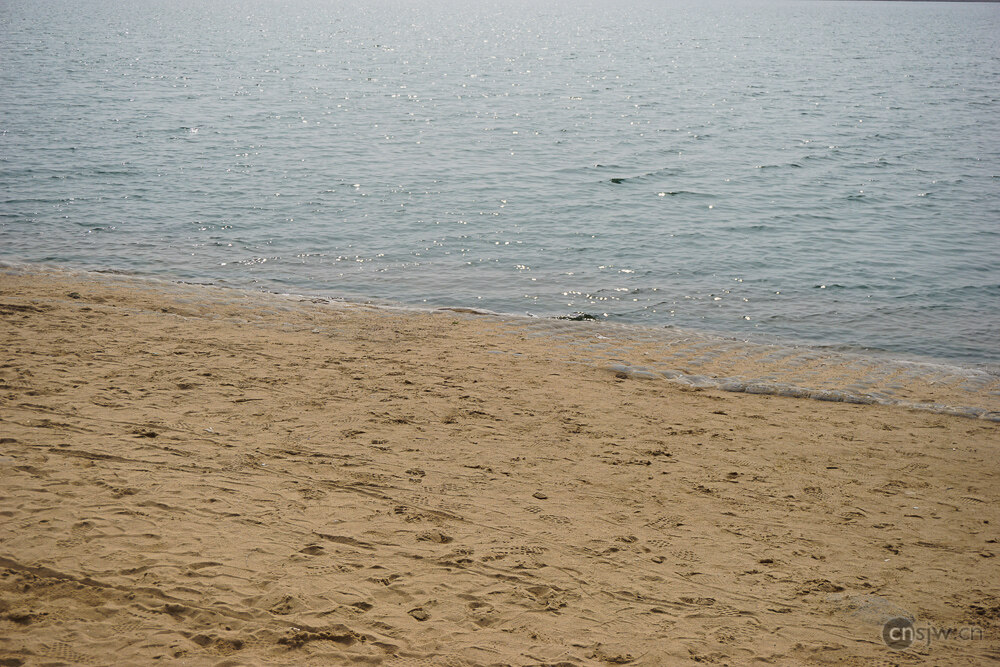
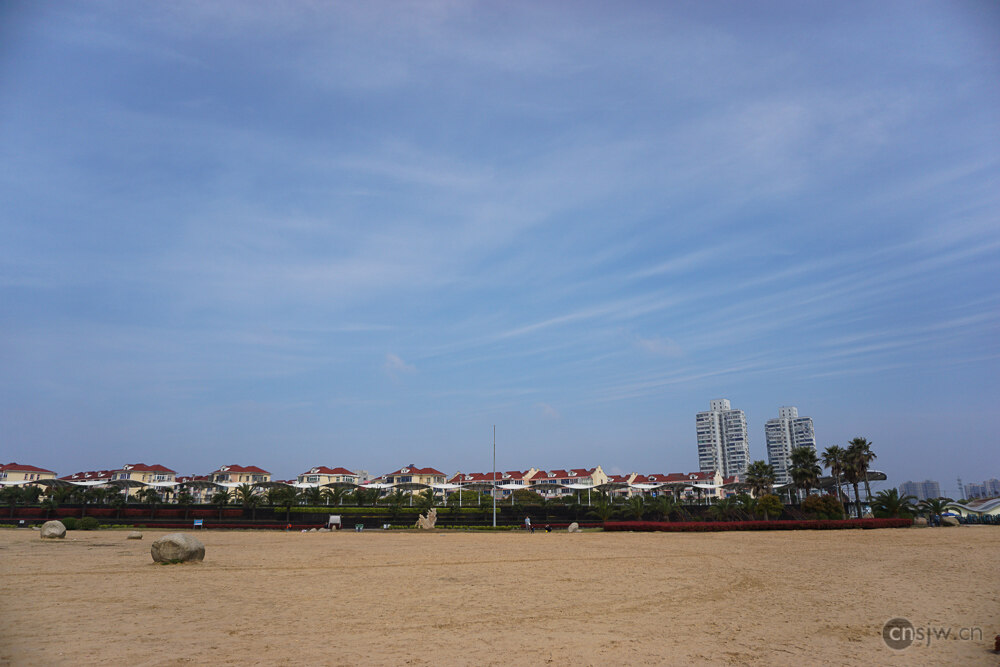
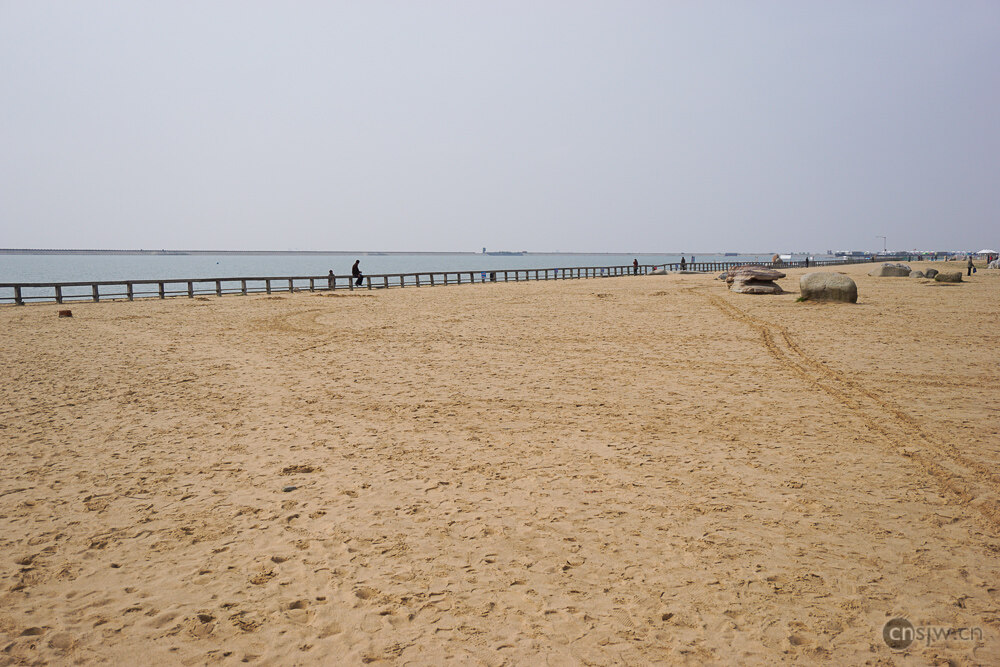
So, to meet the growing demand for tourism, or rather people’s enduring desire to see what the seaside looks like, Fengxian and Jinshan each developed an artificial beach: Fengxian’s Bihai Jinsha and Jinshan’s City Beach. Here, the sea is enclosed; in the distance, you don’t see the horizon but a wall. The seawater is filtered, and the sand was transported in from elsewhere.
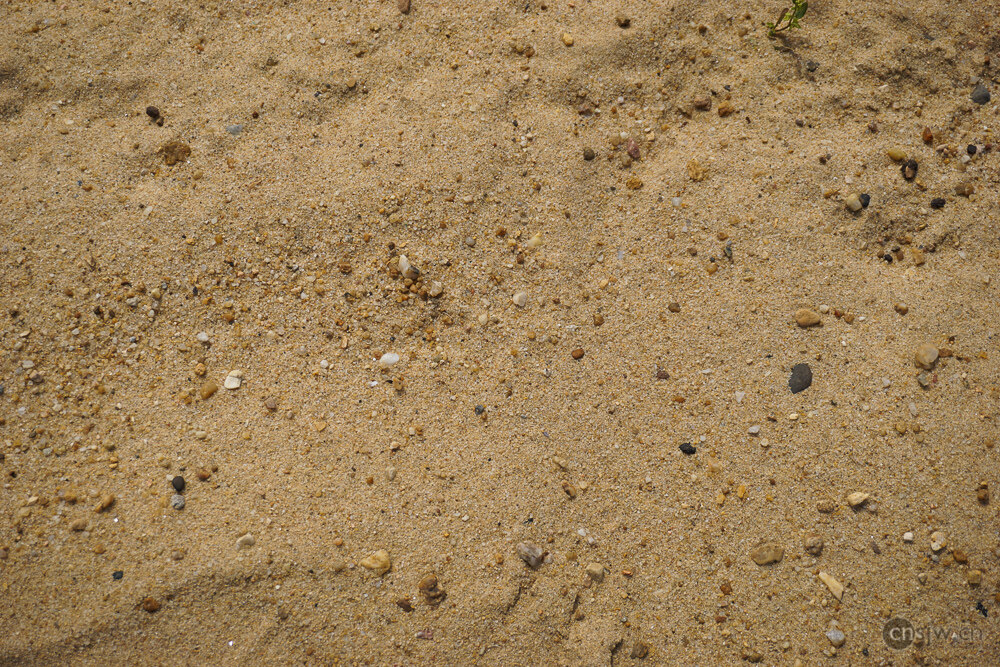
Although it might sound rather uninteresting—and personally, I wouldn’t make a special trip just for this—if you happen to be in Jinshan for other reasons, stopping by for a morning stroll is a decent option. At least I think so: the water really is seawater, the sand is pretty good, and the breeze is a genuine sea breeze. For someone who hasn’t seen the ocean in a long time, it holds a certain appeal~~~ Especially when the weather is nice, sunbathing, enjoying the sea breeze, and taking a walk can be quite enjoyable if the crowds are thin.
This place is quite close to Jinshanwei Station. This was also my first time taking the Jinshan Railway. The full fare is 17 yuan, and you can use your public transport card to enter and exit the station without needing an ID to buy tickets. Seating is unassigned, and the train is a standard EMU with only second-class carriages, but it’s still much more comfortable than the subway. The direct train from Shanghai South Station to Jinshanwei Station takes less than 30 minutes, which is very fast. The local trains that stop at every station are slower, taking a little over an hour. So, if you’re heading to Jinshanwei, I recommend checking the schedule carefully, arriving a bit early to wait for the train, and not being late. If you miss a direct train, you might end up spending an extra hour on your journey!
There aren’t many shops in the entire Jinshan urban area; basically, there’s just one Bailian shopping center. I heard a Wanda Plaza is under construction, but I don’t know when it will be finished. Currently, Bailian has KFC, Pizza Hut, Starbucks, BBQ and hotpot restaurants, and several chain stores, which is pretty good and basically meets daily needs. However, if you plan to visit City Beach, I suggest bringing your own food or eating before you go. The only food options in the beach area are barbecue stalls, which seem to have poor hygiene standards.
As for accommodation, there aren’t many highly-rated hotels locally. I chose the newly opened Hanting JI Hotel. The facilities are decent; the exterior features European-style architecture, while the rooms have a minimalist Japanese design. Although JI Hotel clearly competes in the same tier as Holiday Inn Express (HIX), there is still a noticeable gap in amenities. They seem to use the same toiletries, but there’s no safe or anything like that, the mattress isn’t great, and neither is the breakfast. The Wi-Fi, however, is quite reliable. It’s very close to Jinshanwei Station, just a 10-minute walk. You can also walk to Bailian, and a taxi ride to City Beach costs only the minimum fare.

Photos in this post taken with a SONY A5100 + 16-50mm f/3.5-5.6 lens, post-processed in Lightroom.

Support



Read this article on WeChat