
Since this trip to Hong Kong was mainly about strolling and eating, let’s start with the ‘strolling’ part. It was spread over two days. On the first day, right after arriving in Hong Kong and settling into the hotel, before heading up to The Peak, I spent an hour visiting the famous Central-Mid-Levels Escalator. This escalator is a pedestrian transport system connecting the Central business district on Hong Kong Island with the Mid-Levels residential area. Opened on October 11, 1993, it spans over 800 meters and takes about 24 minutes to complete the entire journey, holding the record as the world’s longest outdoor covered escalator system.
The entire system operates in only one direction at a time, changing direction at different times of the day depending on crowd flow. From 6:00 AM to 10:00 AM daily, it runs downwards towards Central, serving commuters heading to work in the business district; while from 10:00 AM to midnight, it runs upwards towards the Mid-Levels, making it convenient for tourists and off-duty commuters to go uphill.If you want to go against the system’s direction, your only option is to take the stairs. Because of this, if you’d like to stroll here but prefer not to climb stairs, you can catch a taxi or bus from a certain point in the Mid-Levels to reach your next destination.
Of course, this isn’t one continuous escalator; rather, it consists of many separate sections. You can easily step off onto adjacent streets between sections. Along the way, it passes right through the Soho dining district, lined with shops, cafes, bistros, restaurants, and more. If you have plenty of time, it’s definitely worth taking a leisurely stroll—you’ll find lots of delicious food along the way~~~
Here is the starting point of the escalator: the former Central Market, located between Des Voeux Road Central and Queen’s Road Central.
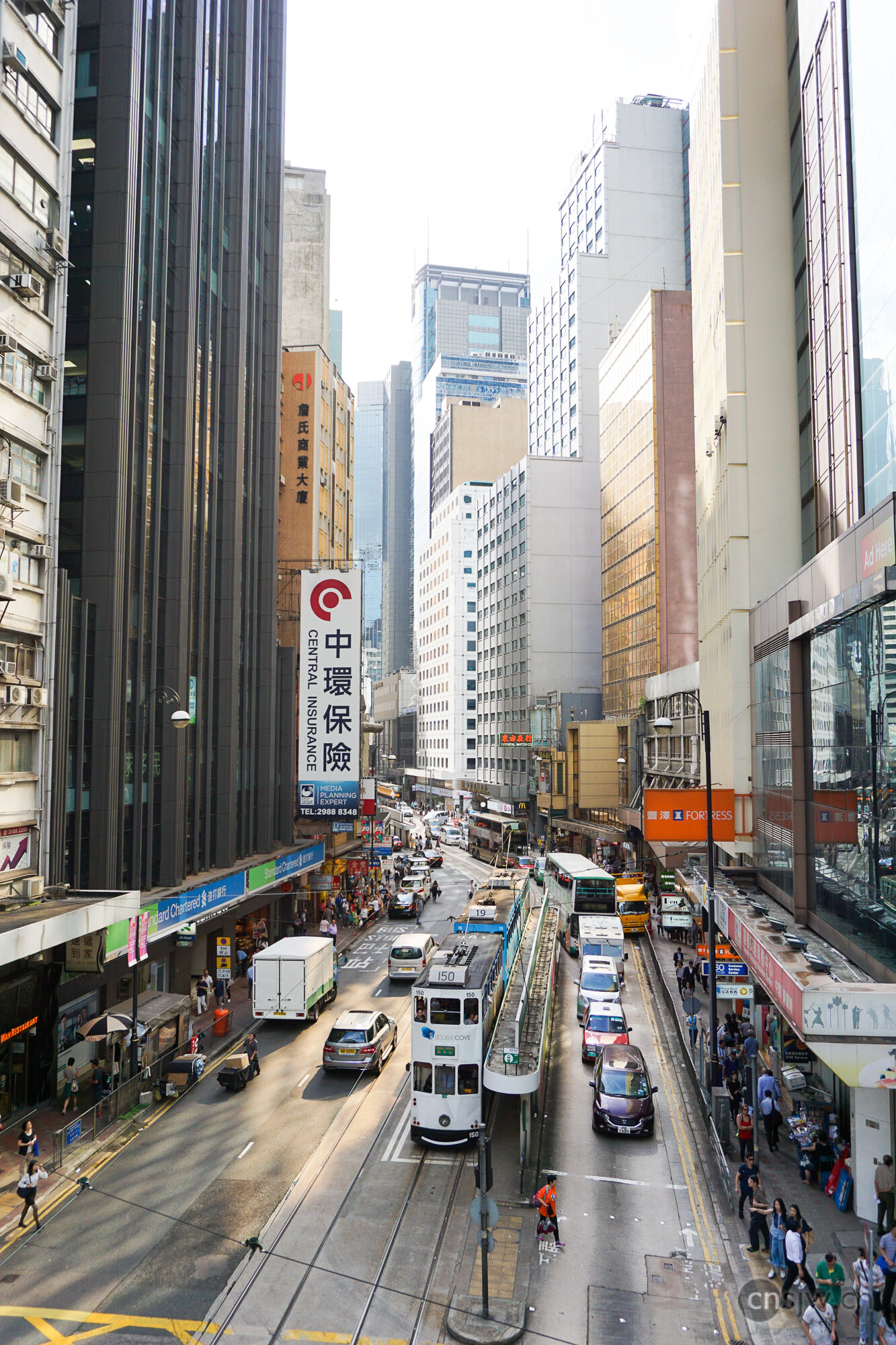
The initial section is mostly flat, consisting simply of inclined moving walkways.
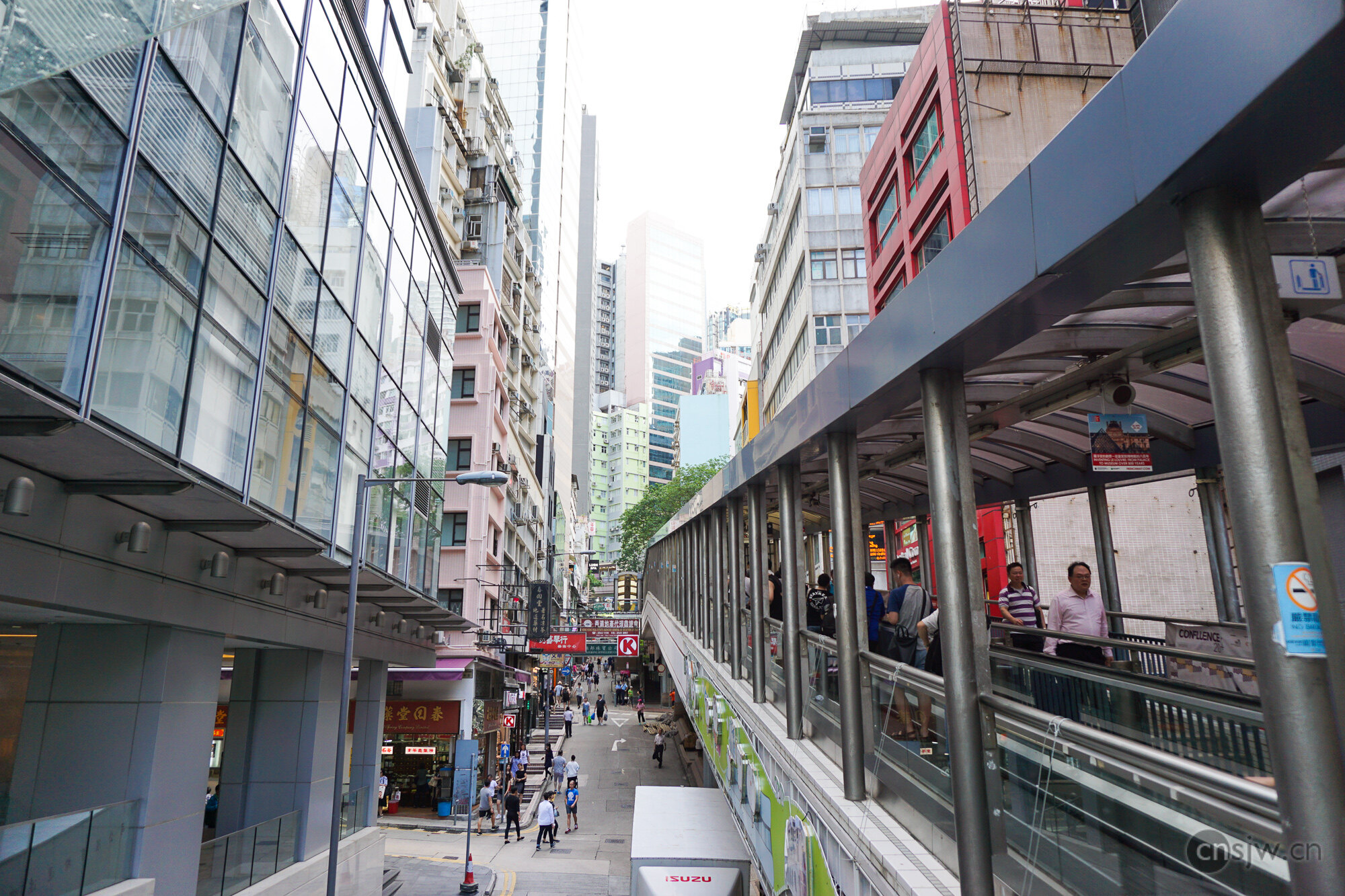
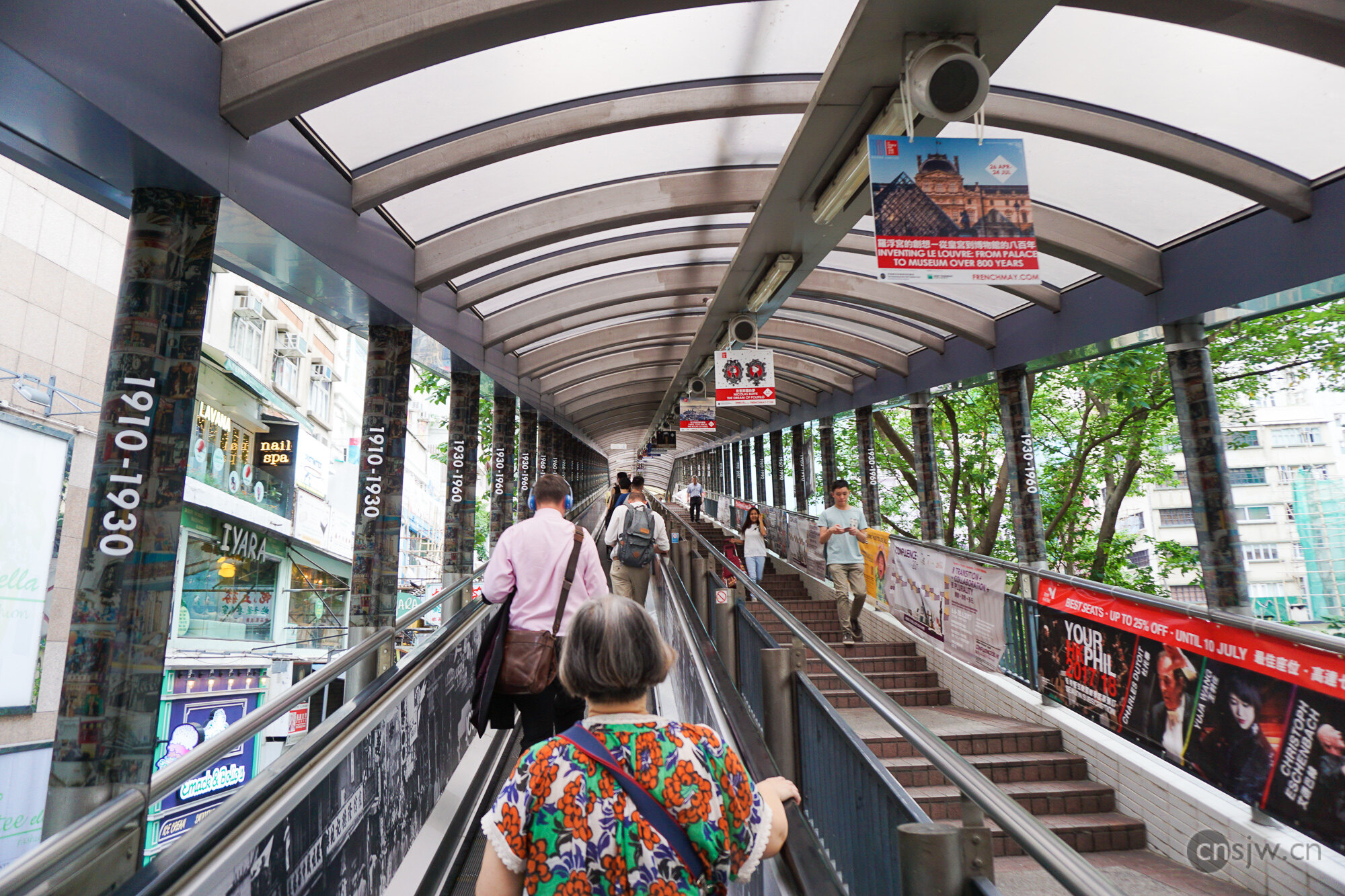
As it gradually gets steeper further along, it transitions into actual escalators.
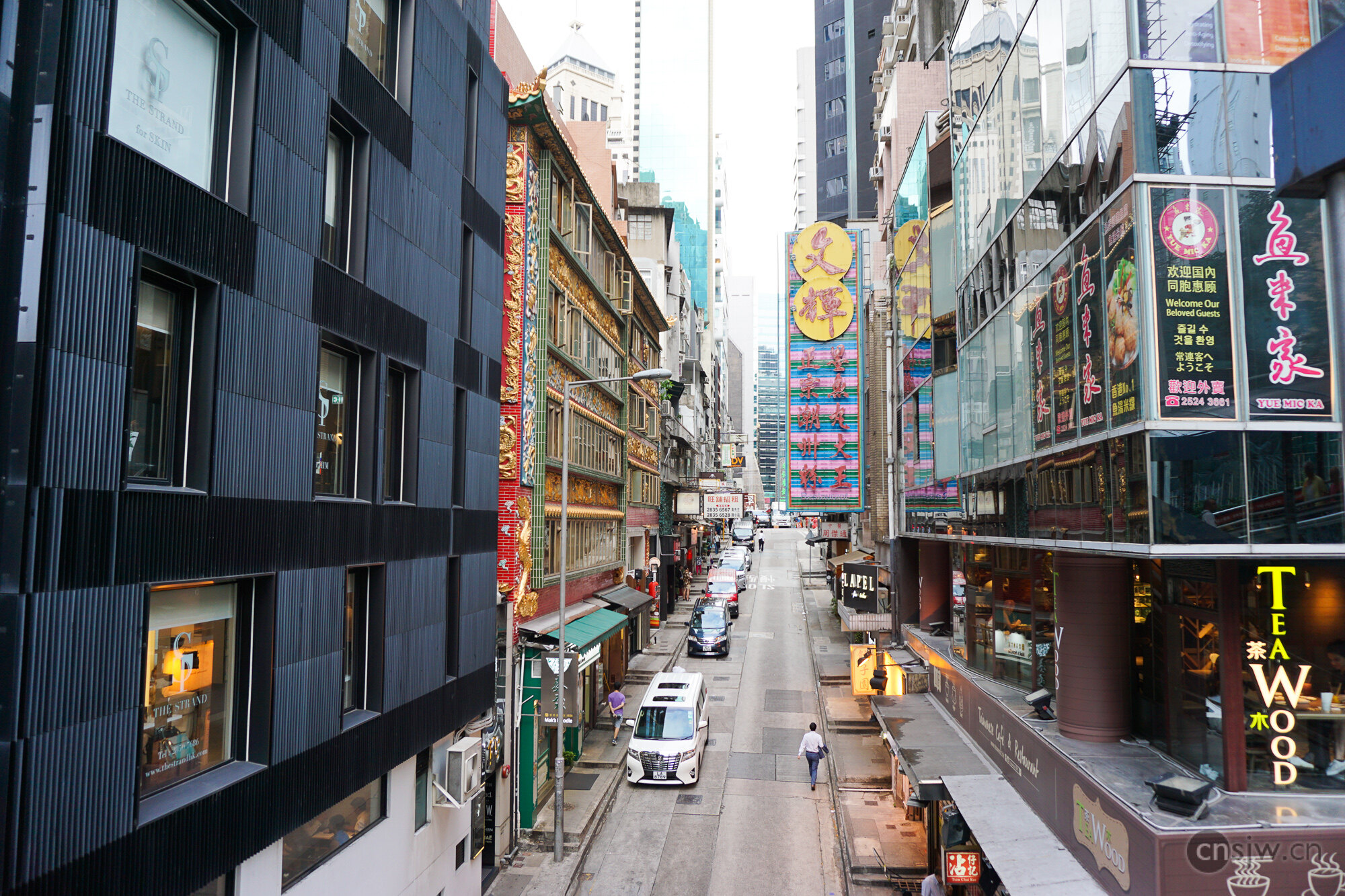
Various restaurants beside the Soho district
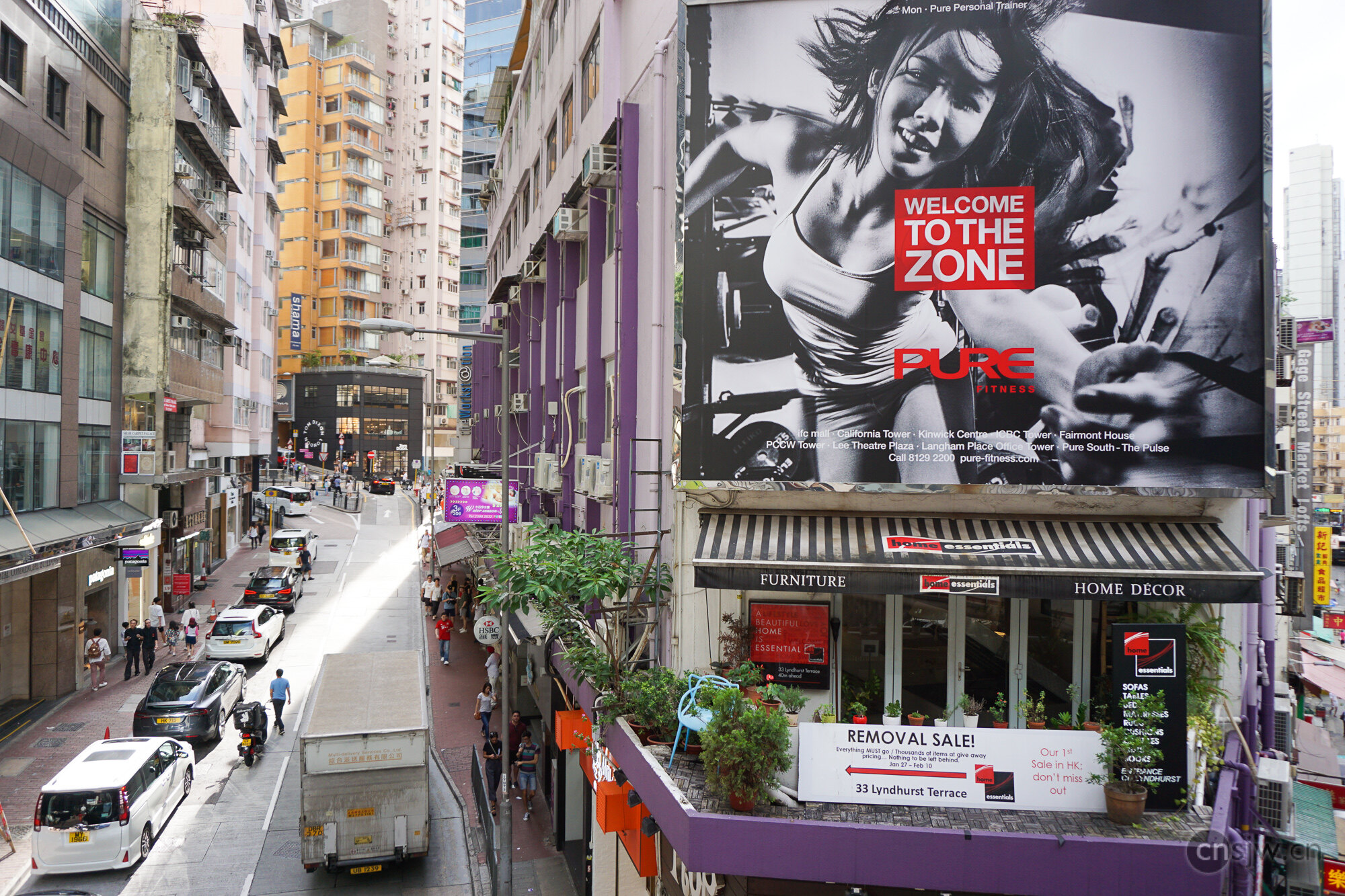
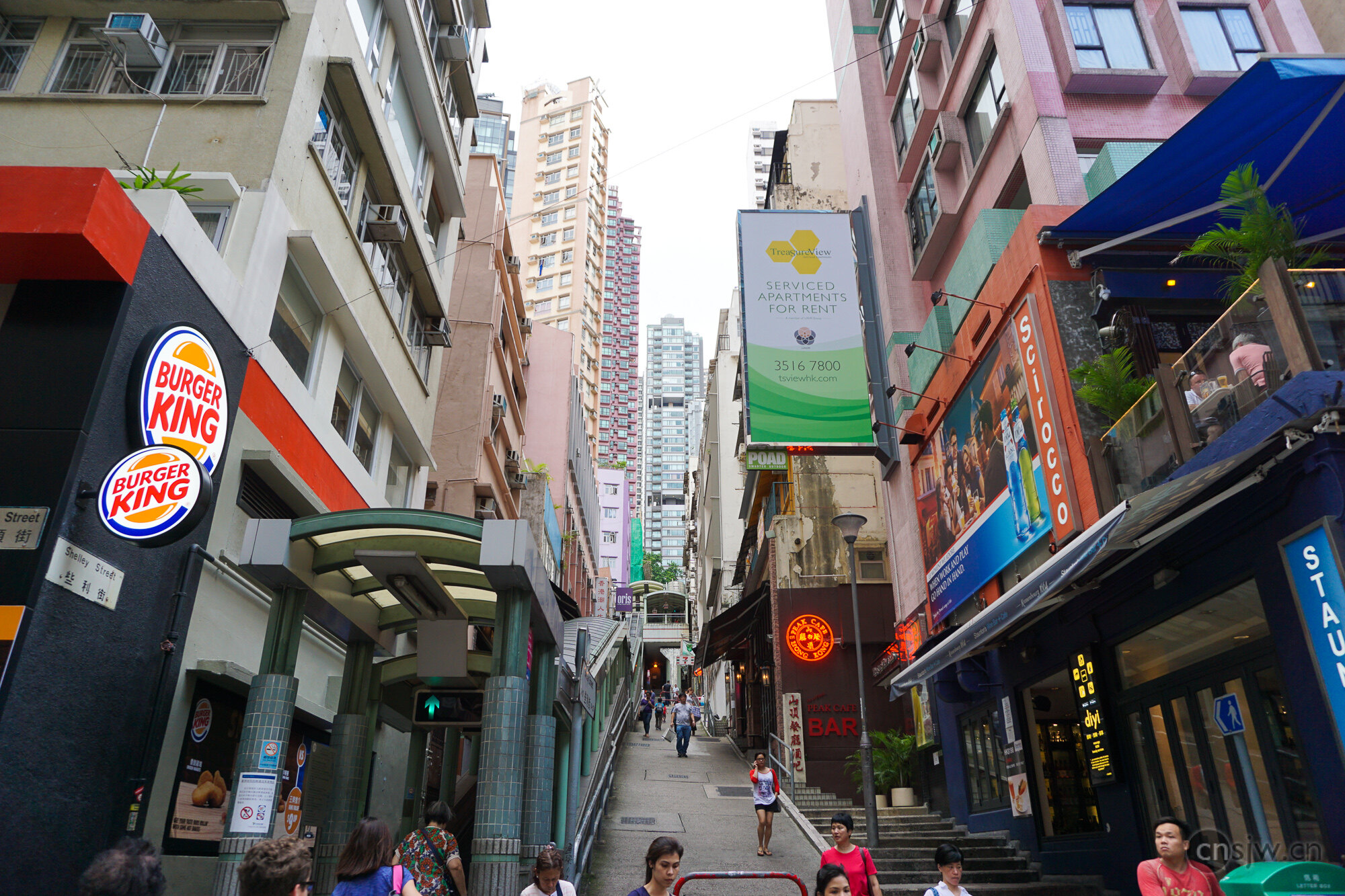
On the right side, you can see the escalator divided into multiple sections.
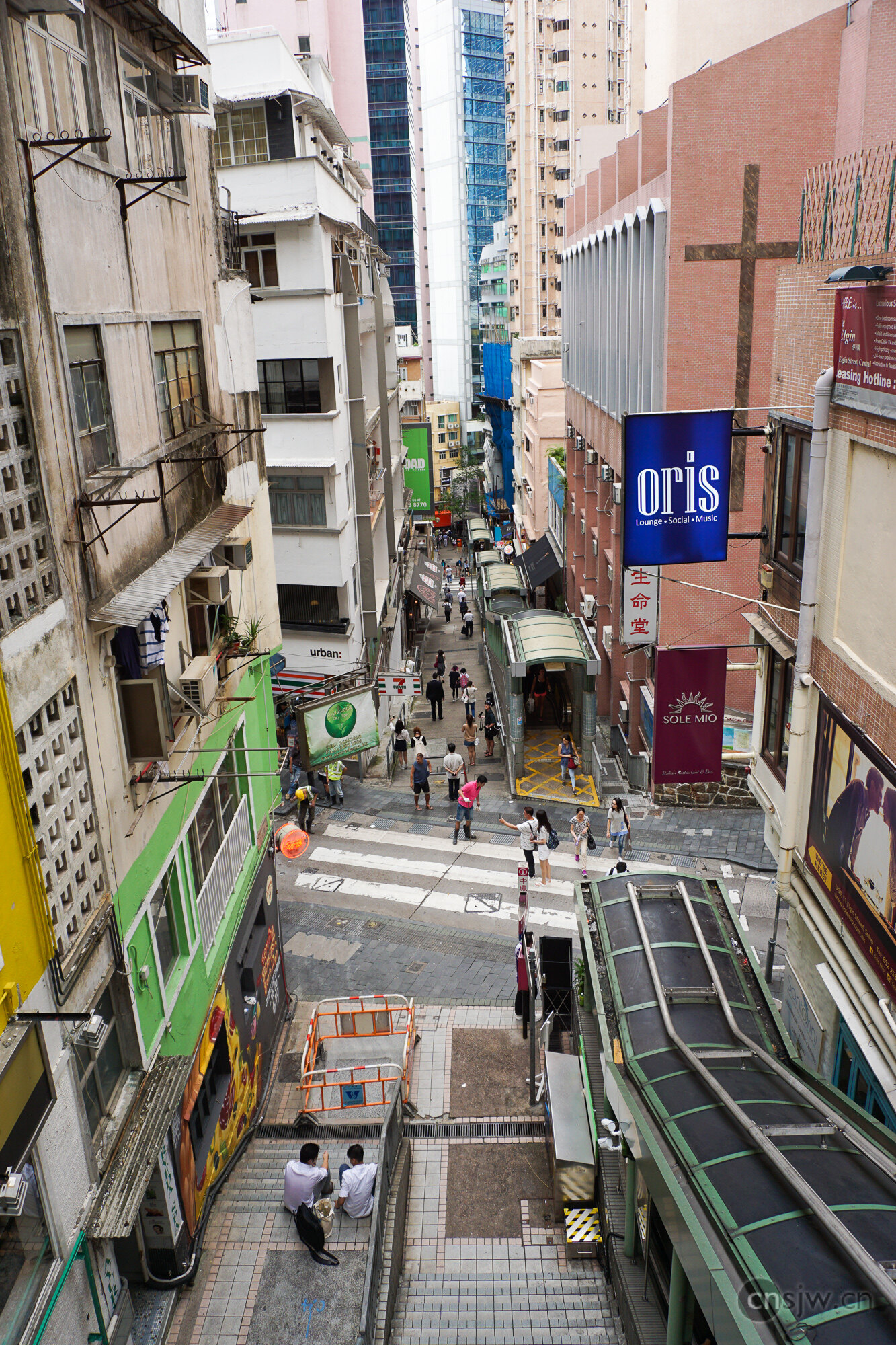
After walking most of the way, the surroundings became predominantly residential areas, so I took a bus up to The Peak.
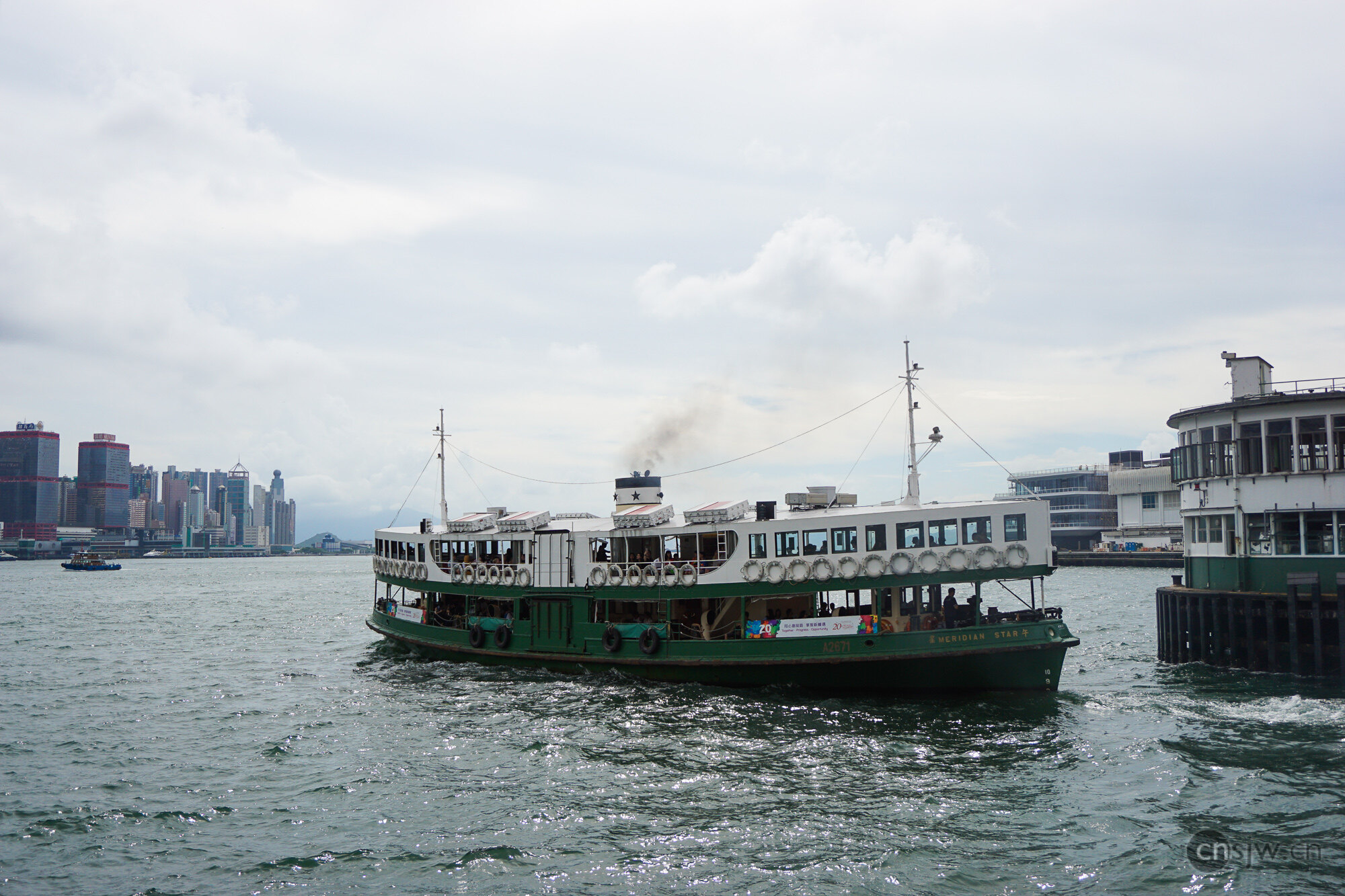
Now let’s move on to the second day. After enjoying morning tea with old classmates at Mong Kok East Station, we walked over to check out the famous Ladies’ Market and Sneakers Street nearby. However, since it was still quite early, most shops hadn’t opened yet. So we headed straight to Mong Kok MTR Station, then went directly to Tsim Sha Tsui, visiting Harbour City, 1881 Heritage, K11, and the Avenue of Stars. Unfortunately, the Avenue of Stars was completely under renovation—it looked like a massive construction site—so we had no choice but to take the Star Ferry back to Wan Chai. From there, we rode the Ding Ding tram to Causeway Bay and finally walked back to our hotel.
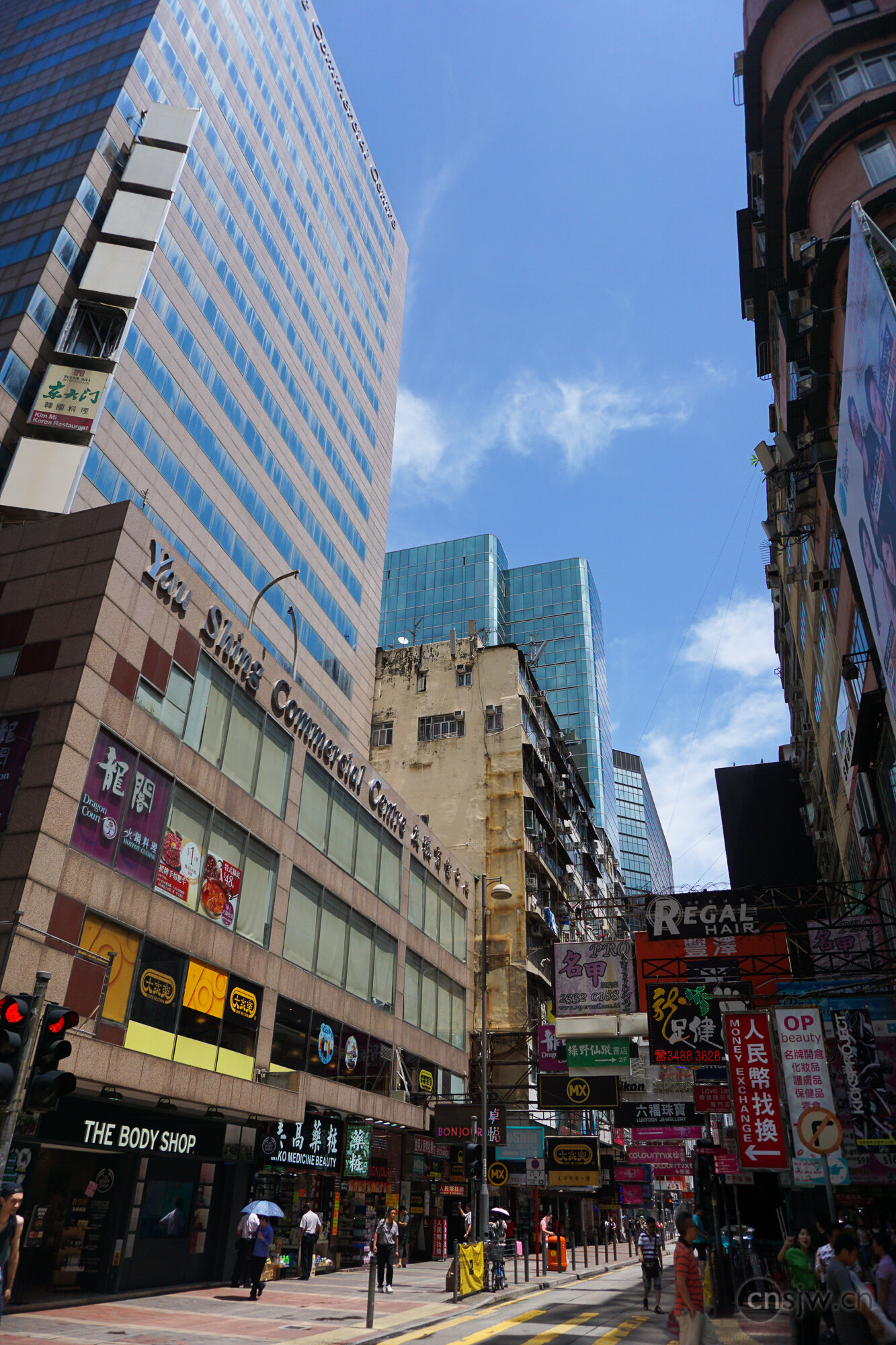
1881 Heritage hasn’t changed much since my last visit.
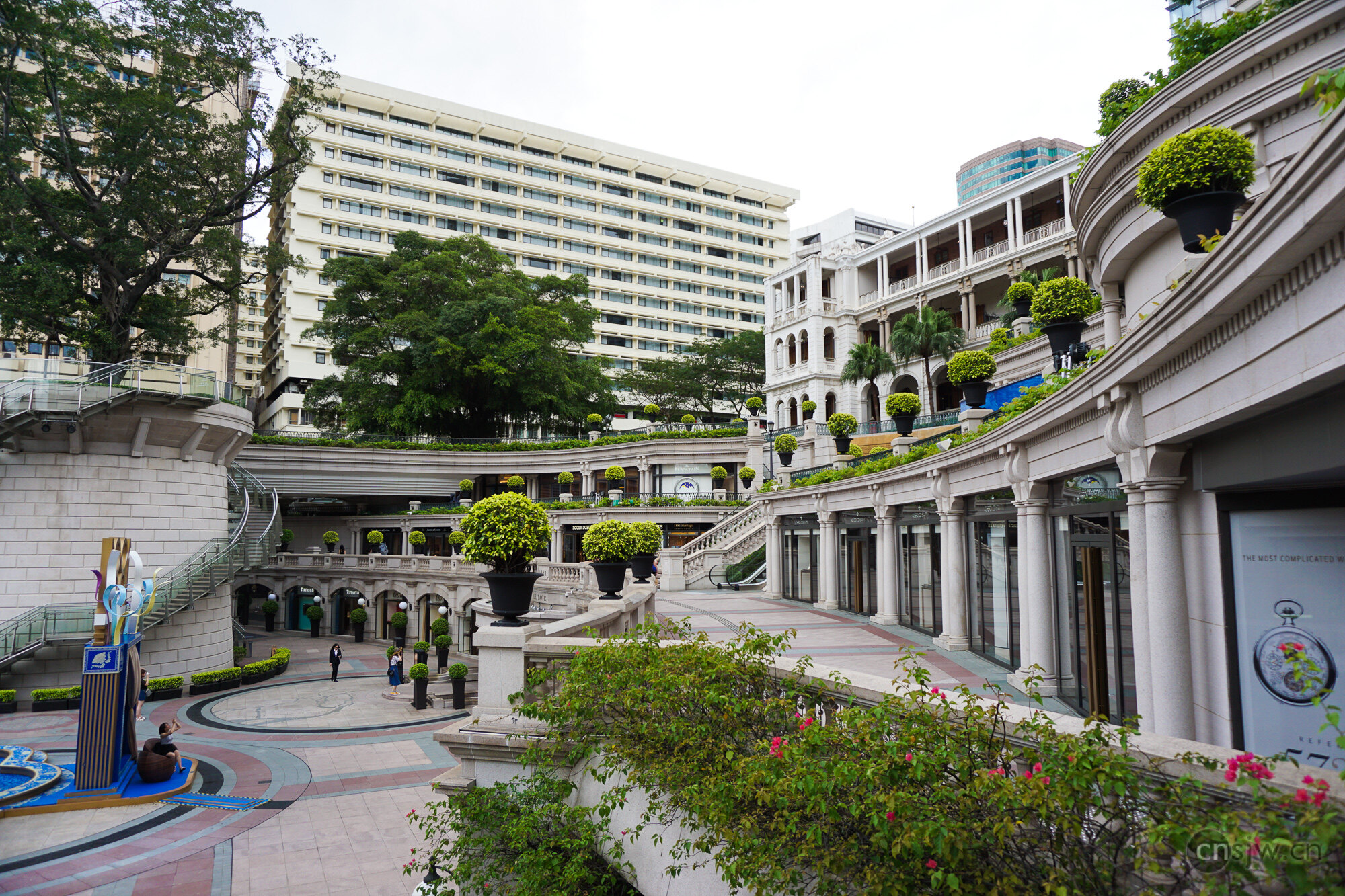
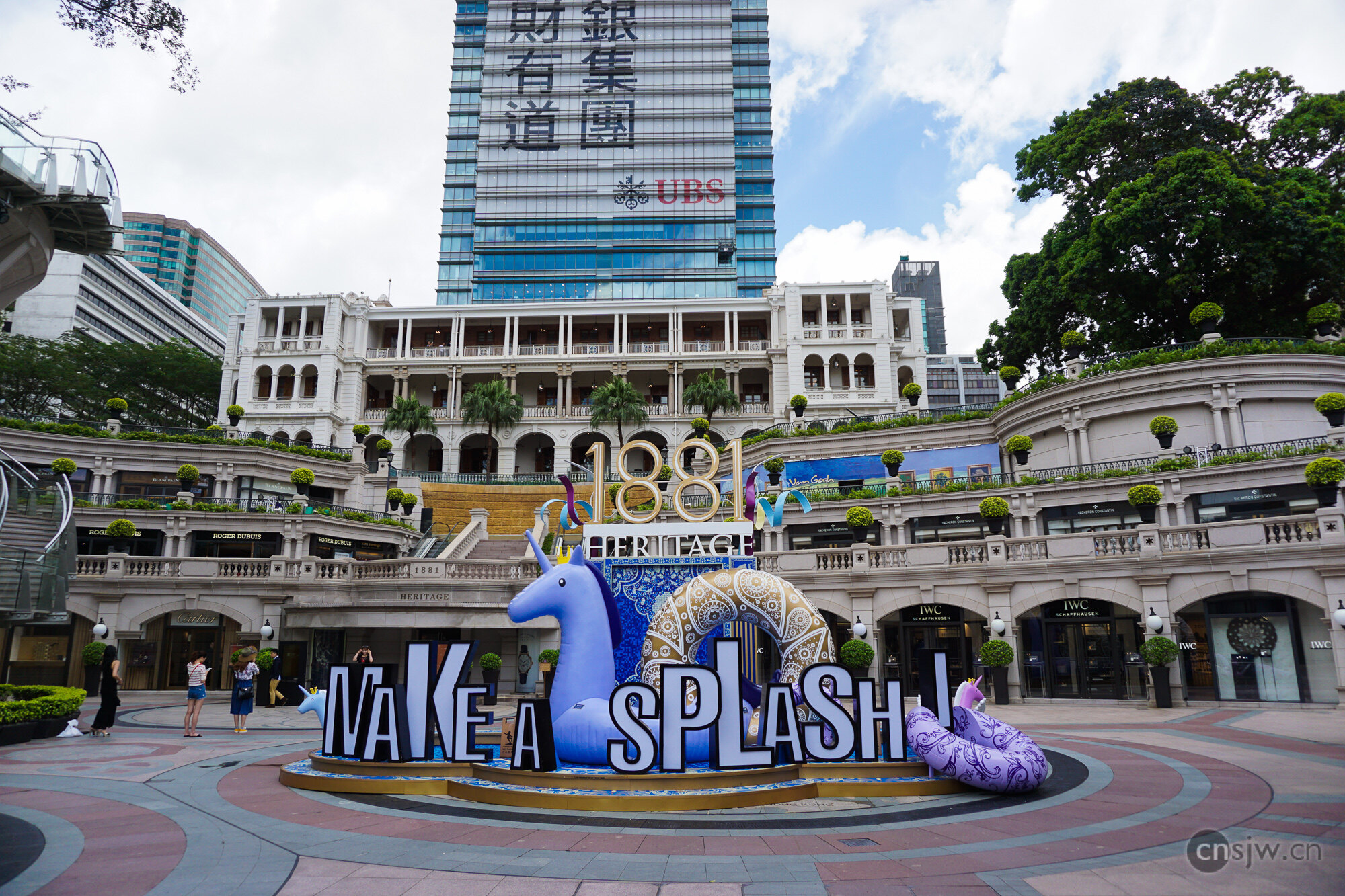
Next to it should have been the Avenue of Stars, but that area was entirely a construction site.
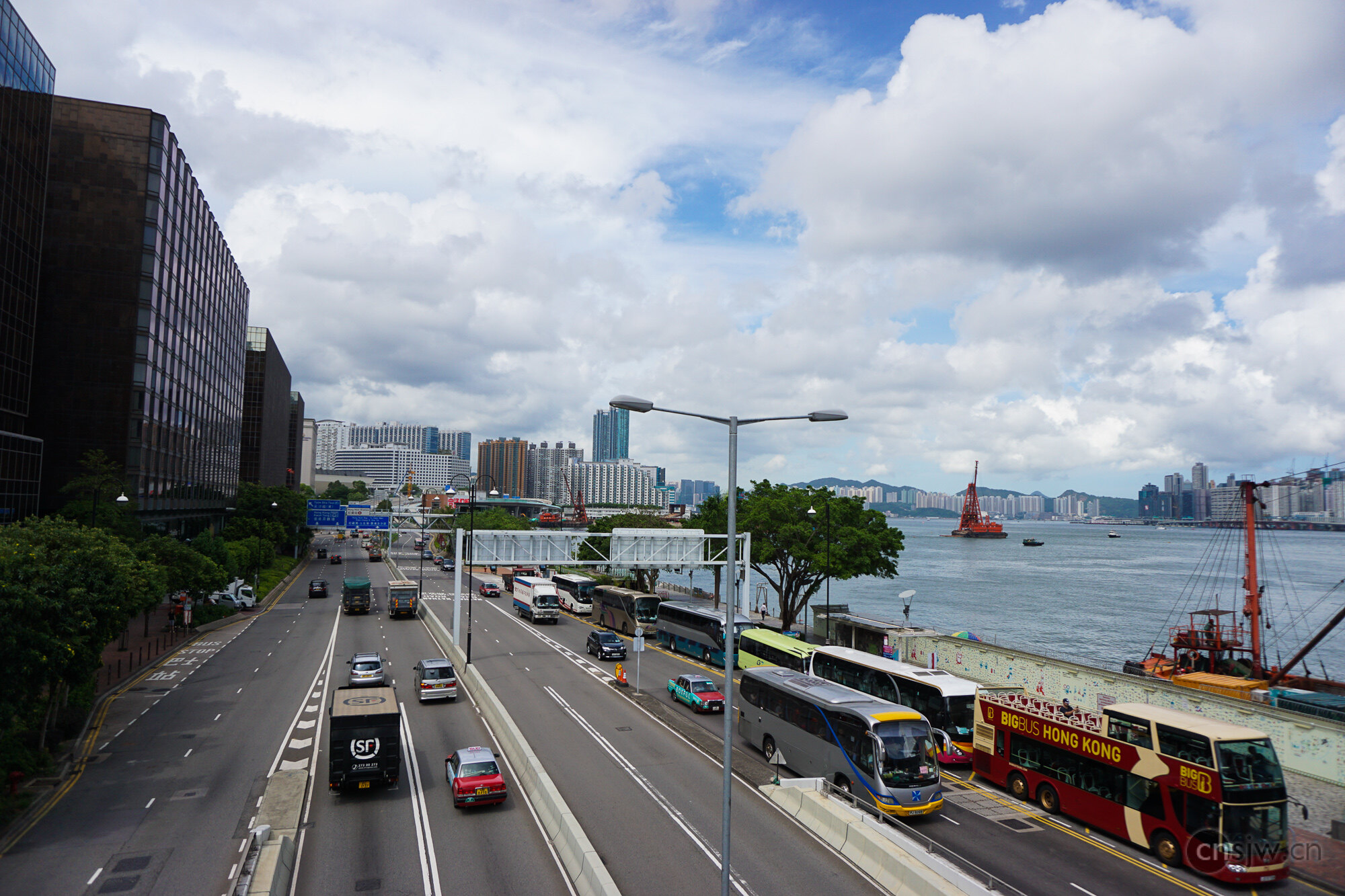

The Star Ferry costs only HK$2.3, which is incredibly cheap. There are two routes—one to Central and another to Wan Chai.
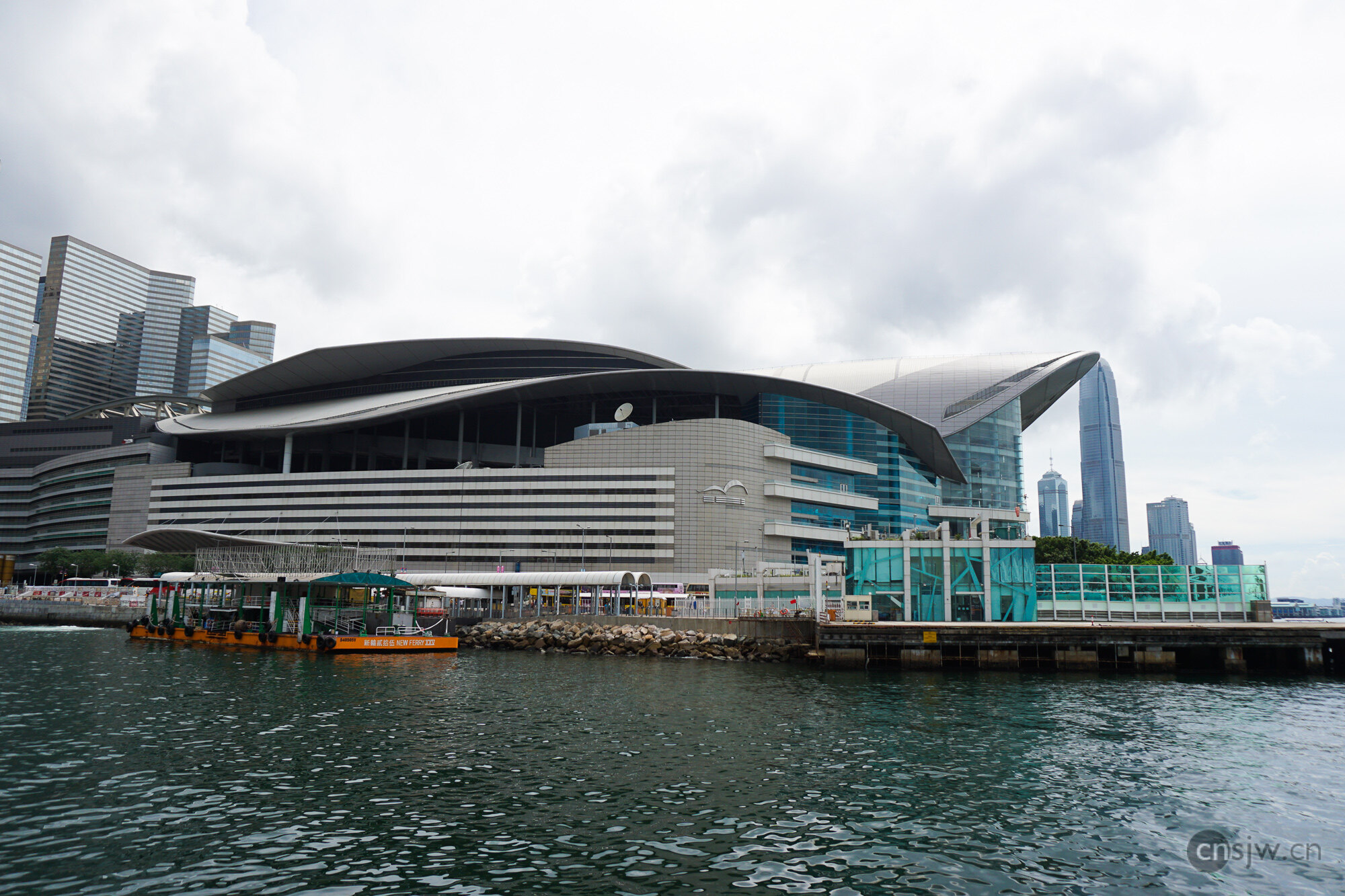
The Hong Kong Convention and Exhibition Centre in Wan Chai—the very place President Xi Jinping visited during those few days~ Right outside Wan Chai Pier, there’s a Tsukiji Yamaki Seafood Market selling Japanese snacks, beverages, and Japanese cuisine. Apparently, they hold live tuna-cutting demonstrations every day. Since it wasn’t mealtime and I wasn’t particularly hungry, I just bought some snacks to bring back to the hotel—and they were absolutely delicious!
At China Resources Building in Wan Chai, I even saw people who had come all the way from Shenzhen holding banners right outside the entrance…

Downtown Hong Kong is extremely crowded, with very narrow streets. Buildings practically spill right onto the sidewalks—as soon as you step out of a building, you’re already on the pavement. Because each city block is relatively small, there aren’t many large open spaces available for public squares or parks. Nevertheless, everything remains remarkably orderly. Drivers generally follow traffic rules diligently, and most vehicles on the road are buses and taxis. Given the high cost of private car ownership and the highly developed public transportation network in Hong Kong, very few residents consider owning a private vehicle. At smaller intersections, clear markings such as “Look Right” or “Look Left” are painted on the ground to remind pedestrians to watch out for traffic. Traffic lights also use distinct audio signals to indicate their status, making them exceptionally user-friendly. Another noteworthy detail: whether it’s escalators, traffic lights, or door-closing alerts on buses and trains, warning sounds in Hong Kong are never overly sharp or jarring—they’re gentle enough not to cause discomfort, and their volume is kept moderate. There’s certainly a lot here worth learning from!
Photos in this post taken with SONY A5100 + 16-50mm f/3.5-5.6 lens, post-processed using Lightroom.

Support



Read this article on WeChat