
Engyo-ji Temple, located at the northern end of Himeji City, is a historic Buddhist temple of the Tendai sect. Renowned for its profound religious significance, rich history, and architecture that harmonizes with the natural environment, it is one of the most famous Buddhist sacred sites in the Kansai region.
Founded in 966 AD by the Tendai monk Shoku Shonin, Engyo-ji has a history spanning over a thousand years. The temple was established to propagate Buddhist teachings and provide a place for believers to practice and meditate. Since its founding, Engyo-ji has been an important training center for the Tendai sect. Known as the “Hiei-zan of the West,” it is the largest temple among the 33 Temples of the Western Pilgrimage and, along with Mount Hiei and Mount Daisen, is counted as one of the three great Tendai training centers. It has enjoyed the support of successive emperors, nobles, and common people throughout history.
To travel from Himeji Castle to Engyo-ji, take the Shinki Bus No. 10. After approximately 25 minutes, you will arrive at the Mount Shosha Ropeway station. From there, take the ropeway up the mountain to reach the entrance of Engyo-ji. Admission is 500 yen. For an additional 500 yen, a round-trip minibus shuttle is available, which is very convenient for tourists who have walked all day or for elderly visitors with limited mobility.
The Mount Shosha Ropeway was built in 1958, and a round-trip ticket costs 1,000 yen. Mount Shosha stands at an elevation of 371 meters, offering panoramic views of Himeji from the summit.
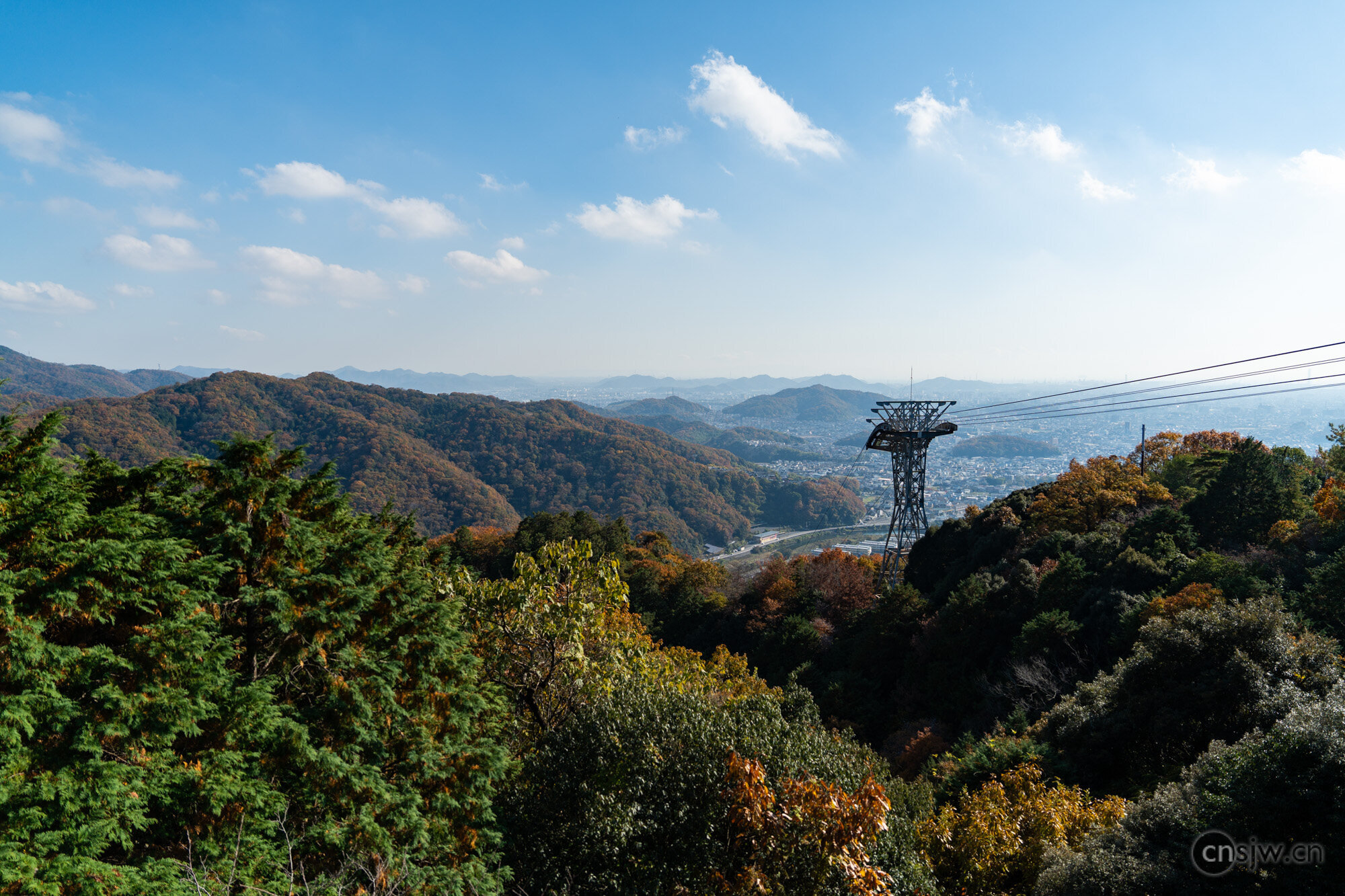
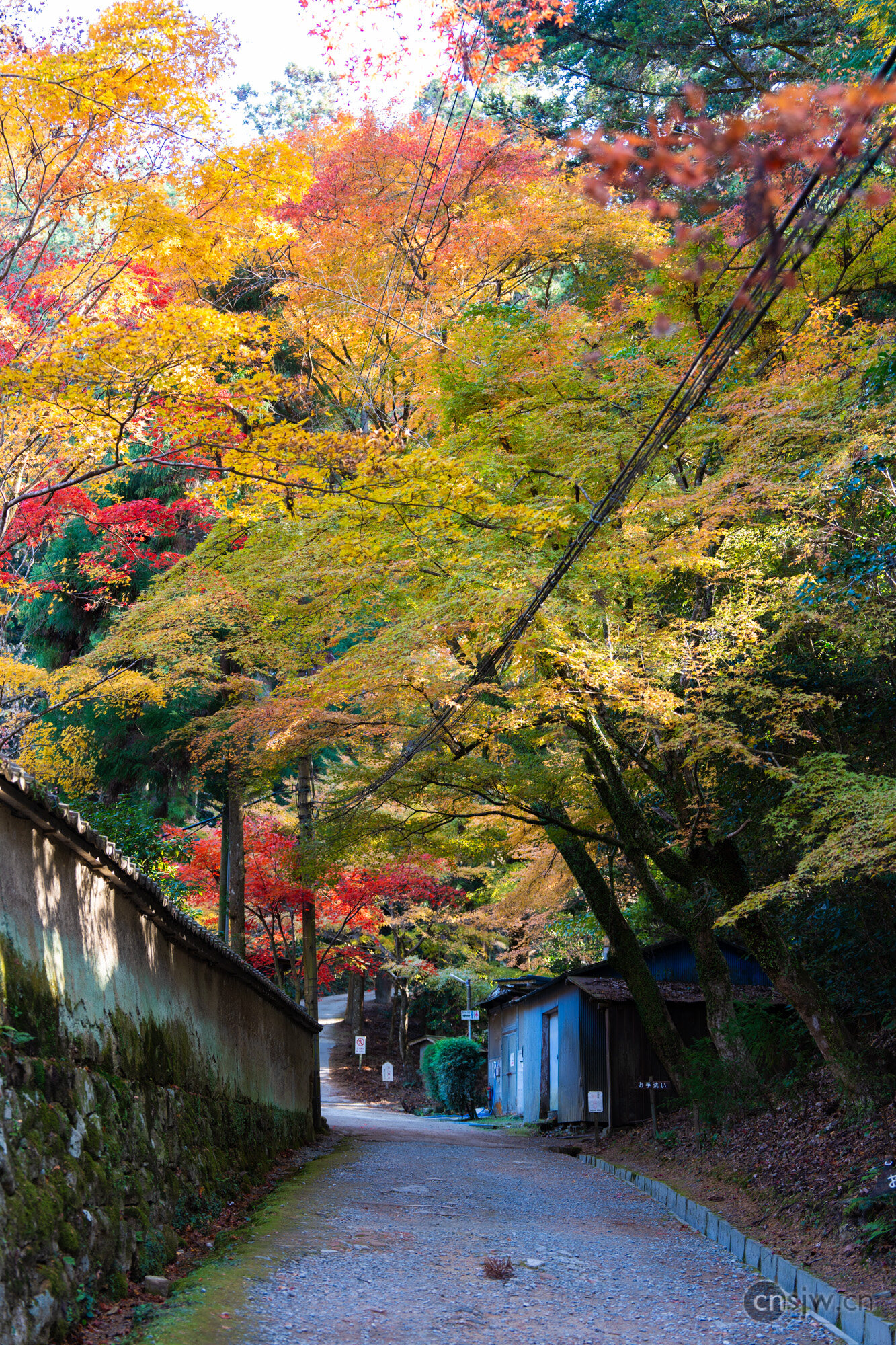
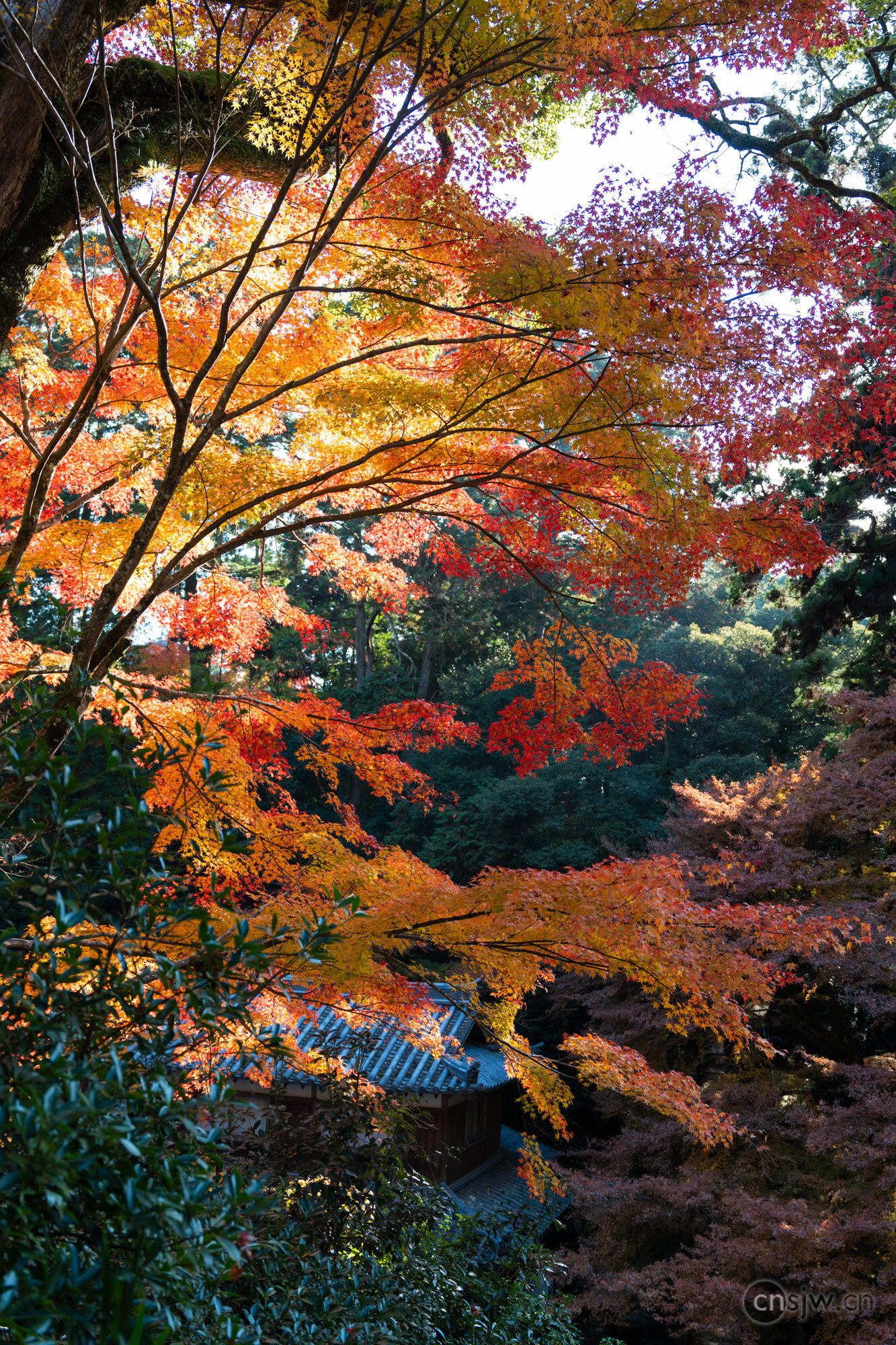
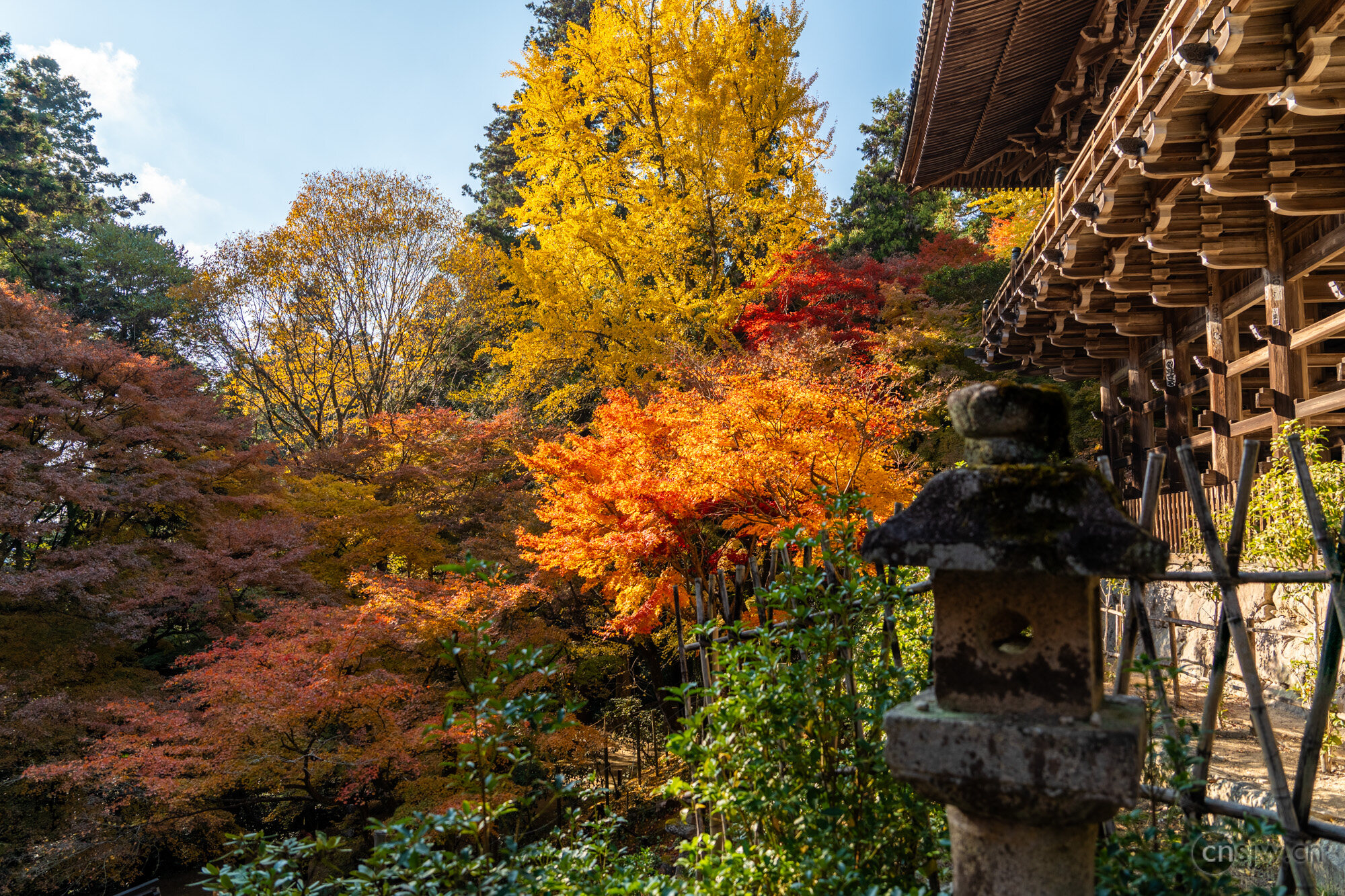
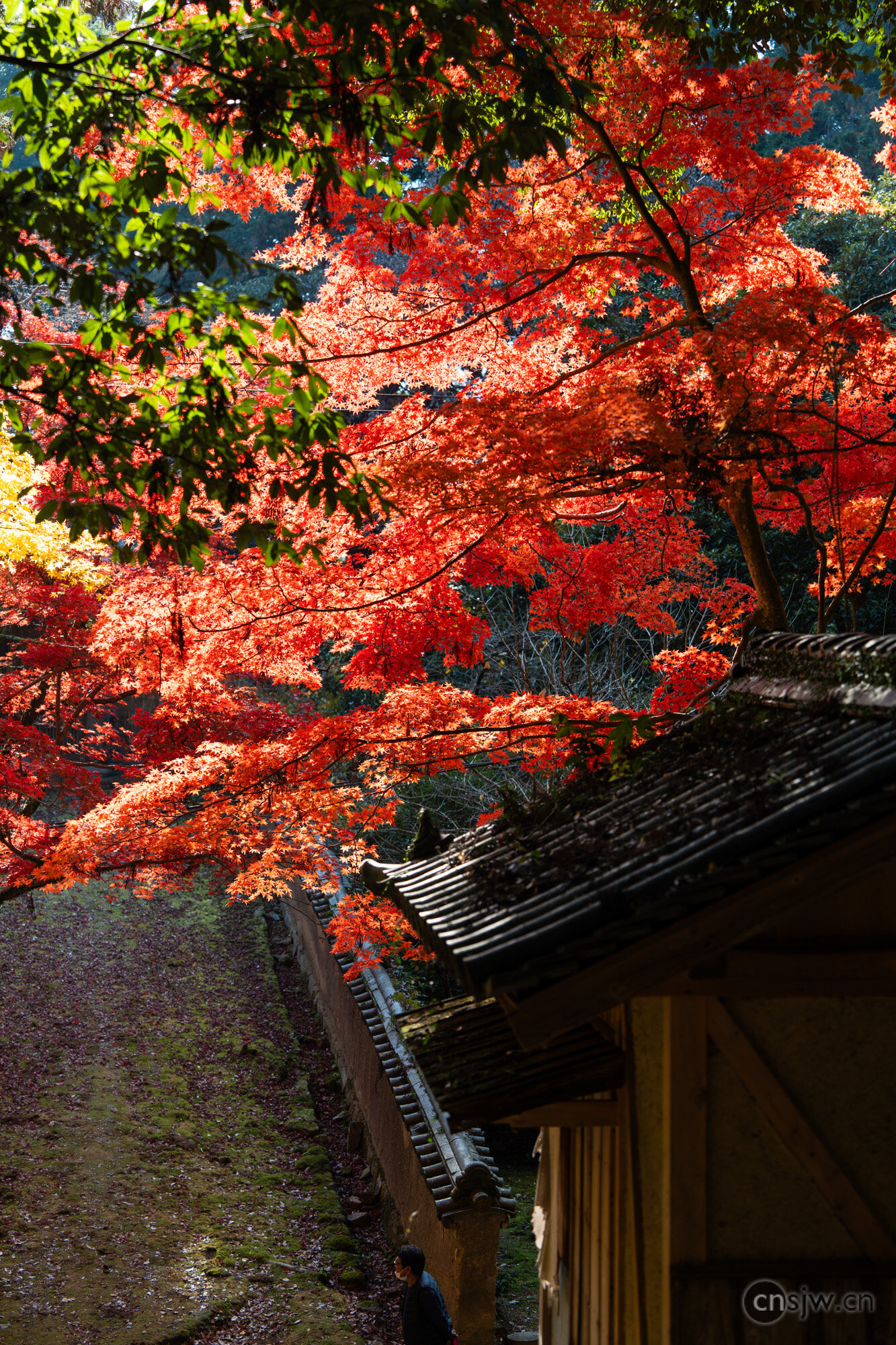
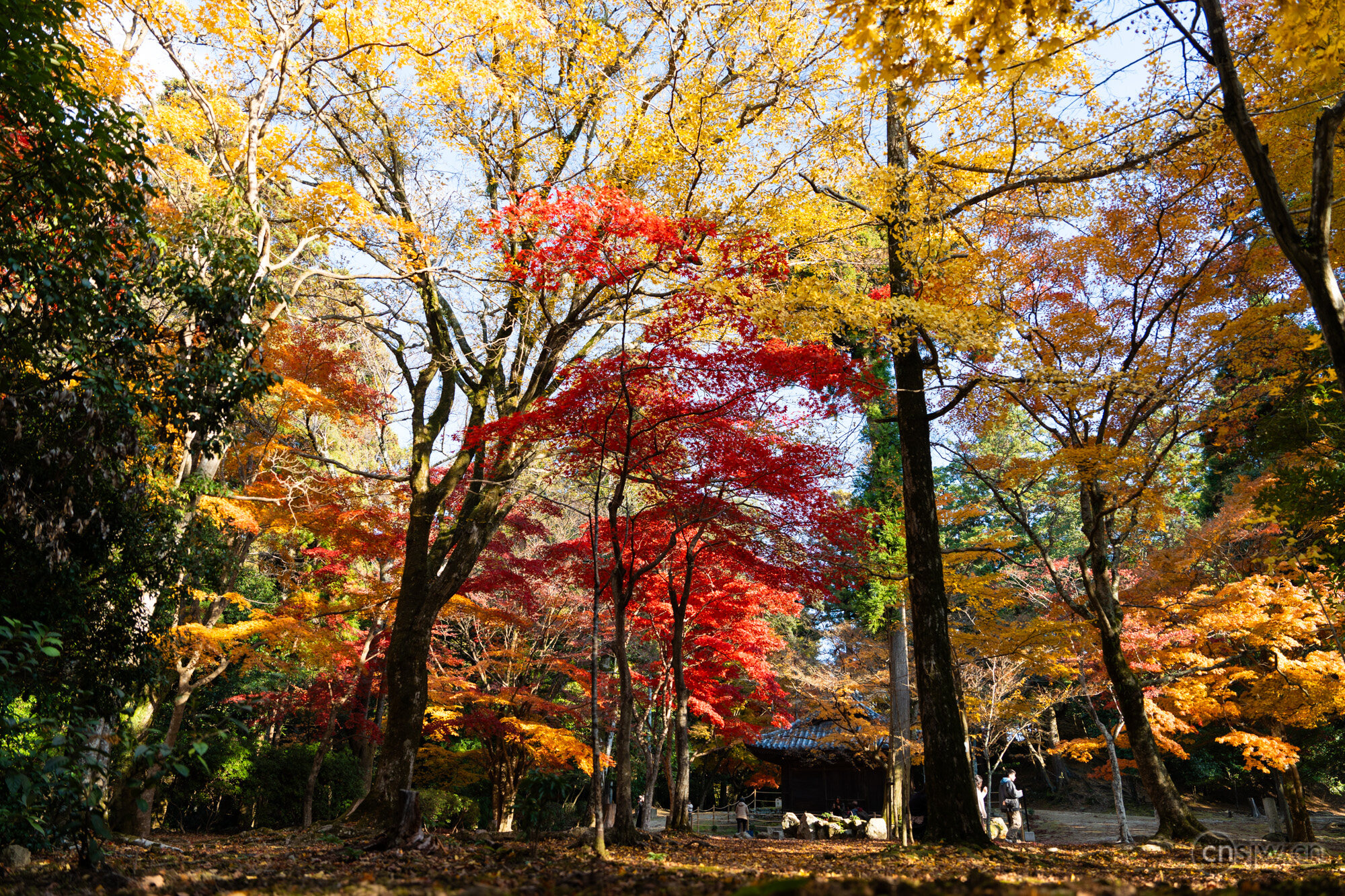
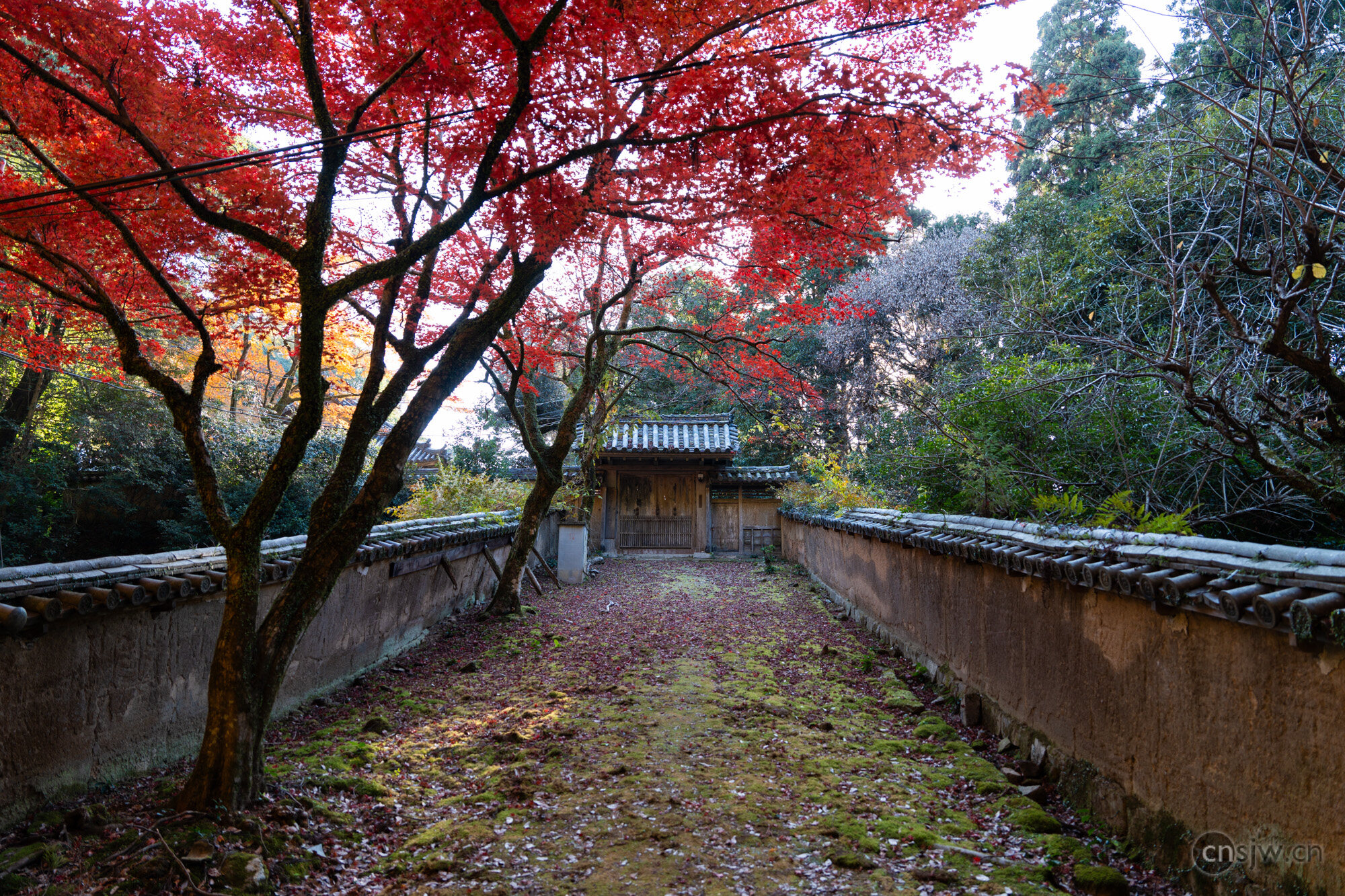
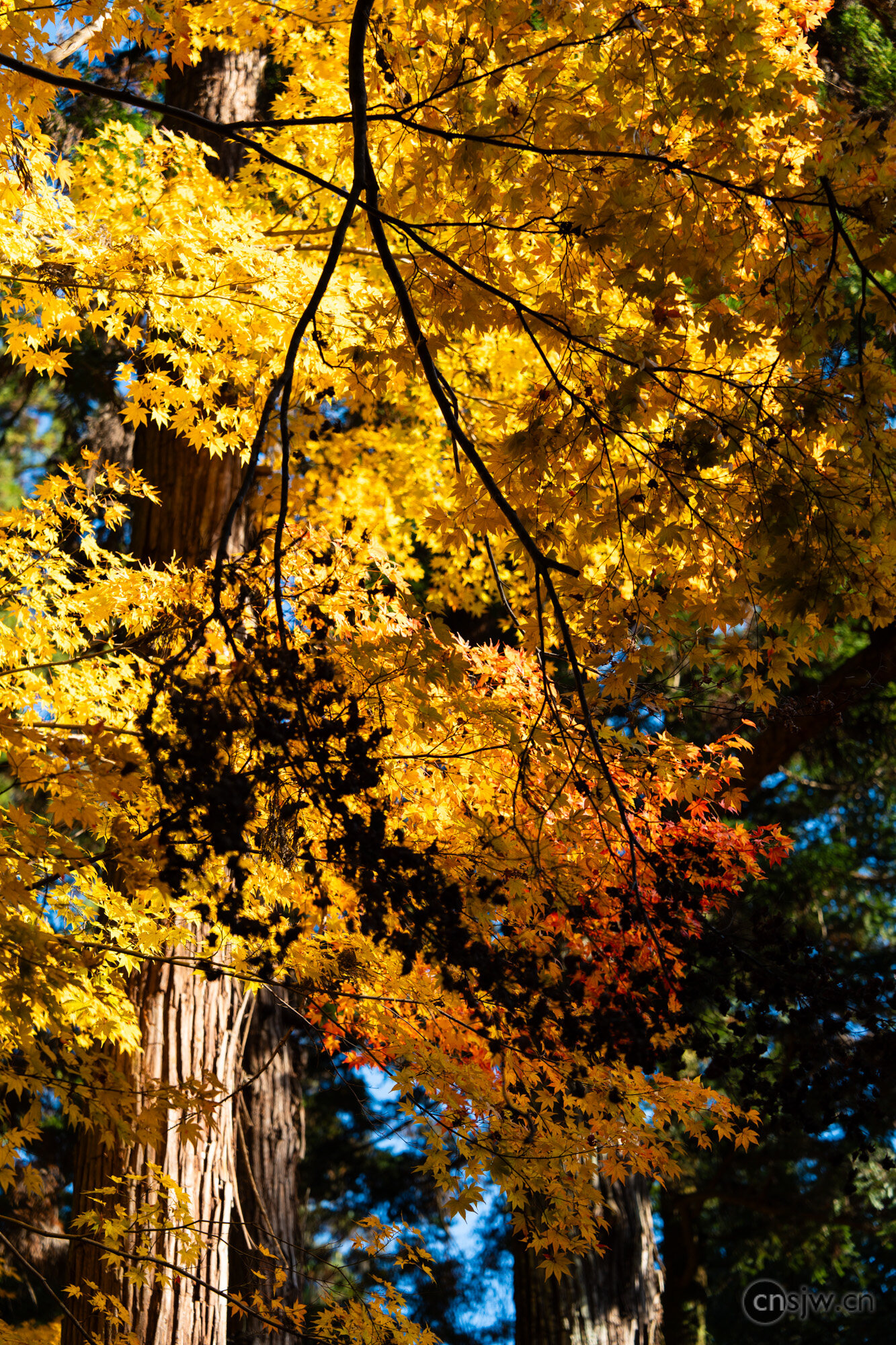
Upon entering the temple grounds, you are greeted by a spectacular autumn scene where red, yellow, and green leaves intertwine to create a colorful tapestry of breathtaking beauty. Mount Shosha is famous for its changing seasonal landscapes: cherry blossoms in spring, lush greenery in summer, vibrant foliage in autumn, and snowy scenery in winter, all of which frame Engyo-ji like a poetic painting.
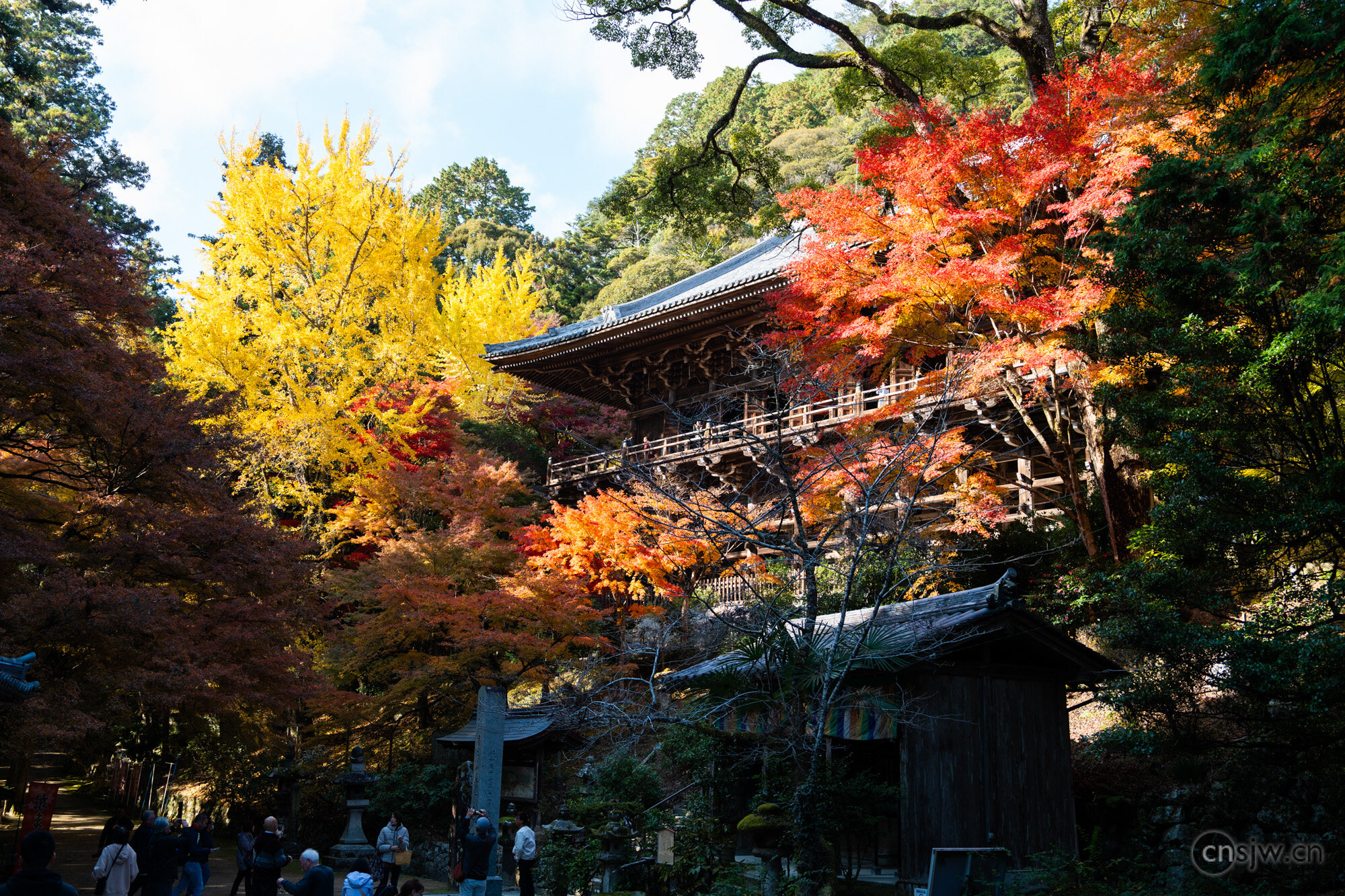
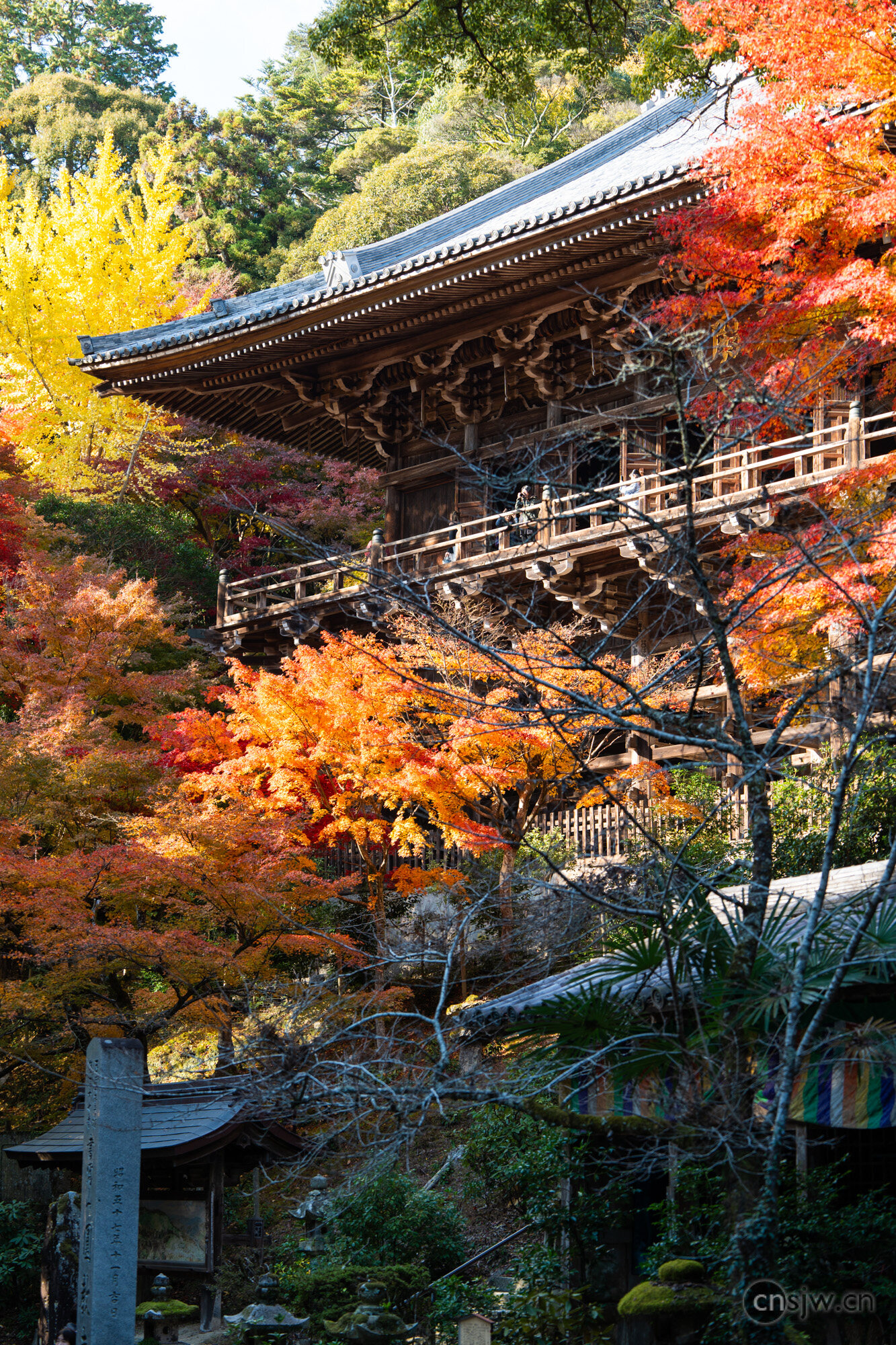
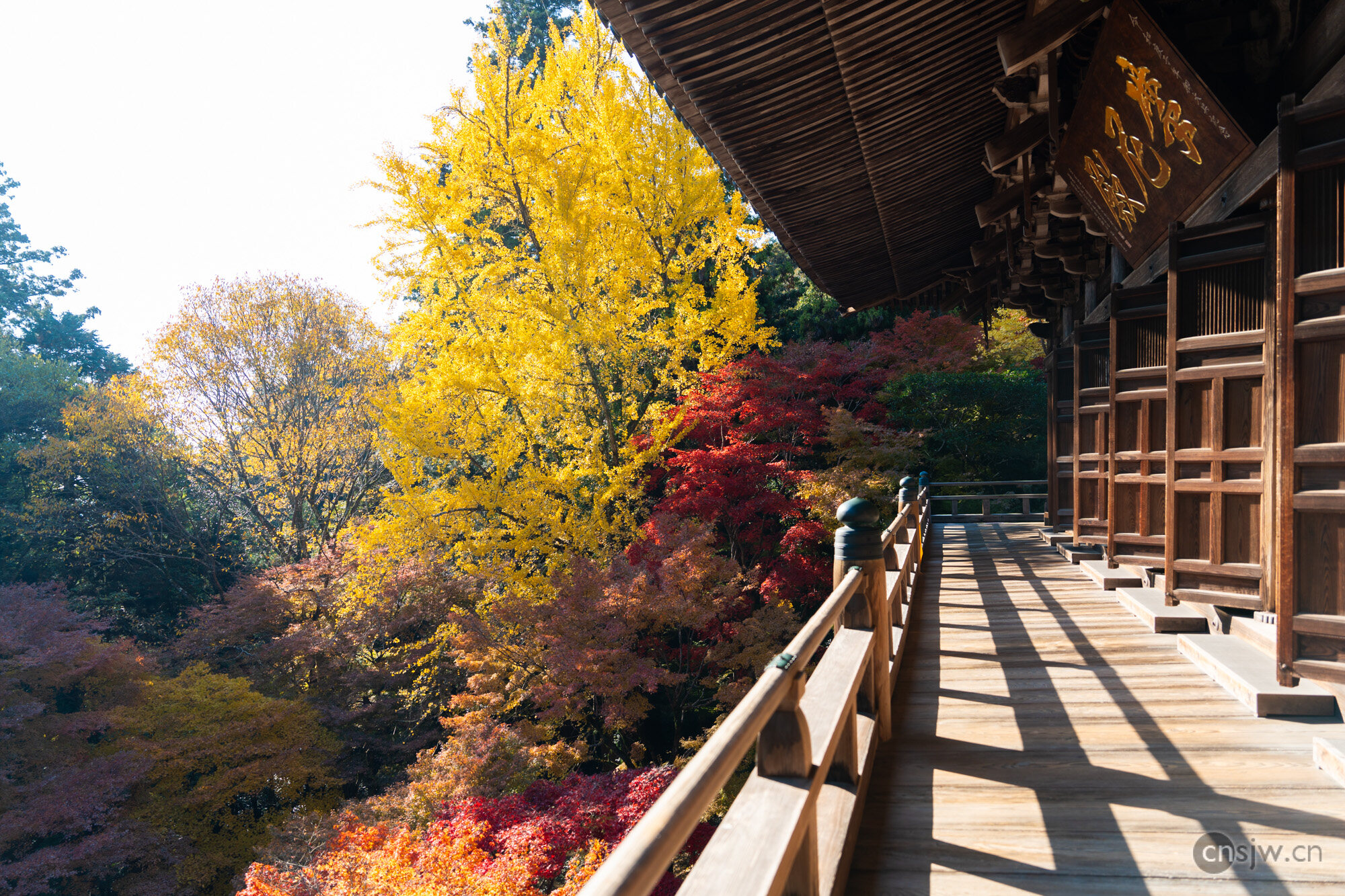
A short walk further brings you to the magnificent Mani-den Hall standing before you. Built upon the expansive terrain of a cliff, the structure rests on a foundation of long pillars and horizontal beams anchored into the slope. It is one of the few places in Japan where you can view a “kakezukuri” (overhanging) architectural style similar to that of Kiyomizu-dera. Looking up from below, utilizing the difference in elevation, the Mani-den appears to float in mid-air, evoking a sense of sacredness and solemnity.
Built in the first year of the Tenroku era (970 AD), the Mani-den enshrines the principal deity, the Six-Armed Cintamani-cakra Avalokitesvara (Nyoirin Kannon). Legend has it that before the hall was constructed, Shoku Shonin witnessed celestial beings worshipping a cherry tree, and he subsequently carved a statue of Kannon directly into this living, rooted tree. Consequently, the Mani-den was built halfway up the rocky mountainside, featuring a distinctive stage-like architectural structure.

Continuing deeper past the rear of the hall leads you to the famous Mitsudo (Three Halls).
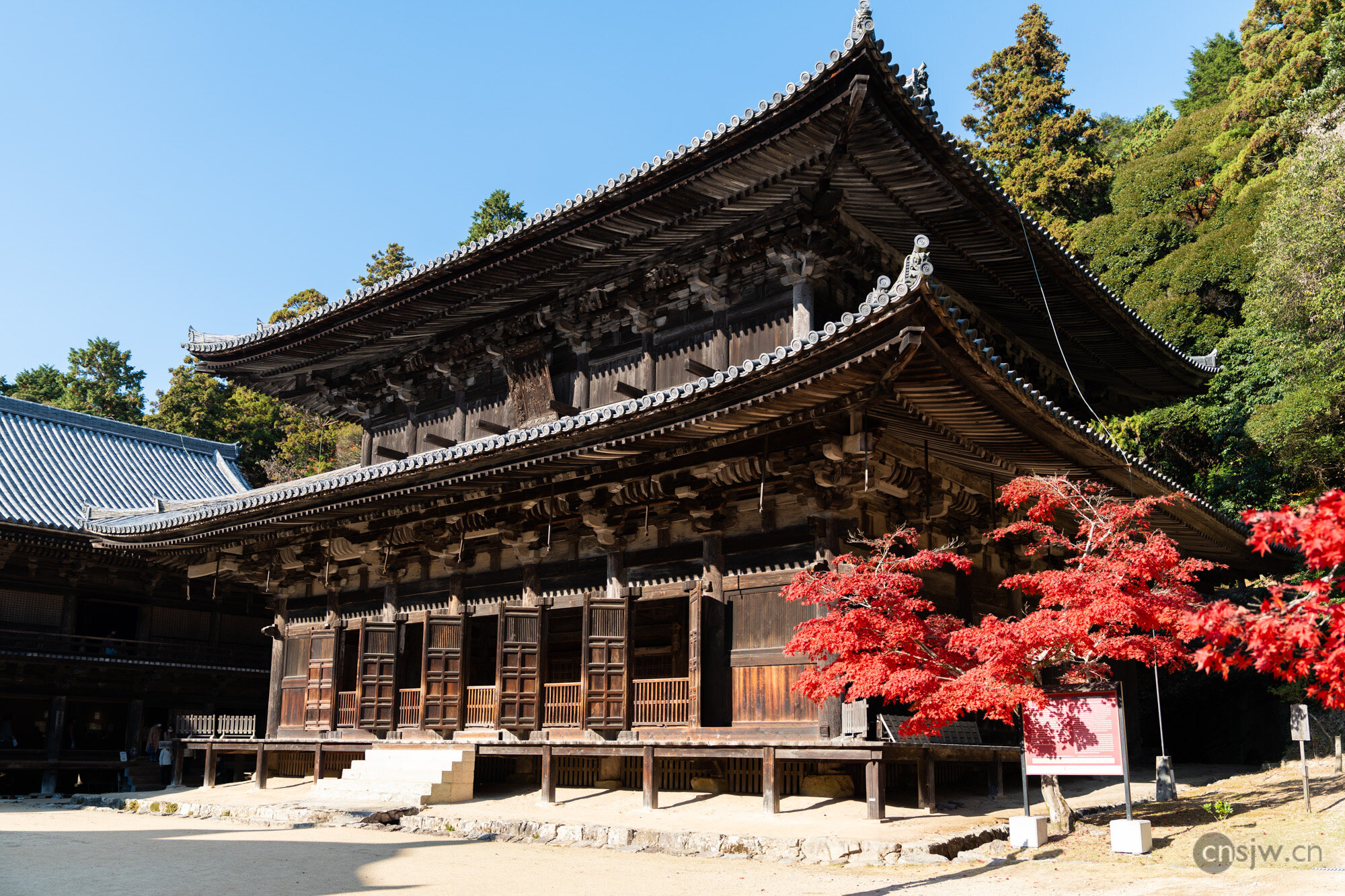
The Mitsudo refers to the Daikodo (Great Lecture Hall), Jikido (Dining Hall), and Jogyodo (Constant Practice Hall), all designated as Important Cultural Properties. These three buildings are arranged in a U-shape. The spectacular vista formed by these mountain temple structures attracts many tourists and professional photographers alike.
The Jikido, serving as a Buddhist hall, is one of the largest two-story wooden structures in Japan and gained fame as a filming location for the movie “The Last Samurai.” Due to its long, horizontal structure, it is also known as the “Chodo” (Long Hall). The second floor houses a free exhibition hall displaying treasures of Engyo-ji. This summer, a special exhibition was held on the first floor featuring temple treasures, including the 23-meter-long picture scroll “Banshu Shosha-san Engi Emaki,” which depicts various scenes from the birth to the passing of the temple’s founder, Shoku Shonin.
Sutra copying experiences and other activities are usually available here as well.

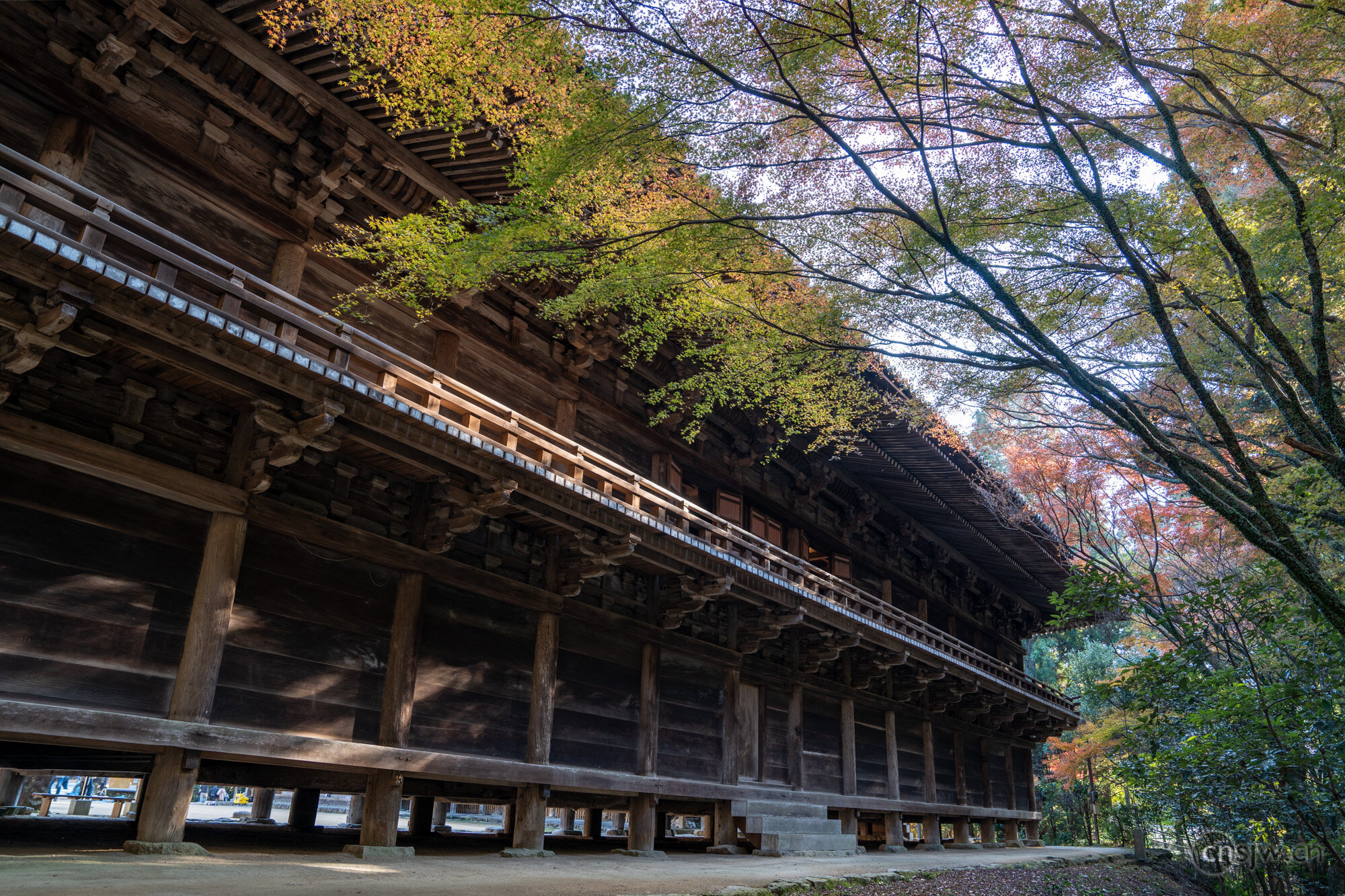
The Daikodo and Jogyodo, located on either side of the Jikido, are not frequently open to the public.

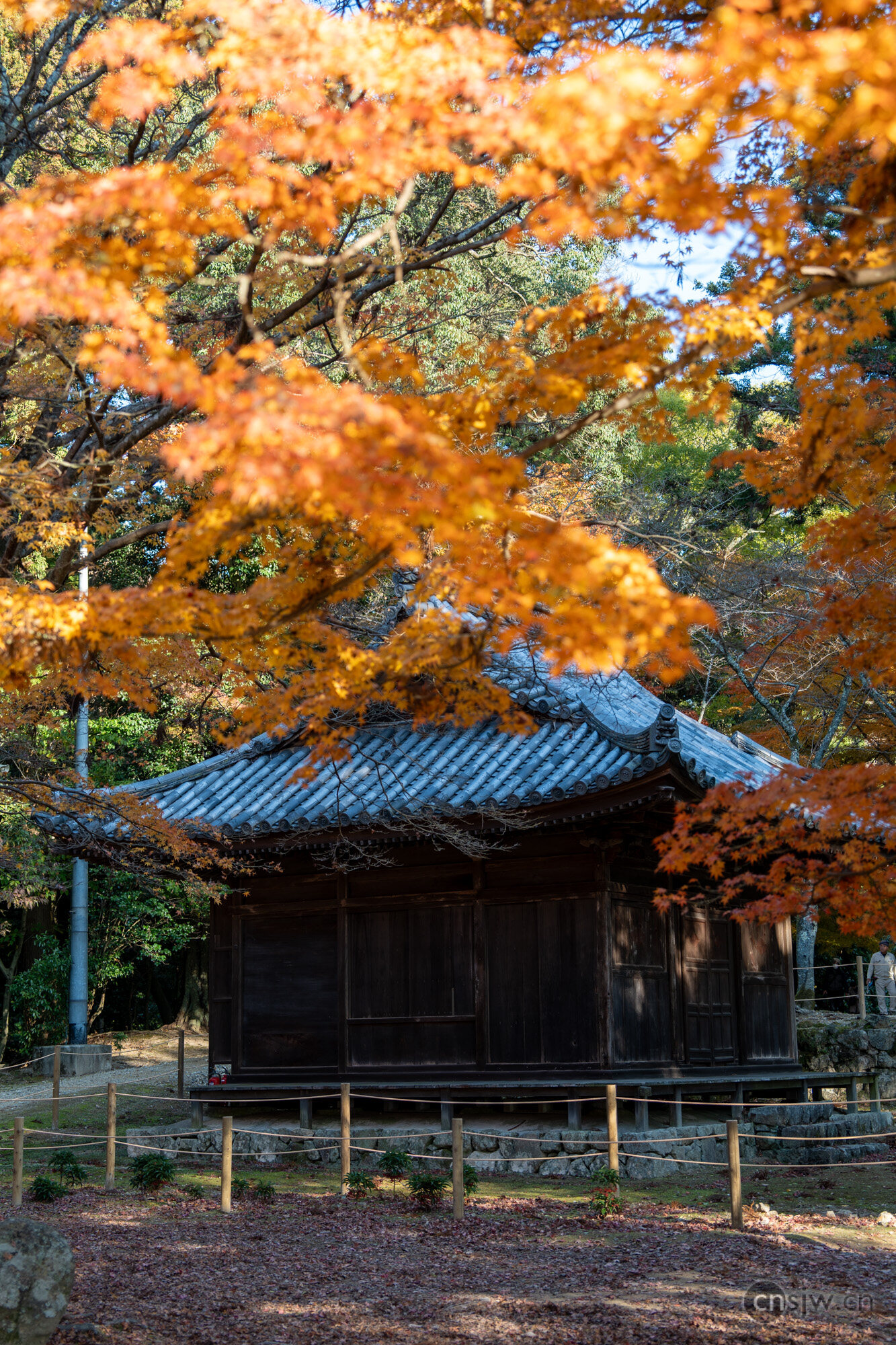
Walking further inward, you will find the Goho-do, Oku-no-in, Observation Park, and Kongo-do. Towering trees surround these areas, their colors resembling nature’s own palette.
Within the temple grounds, there is also Juyo-in, a Michelin one-star vegetarian restaurant, as well as a tea room and light meal service.
A visit to Engyo-ji on Mount Shosha is a journey of purification for both body and mind, allowing you to escape the hustle and bustle of daily life and experience the peaceful power of nature and Buddhism. With its long history, unique architectural style, and beautiful natural landscapes, Engyo-ji stands as a cultural treasure of Himeji City. Whether you are a devout believer or a visitor drawn by its reputation, you can find your own inner peace here.




Support



Read this article on WeChat