
Early on the second day of my trip to Seoul, I visited Gyeongbokgung Palace. Built in 1394, it was the main royal palace of the Joseon Dynasty and is the largest of the Five Grand Palaces. It was actually built slightly earlier than the Forbidden City in Beijing, but in reality, the interior feels quite empty and barren. It was also cold; being the middle of winter, there wasn’t much vegetation around. A walk through takes just over half an hour, and it really pales in comparison to the Forbidden City. Of course, the admission fee is quite cheap—only 3,000 KRW, which is about 18 RMB.
When I arrived, I exited via Gwanghwamun Station. After coming up from the subway, I found myself at Gwanghwamun Square, which features statues of Admiral Yi Sun-sin and King Sejong the Great. To the east is the U.S. Embassy, which is heavily guarded with police stationed outside. To the west are the Seoul Metropolitan Government building and the Ministry of Foreign Affairs, and to the north lies Gyeongbokgung Palace. The plaza in front of Heungnyemun Gate is free to enter; this is where the ticket office is located and where the Royal Guard Changing Ceremony takes place. After buying a ticket and entering, I toured the grounds and came out just in time for the ceremony. The ceremony is held twice daily (except on Tuesdays) at 10:00 AM and 2:00 PM, lasting 15 minutes each. Afterwards, there are activities such as Hanbok experiences. Similarly, at Daehanmun Gate of Deoksugung Palace, the changing ceremony is performed three times daily (at 11:00 AM, 2:00 PM, and 3:30 PM), except on Mondays.
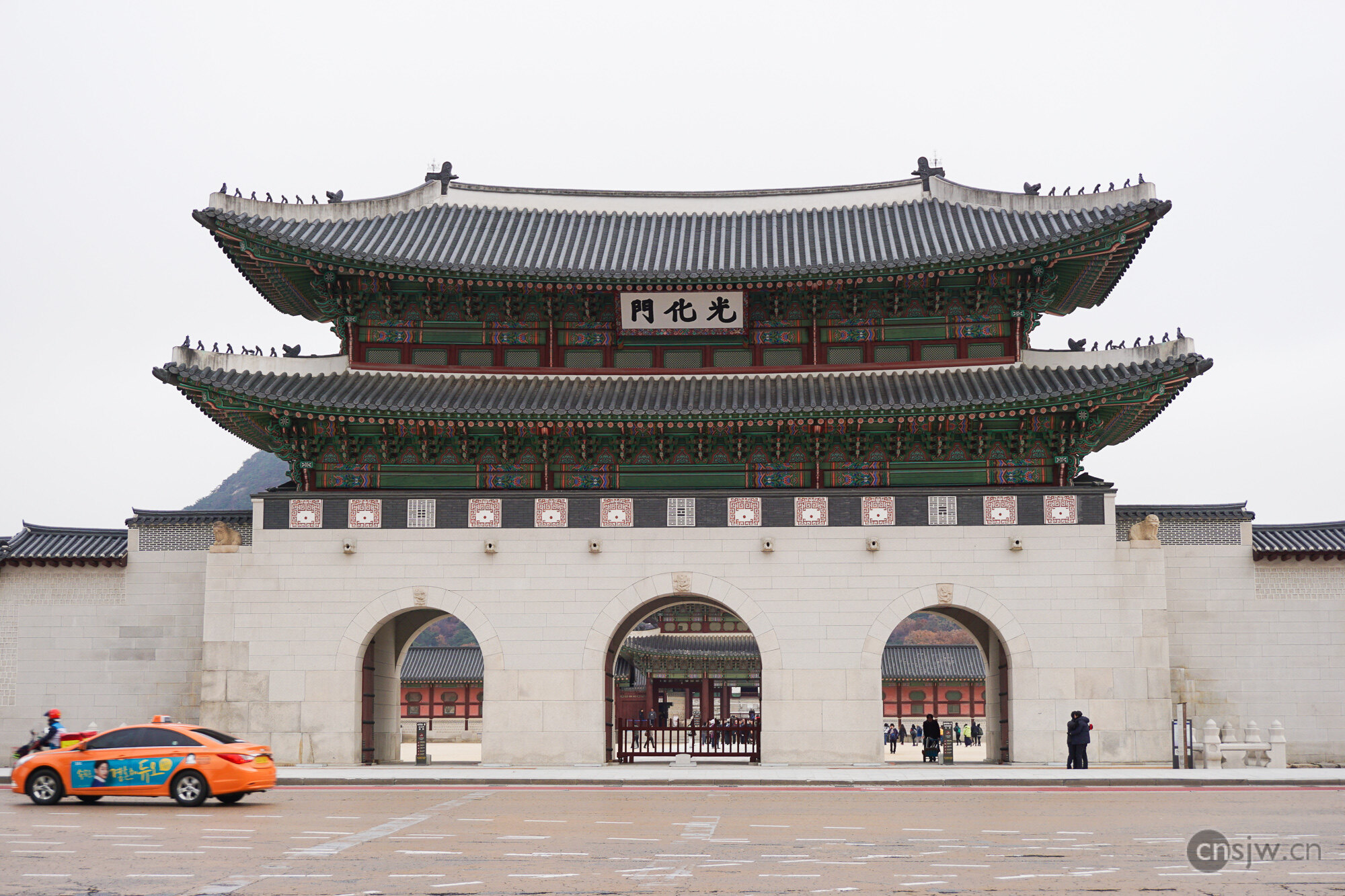
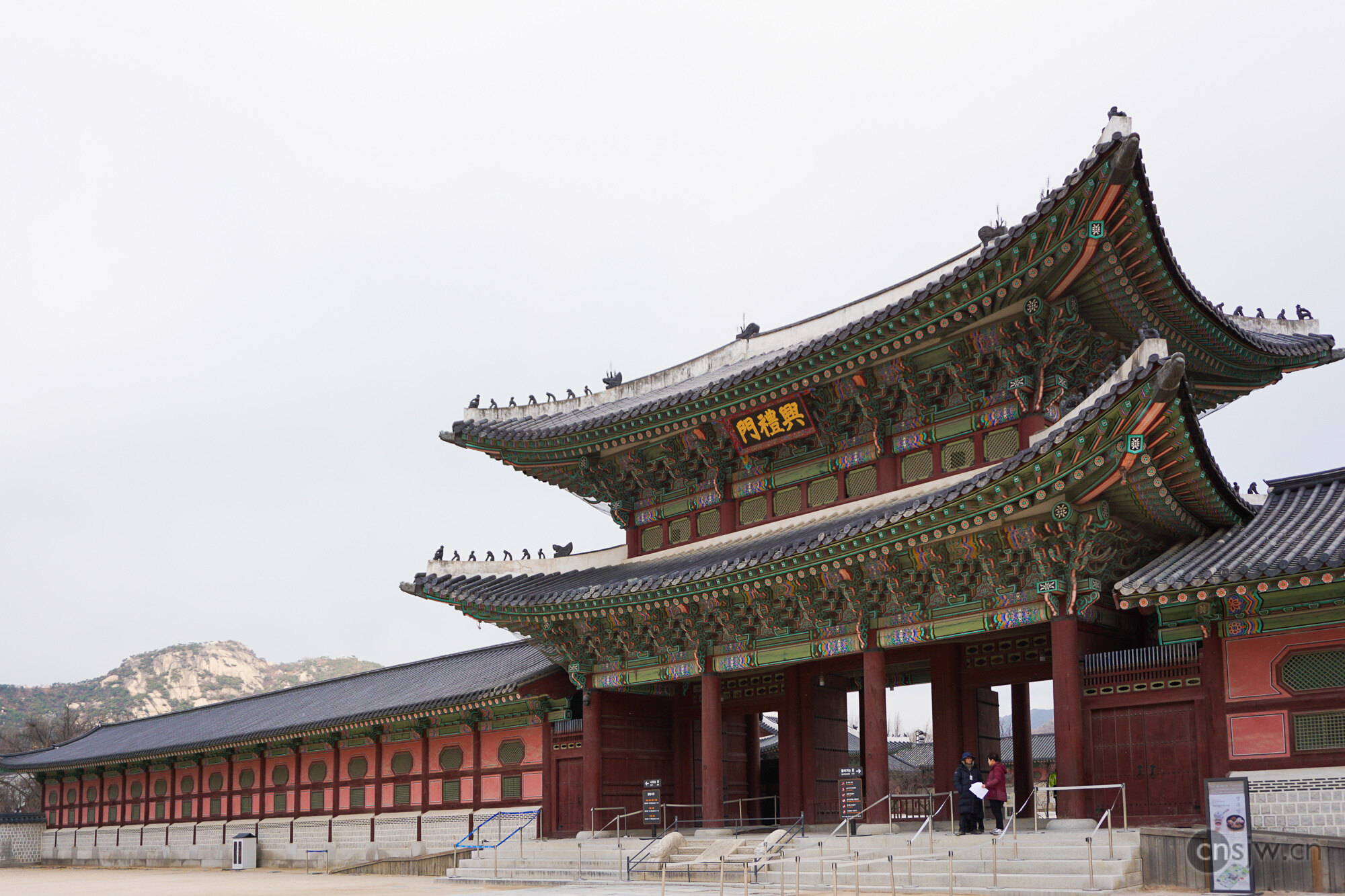
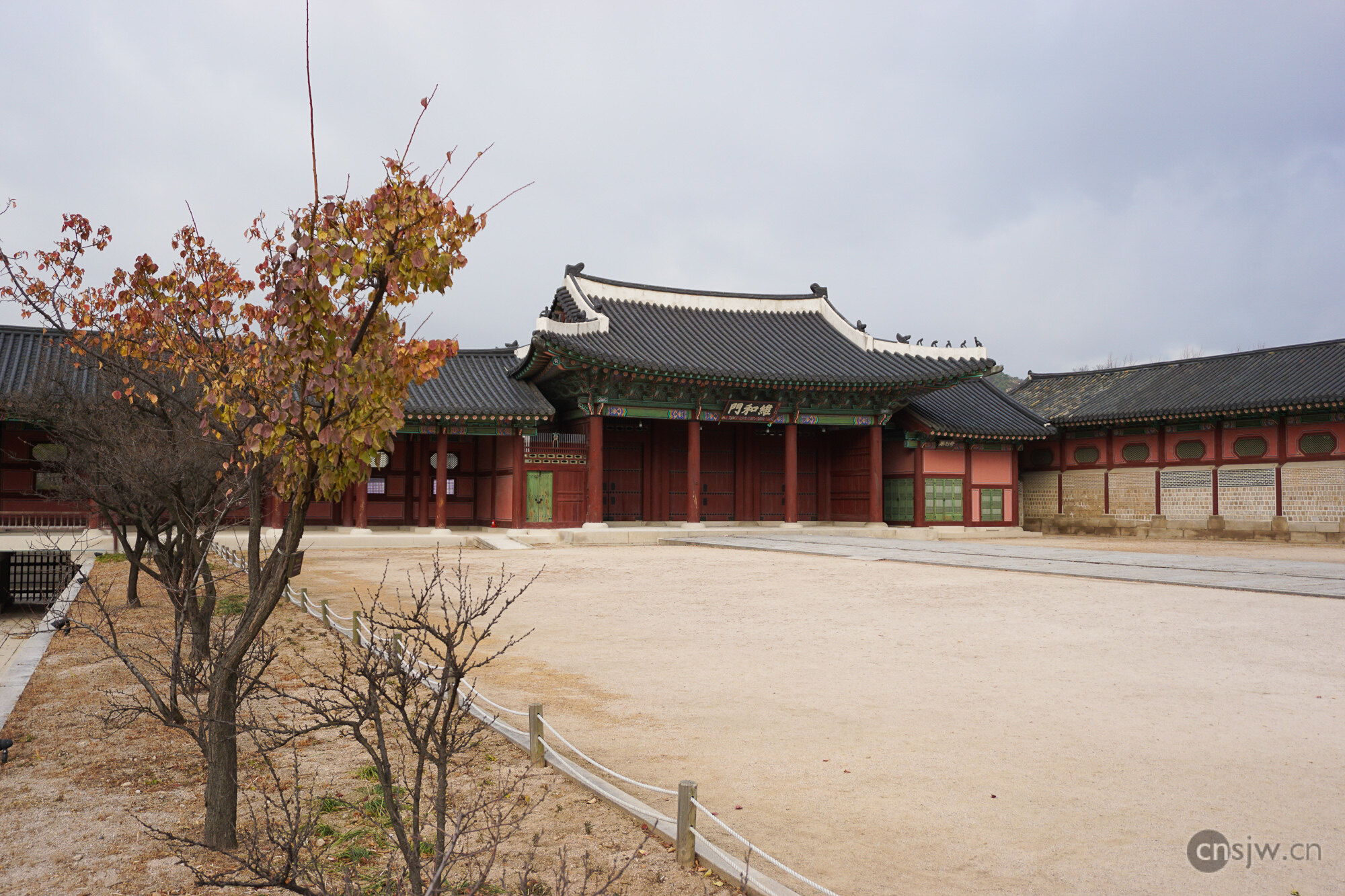
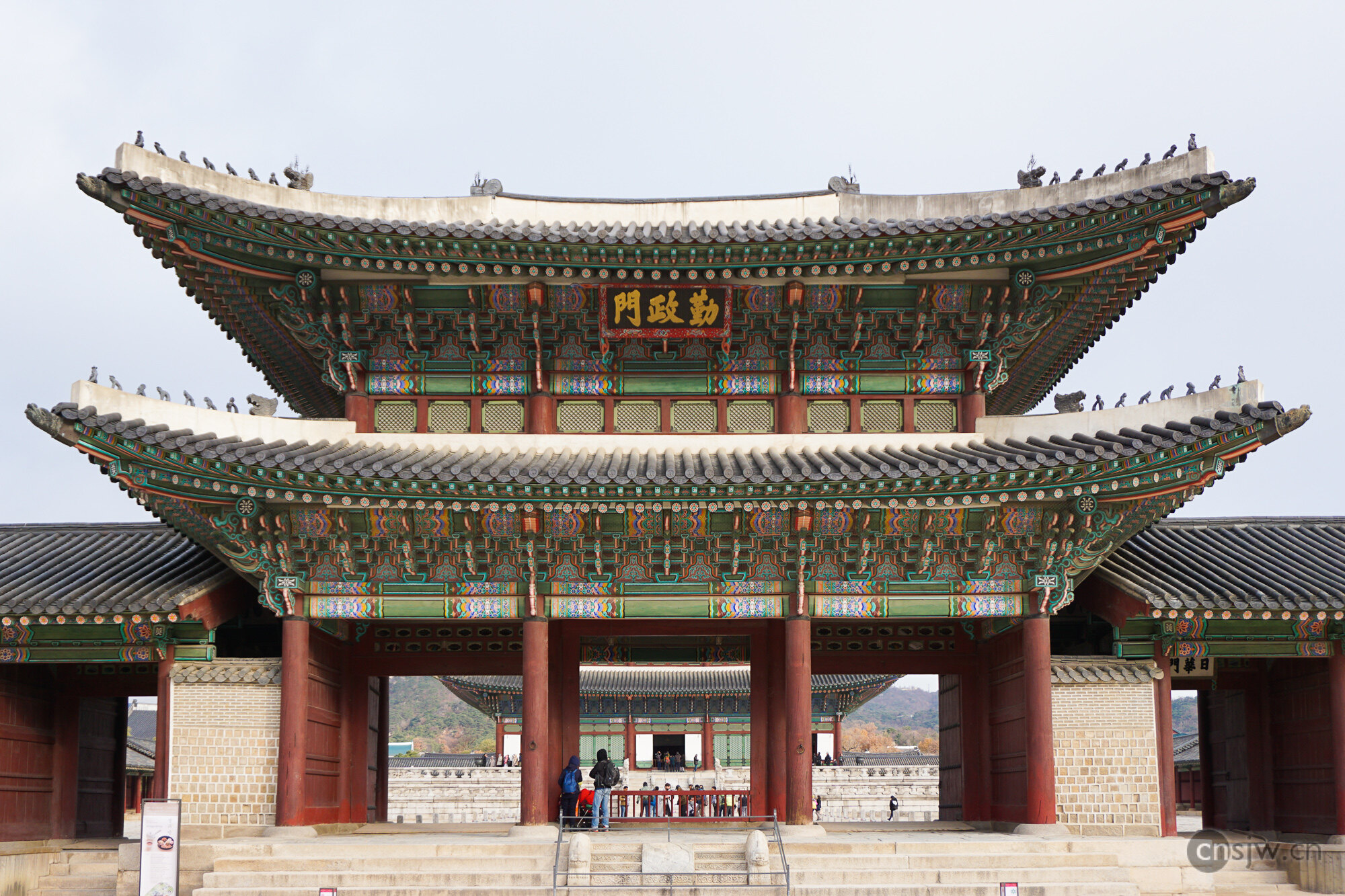
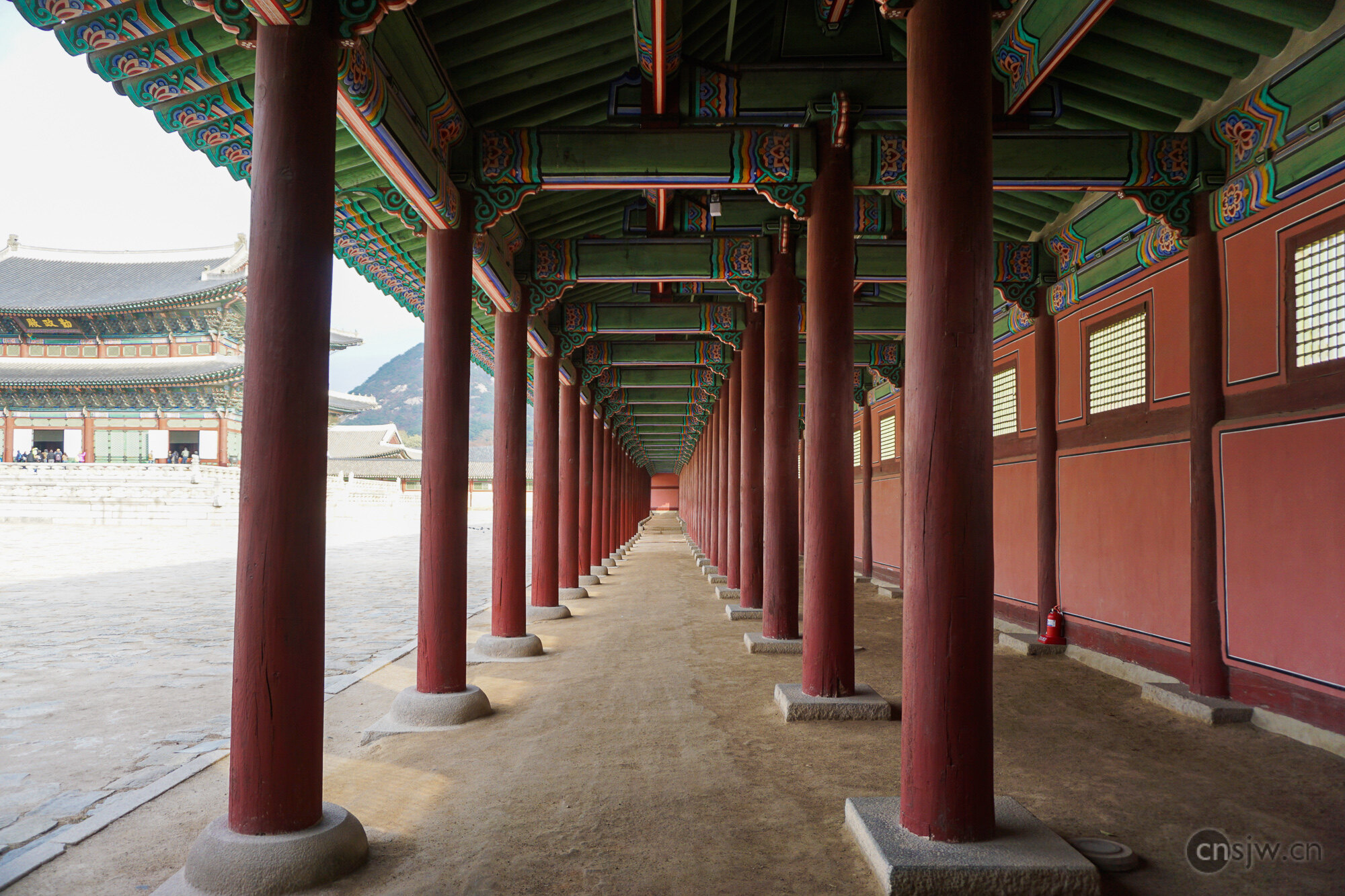
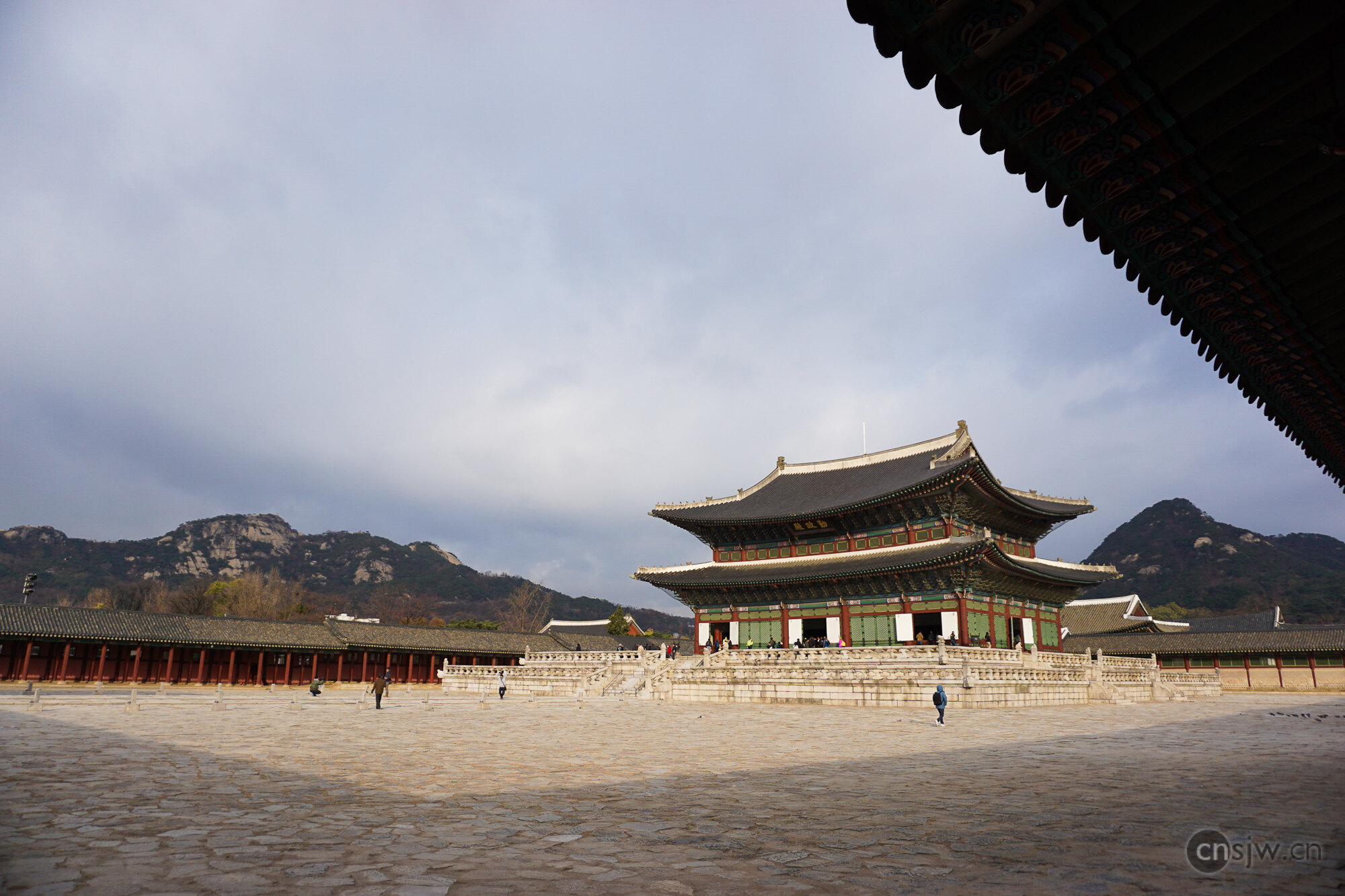
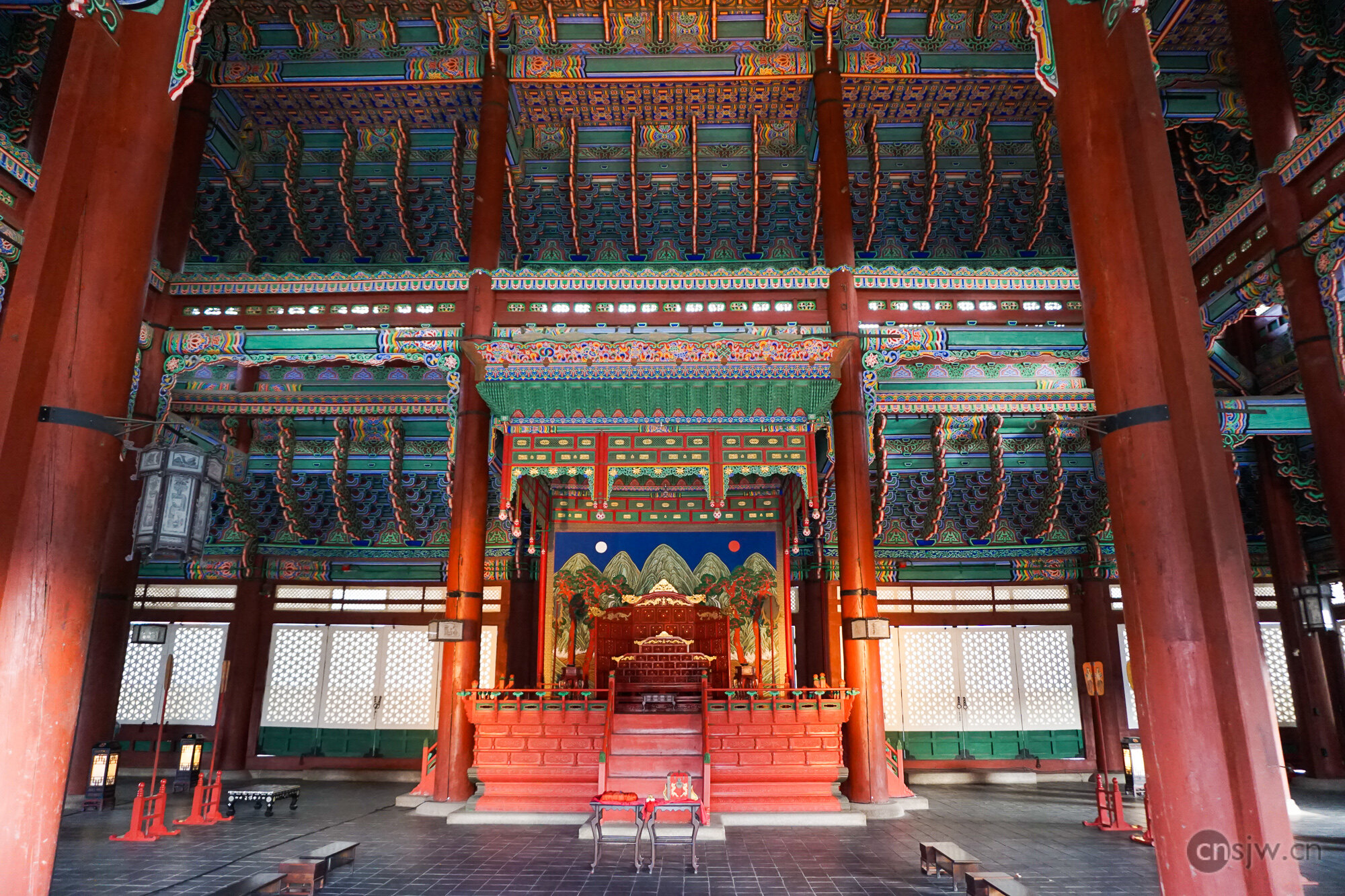

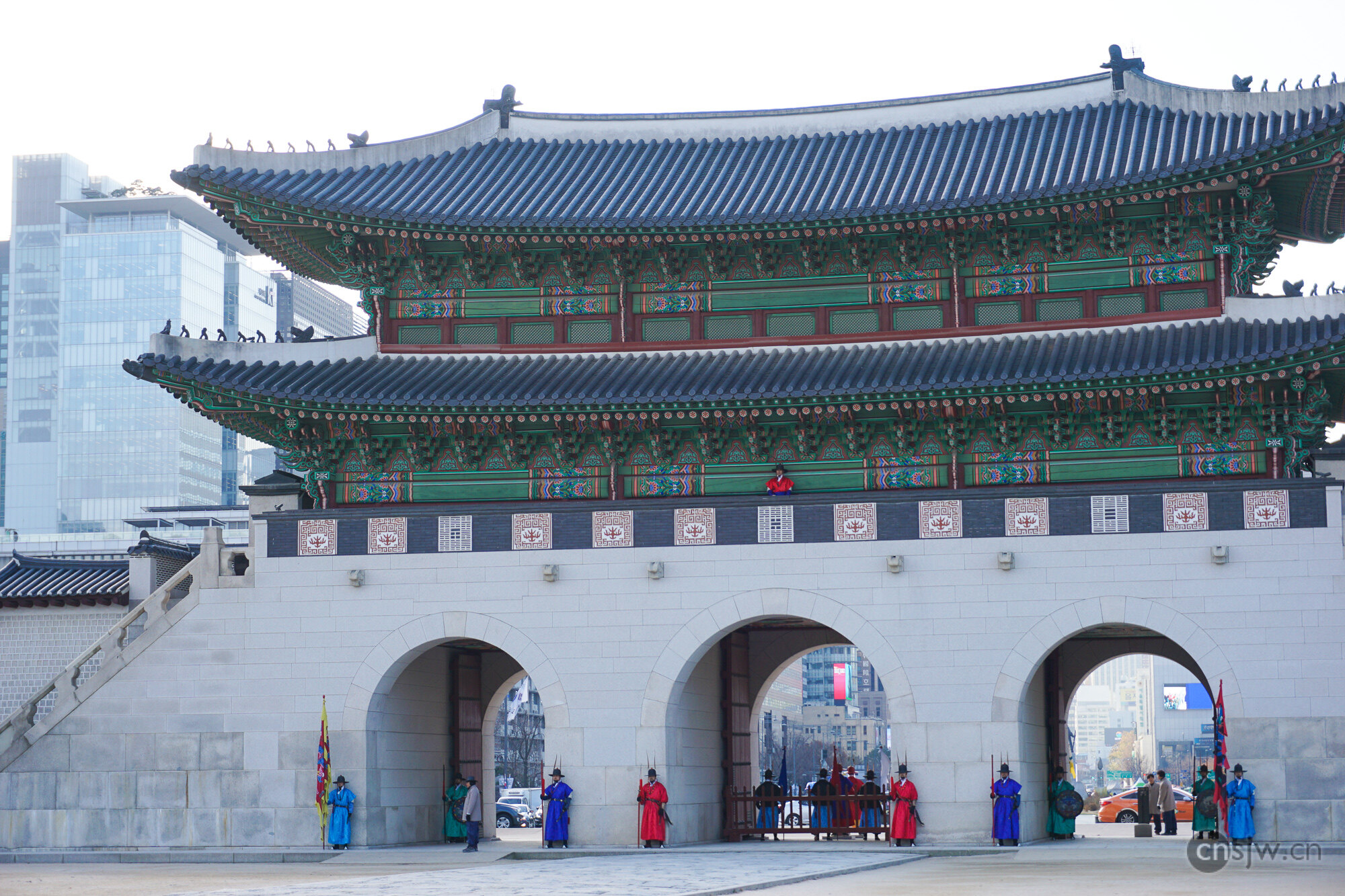
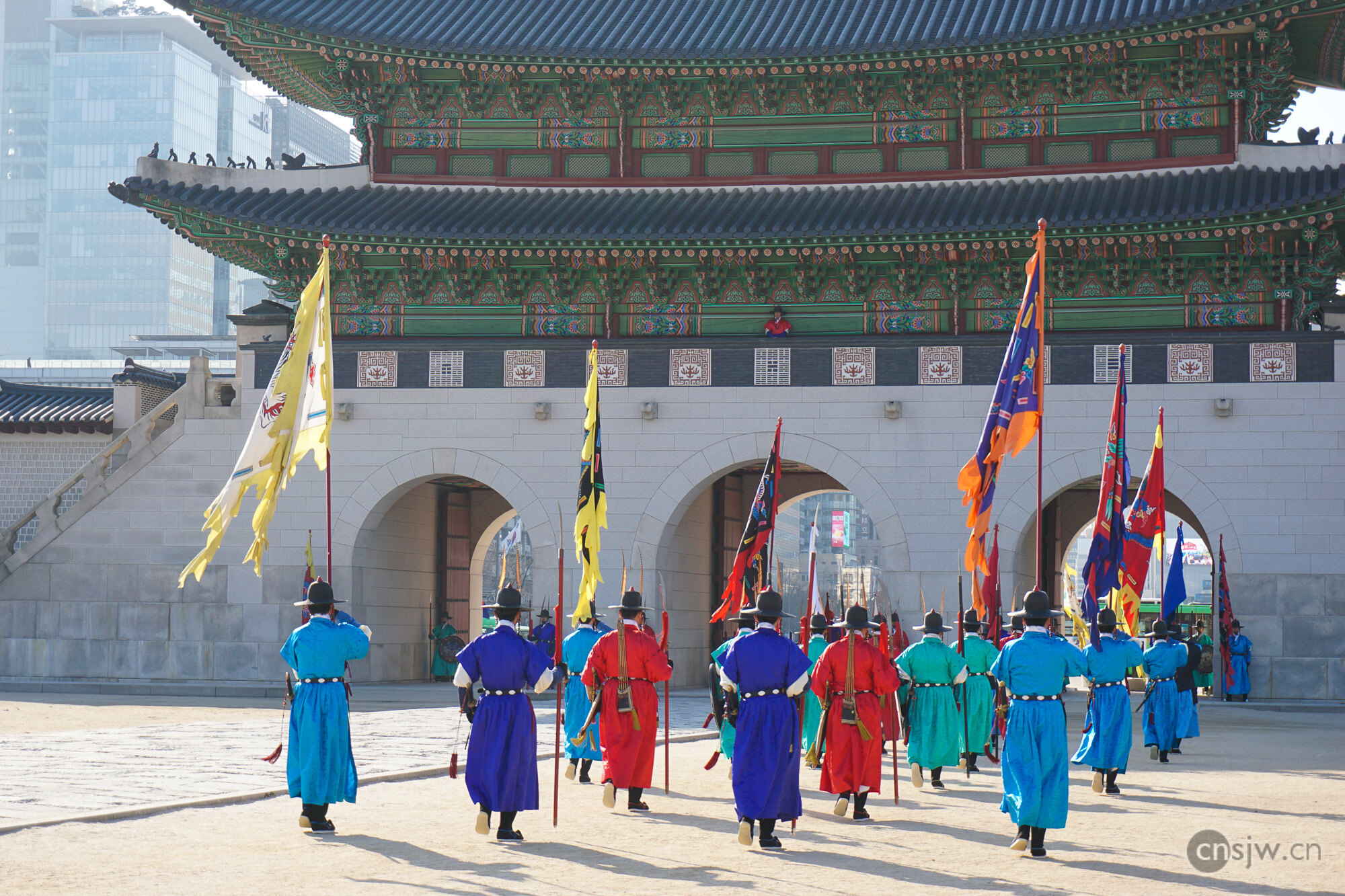
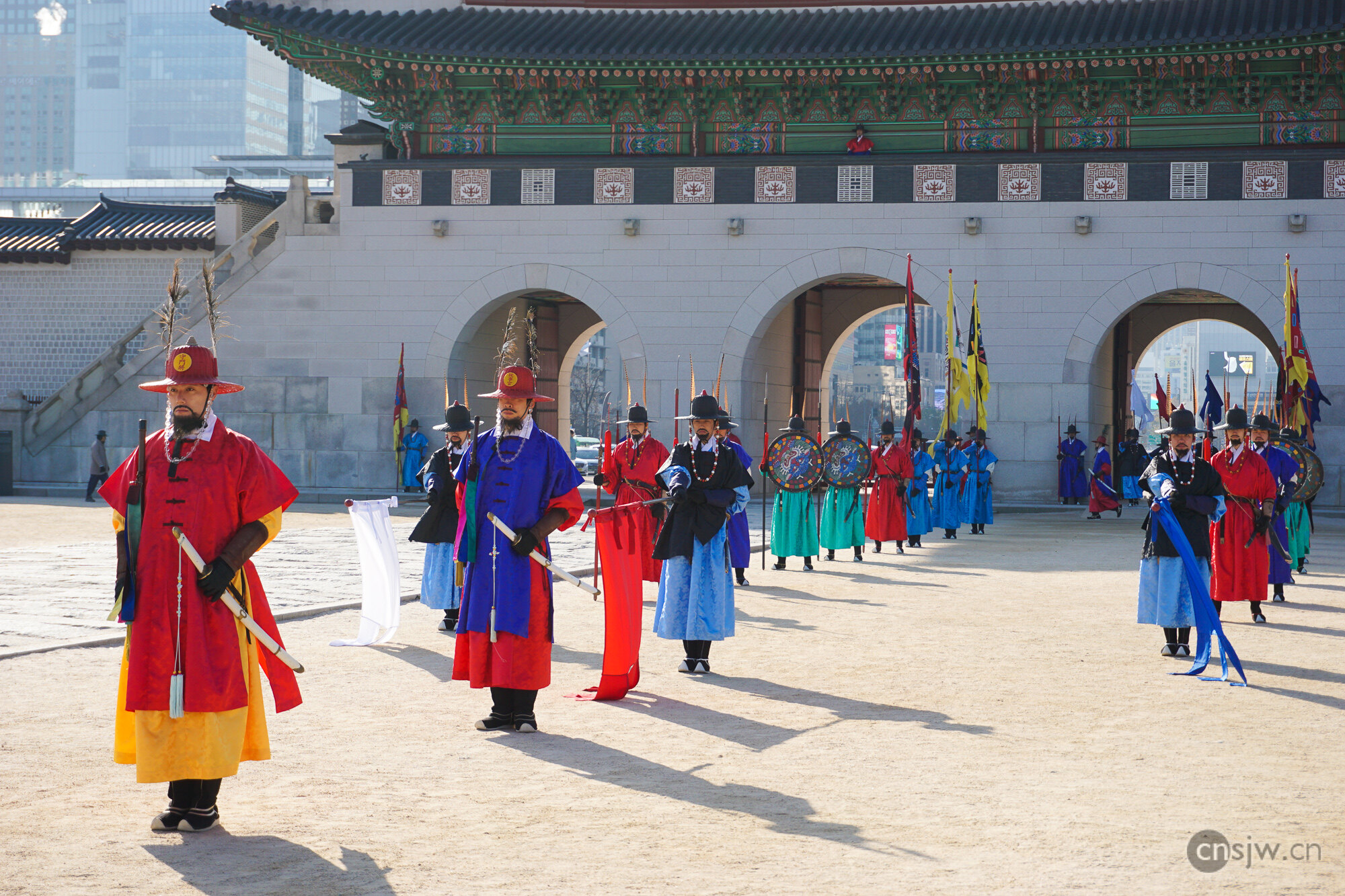
Photos in this post taken with SONY A5100 + 16-50 f3.5-5.6, post-processed in Lightroom.
Below is some history regarding Gyeongbokgung Palace:
In the 27th year of Hongwu of the Ming Dynasty (1394), King Taejo Yi Seong-gye ordered the establishment of the ‘New Capital Palace Construction Directorate’ in Gaegyeong, appointing Jeong Do-jeon, Sim Deok-bu, Kim Jin, Yi Cheom, Yi Jik, and Gwon Jung-hwa to oversee the construction of the palace in Hanyang. During the site selection, the National Preceptor Master Muhak, considering geomancy, advocated for Inwangsan Mountain to the west of Hanyang as the main mountain, with the palace facing east. Jeong Do-jeon and others, considering ritual propriety, advocated for Bukaksan Mountain to the north of Hanyang as the main mountain, with the palace facing south. King Taejo ultimately chose Jeong Do-jeon’s proposal. However, since Bukaksan is not directly due north, Gyeongbokgung adopted an orientation of sitting in the Ren direction and facing the Bing direction (sitting north-northwest). The site of Gyeongbokgung originally housed a palace built by King Sukjong of Goryeo, which was expanded during the reign of King Chungsuk. Kings Sinwoo and Gongyang resided here when they moved the capital to Hanyang. By the founding of the Joseon Kingdom, buildings such as Yeonheungjeon Hall were still intact. However, due to its small size, Yi Seong-gye ordered an expansion based on the ruins of the old Goryeo palace and the construction of new buildings. The name Gyeongbokgung is derived from the Chinese ‘Classic of Poetry, Greater Odes, Already Drunk’: ‘Already drunk with wine, already full of virtue; may the noble man live ten thousand years, and magnify your…Gyeongbok(blessed prosperity).’ Because it is located in the northern part of Seoul, it is also called ‘Bukgwol’ (Northern Palace).
In January of the 28th year of Hongwu of the Ming Dynasty (1395), construction of the new palace began and was preliminarily completed in September of the same year. Named ‘Gungseong’ (Palace City), it included a five-bay main hall, a five-bay Bopyeongcheong Hall, a seven-bay royal bedchamber, three-bay small bedchambers on the east and west, as well as Ommun Gate, Jeonmun Gate, East Tower, West Tower, East and West Corner Towers, corridors, covered walkways, Surabang (kitchen), Saongbang, Sangseosa, Seungjibang, Internal Tea Room, Gyeongheungbu, Jungchuwon, Samgunbu, East and West Storehouses, totaling over 500 buildings. In October of that year, Judge of the Three Offices Jeong Do-jeon was ordered to name the new palace. The palace was named Gyeongbokgung; Ommun became the main gate (later renamed Gwanghwamun); Jeonmun became Geunjeongmun; the main hall was named Geunjeongjeon; Bopyeongcheong became Sajeongjeon; the royal bedchamber became Gangnyeongjeon; and the east and west small bedchambers became Yeonsaengjeon and Gyeongseongjeon. The east and west towers were named Yungmunru and Yungmuru. The surrounding palace walls measured 1,813 paces (1 pace = ancient 6 feet, approx. 2,500m). Outside Gwanghwamun to the east and west were the Two Ministries, Six Boards, and Inspectorate. To the north was Hyeonmumun Gate; due east was Geonchunmun Gate; and due west was Yeongchumun Gate.
In the late years of King Taejo, the First Strife of Princes occurred in Joseon, and the capital was moved back to Gaegyeong, using the old Goryeo palace Suchanggung as the main palace for a considerable period. After King Taejong ascended the throne, intense debate ensued over whether to keep Gaegyeong as the capital, return to Hanyang, or build a new capital at the foot of Moaksan to the west. Finally, divination was used: Hanyang received two auspicious signs and one ominous sign, while Gaegyeong and Moaksan each received one auspicious and two ominous signs. Thus, the decision was made to return the capital to Hanyang. For the next two hundred years, Gyeongbokgung served as the main palace of the Joseon Dynasty.
On September 14, 1553 (32nd year of Jiajing), a massive fire broke out at Gyeongbokgung, destroying Gangnyeongjeon, Sajeongjeon, and Heumgyeonggak pavilions. Treasures, books, royal edicts of queens dowager, clothing, and cultural artifacts accumulated over generations were all burned. King Myeongjong, Queen Consort Sim, and Queen Dowager Yun (Queen Munjeong) relocated to Changdeokgung. In 1592, the Imjin War broke out. On April 28, Chungju fell, and King Seonjo hastily fled the palace on April 30, accompanied by Minister Yun Du-su, traveling day and night to the northwest. That day, rioters rose up in Seoul, first burning the government offices of Jangryewon and the Board of Punishments, which held records of public and private slaves. They then entered the royal treasury to loot treasures and set fire to Gyeongbokgung, Changdeokgung, and Changgyeonggung, burning ‘without remainder’ the treasures of past dynasties, books stored in Munmu-ru and Hongmungwan, the Annals of previous kings stored in Chunchugwan, the ‘Seungjeongwon Ilgi’ (Daily Records of the Royal Secretariat), and historical documents and drafts from previous eras.
After the Imjin War ended, the Joseon royal family returned to Seoul, using the residence of Prince Wolsan (elder brother of King Seongjong) as a temporary palace, renaming it Gyeongungung. Due to the vast number of halls in Gyeongbokgung and the massive scale of reconstruction required, and because the Joseon economy was devastated after two invasions, the dynasty lacked the resources to restore Gyeongbokgung. Consequently, Changdeokgung, originally a detached palace, was used as the main palace, leaving Gyeongbokgung abandoned for approximately 270 years. During the reigns of Gwanghaegun and Sukjong, rebuilding Gyeongbokgung was discussed but abandoned due to insufficient funds. During King Yeongjo’s reign, court assemblies were occasionally held at the former site of Geunjeongjeon.
In 1865, to enhance the prestige of King Gojong, who had ascended the throne from a collateral line, and to restore royal authority, Gojong’s father, Heungseon Daewongun, ordered the reconstruction of Gyeongbokgung. The newly rebuilt Gyeongbokgung covered 126,000 pyeong (57.75 hectares), consisting of 509 buildings with a total of 6,808 rooms. In 1868, the main palace of the Joseon Dynasty was moved from Changdeokgung to here.
On November 5, 1873 (10th year of Gojong), Daewongun stepped down, and Gojong began his personal rule. However, on December 10, a gunpowder explosion occurred at Sunhuidang Hall in Gyeongbokgung, where Queen Dowager Jo resided, burning over 400 rooms including inner halls, gates, and corridors. Daewongun was suspected of orchestrating the explosion. Afterwards, Gojong escorted the Queen Dowager to reside at Changdeokgung. The following February, Queen Min gave birth to the first son (Sunjong) at Gwanmulheon Pavilion in Changdeokgung. The subsequent crown prince investiture ceremony was also held at Injeongjeon Hall in Changdeokgung. On November 4, 1876 (13th year of Gojong), another fire broke out at Gyotaeyeon Hall in Gyeongbokgung, destroying over 830 rooms. The royal seals of the Joseon kings, the seal of the crown prince, the jade treasures and books of queens dowager throughout history, as well as the calligraphy and relics of past kings stored in the inner halls, were all destroyed.
After the First Sino-Japanese War, Queen Min advocated using Russian influence to check and counter Japan, drawing hostility from the Japanese side. On the night of August 20, 1895 (lunar calendar; October 7, 1895, solar calendar), Miura Goro, the Japanese minister to Korea, commanded members of the Japanese garrison disguised as ronin to break out the confined Daewongun, force him into a palanquin, and storm into Gyeongbokgung through Gwanghwamun Gate, searching everywhere for Queen Min. Captain of the Royal Guards Hong Gye-hun and Minister of the Royal Household Lee Gyeong-jik were killed while trying to stop the mob. With the Japanese garrison surrounding the palace walls, Queen Min could not escape and was ultimately murdered by the Japanese in Okhoru Pavilion within Geoncheonggung, the queen’s residence in the northern part of Gyeongbokgung. The mob summoned the crown prince and court ladies to identify Queen Min’s body, then doused it in kerosene and burned it. This assassination is historically known as the Eulmi Incident. Thereafter, Gojong became a puppet controlled by pro-Japanese Prime Minister Kim Hong-jip and was placed under house arrest by the Japanese garrison. On November 27 of that year, Gojong’s loyalist forces planned to enter Gyeongbokgung through Chusaengmun Gate and the North Wall Gate to escort him to safety at the American Legation in the Jeong-dong area near Gyeongungung, as several Western legations were located there, making it difficult for the Japanese to approach and harm him. However, the plan was leaked, and the participants were punished; this is historically known as the ‘Chusaengmun Incident.’
After the failure of the ‘Chusaengmun Incident,’ fearing poisoning by the Japanese, Gojong could barely eat and survived only on canned food smuggled in by American missionaries. Orchestrated by Royal Noble Consort Eom, eunuch Kang Seok-ho, attendant Jong Hong-u, internal official Choi Yeong-ha, Captain of the Royal Guards Lee Hak-gyun, and interpreter Kim Hong-ryuk of the Russian Legation, on December 28, 1895 (February 11, 1896, solar calendar), Gojong and the crown prince exploited a loophole where Japanese guards did not search court ladies’ palanquins, escaping to the Russian Legation in Royal Noble Consort Eom’s palanquin. The royal family never returned to reside in Gyeongbokgung again. In 1897, the main palace was moved to Gyeongungung. In 1907, upon Sunjong’s accession, the main palace was moved to Changdeokgung.
After the annexation of Korea by Japan in 1910, the Japanese Government-General of Korea designated Deoksugung as the residence of the abdicated Emperor Emeritus Gojong (Deoksugung Yi Taewang) and Changdeokgung as the residence of Sunjong (Changdeokgung Yi Wang), turning Gyeongbokgung into government land. Starting in 1911, the Japanese Government-General began demolishing buildings within Gyeongbokgung. Initially, fourteen buildings in the rear palace and eastern palace areas (such as Jaseondang, the crown prince’s residence) were dismantled, transported to Busan, reassembled as exhibits for the 5th Anniversary of Annexation Expo, and later shipped to Japan. Other buildings were sold to Japanese conglomerates or private buyers. In 1917, a fire at Changdeokgung destroyed the Daejojeon bedchamber area. The Government-General then dismantled Gangnyeongjeon (king’s bedchamber), Gyotaeyeon (queen’s bedchamber), and nearby buildings like Gyeongseongjeon and Injigak in Gyeongbokgung, moving them to Changdeokgung to replace the lost quarters. Subsequently, most remaining buildings in Gyeongbokgung were demolished, leaving only the ten most significant structures: Gwanghwamun, Geonchunmun, Yeongchumun, Sinmumun (Hyeonmumun), East Sipjagak (Southeast Corner Tower), Geunjeongmun, Geunjeongjeon, Sajeongjeon, Gyeonghoeru, and Hyangwonjeong. Furthermore, the Japanese Government-General Building was constructed in front of Geunjeongmun, on the original site of Hongnyemun Gate. Since the completion of the Government-General Building blocked the view of the palace from the street, it was regarded by Koreans as a symbol of historical humiliation. Demolition of the remaining structures was halted by Yanagi Muneyoshi, a Japanese admirer of Korean art, but Gwanghwamun, located in front of the Government-General Building, was relocated and rebuilt on the east side of Gyeongbokgung.
After Korea regained independence, restoration work on Gyeongbokgung began. Gwanghwamun was reconstructed in 1968 in front of the Government-General Building (having previously been moved to the site of the current National Folk Museum). Demolition of the Japanese Government-General Building began in 1995 and was completed in 1996. Restoration of Gwanghwamun began in 2006, moving it 14.5 meters south to its original location from 100 years prior, with reconstruction completed in 2010. Palaces demolished during the Japanese occupation, such as Jaseondang, Geoncheonggung, and Taewongung, have also been restored and rebuilt.
from Wikipedia

Support



Read this article on WeChat