
Rua do Cunha
After leaving The Venetian, just a short walk to the side brings you to Taipa’s famous food street—Rua do Cunha. Rua do Cunha is a narrow pedestrian street, only about 5 meters wide and roughly 100 meters long, lined with numerous souvenir shops, snack stalls, and dessert shops. After buying a few postcards here, we took a taxi to the famous Ruins of St. Paul’s.
Rua Correia da Silva
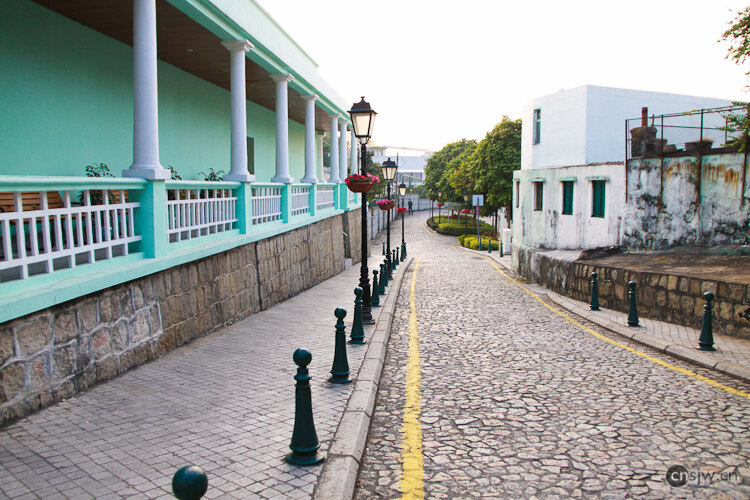
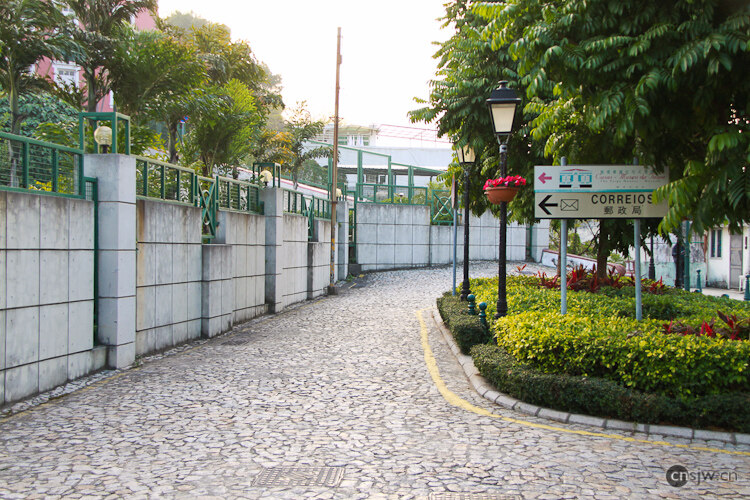
Street next to Rua do Cunha
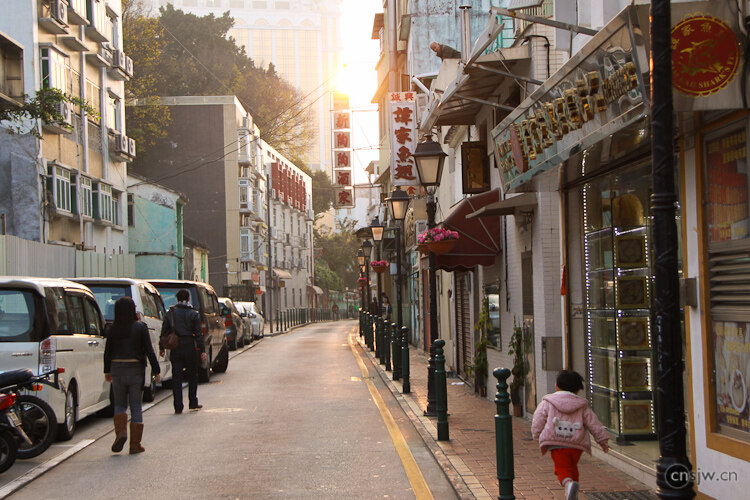
Alley beside Rua do Cunha
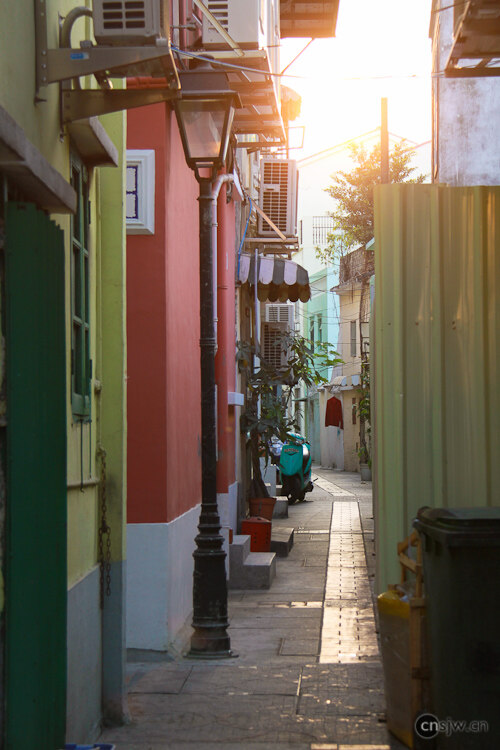
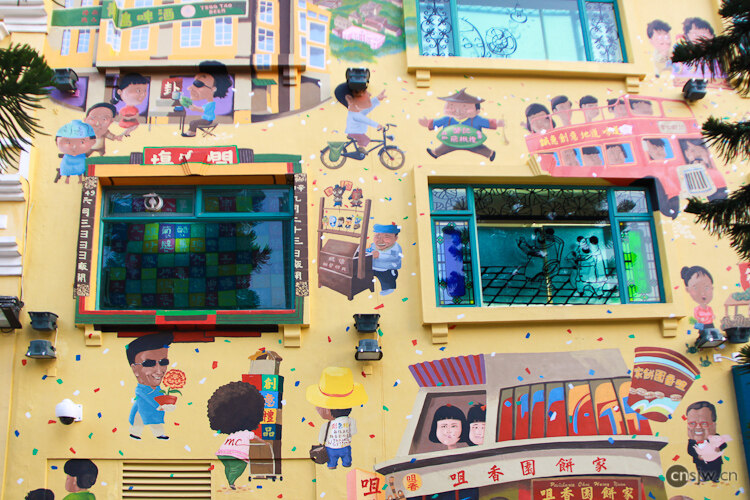
Mural at Chui Heong Yuen
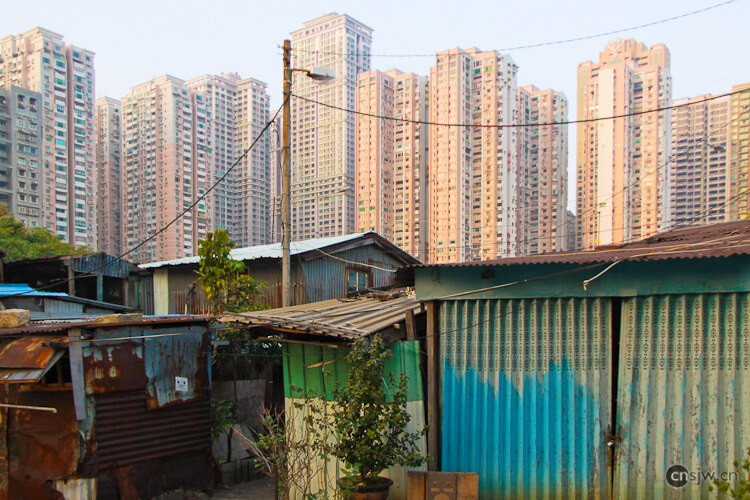
Old and New Macau
Taking a taxi in Macau is basically a last resort when you’re too tired to walk… The starting fare for Macau taxis is HKD 13 for the first 1,600 meters, and then HKD 1.5 for every subsequent 230 meters. Since almost all casinos under various companies offer free shuttle buses between each other, as well as free shuttles from casinos to ferry terminals and border crossings, if you’re familiar enough with Macau, you can practically get around without using any paid public transportation at all.
Ruins of St. Paul’s
Rua de São Paulo—the entire street is lined with souvenir shops. This area is essentially the busiest part of Macau, and it’s incredibly crowded. Of course, it’s still not as packed as the casinos… Along the way, we had egg tarts from Chui Heong Yuen, HKD 7 each; they tasted virtually identical to those from A-1 Bakery…
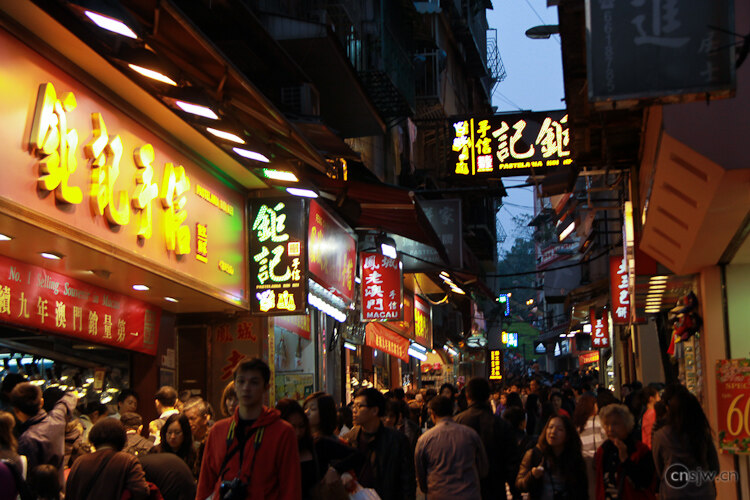
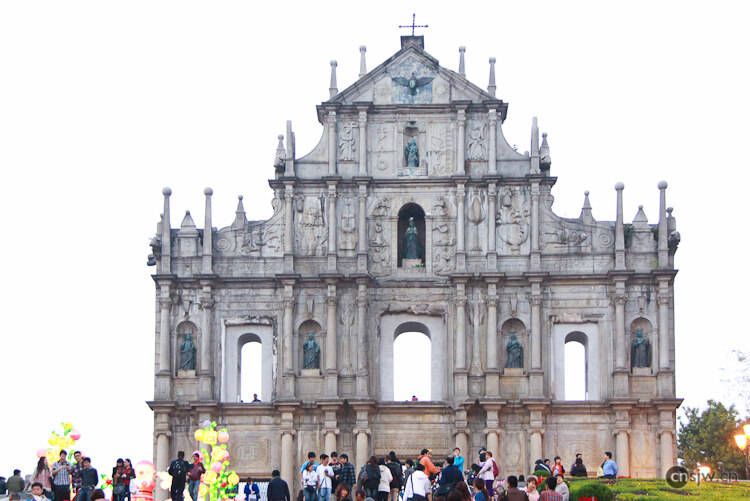
Walk to the end of Rua de São Paulo, and you’ll reach the Ruins of St. Paul’s:
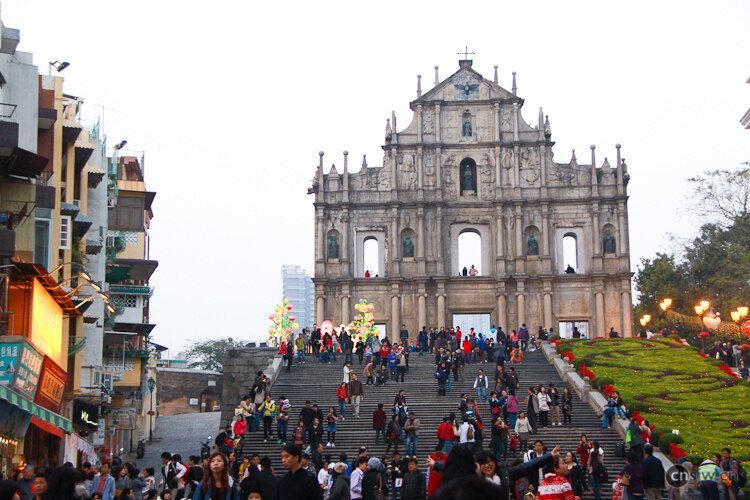
The Ruins of St. Paul’s, officially known as the Ruins of St. Paul’s Cathedral, are the remains of the façade of the Church of Mater Dei (St. Paul’s Church). After a fire in 1835, only this front wall remained standing… It was successfully inscribed as a UNESCO World Heritage Site in 2005.
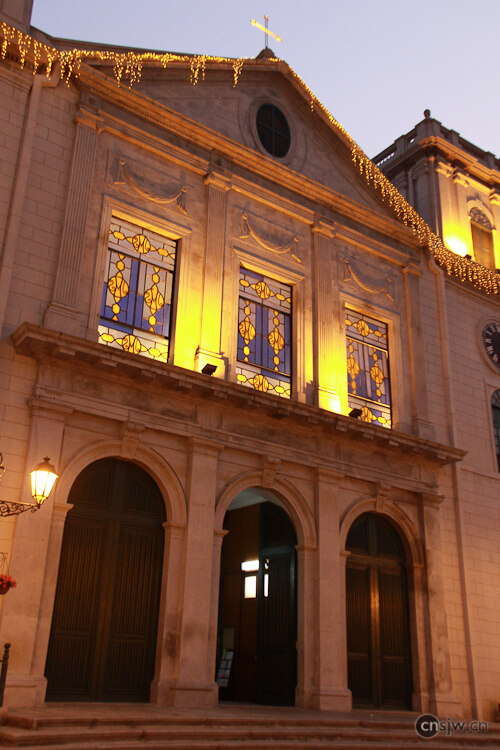
Walking along, we soon arrived at the Cathedral (also known as the Sé Cathedral), which has a history of over 400 years. Originally built in 1576, it was rebuilt in 1849. We went inside and listened for a while, but realized everything was being said in Portuguese, which we couldn’t understand at all, so we had to leave…
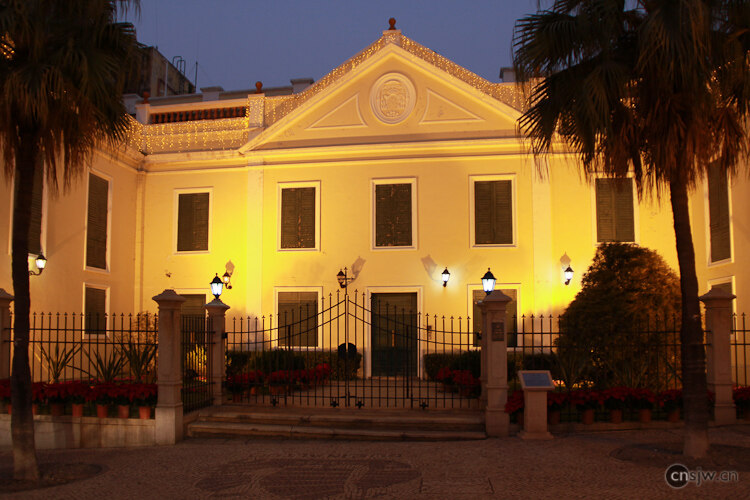
Next to the church is St. Joseph’s Diocesan School, which has multiple campuses mostly built adjacent to churches. It has the most campuses and the largest total campus area of any school in Macau.
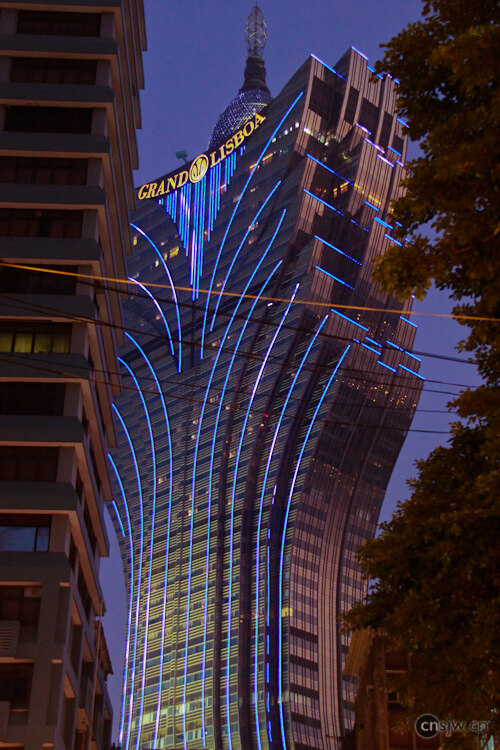
Walking all the way back to the ferry terminal to catch our boat, we passed the famous Grand Lisboa building—what an ugly building…
To sum up briefly, Macau’s service industry is highly developed, and Mandarin proficiency among restaurant and shop staff is generally better than in Hong Kong.
A trip to Macau basically revolves around these few activities:
Shopping: Brands and prices are pretty much the same as in Hong Kong, but with far fewer crowds.
Casinos: Worth a visit and a try, but keep an eye on your wallet~~~
Historic District: Macau’s historic district is quite small because Macau itself used to be tiny—in 1850, Macau covered only 2.78 km2, but thanks to land reclamation, it now spans 29.5 km2. Walking from A-Ma Temple all the way to the Ruins of St. Paul’s will basically let you see the entire historic district. You can pick up a free map of Macau at the tourist information center right after clearing customs; there’s a green route marked on it that follows this exact path. It gets pretty crowded on holidays, but visiting on weekdays should be quite pleasant. Spend two days exploring, and you’ll have pretty much seen all of Macau.


Support