
First post of 2021… Time to catch up on a few travel blogs from 2020. It’s been quite a while, so my memory is a bit fuzzy…
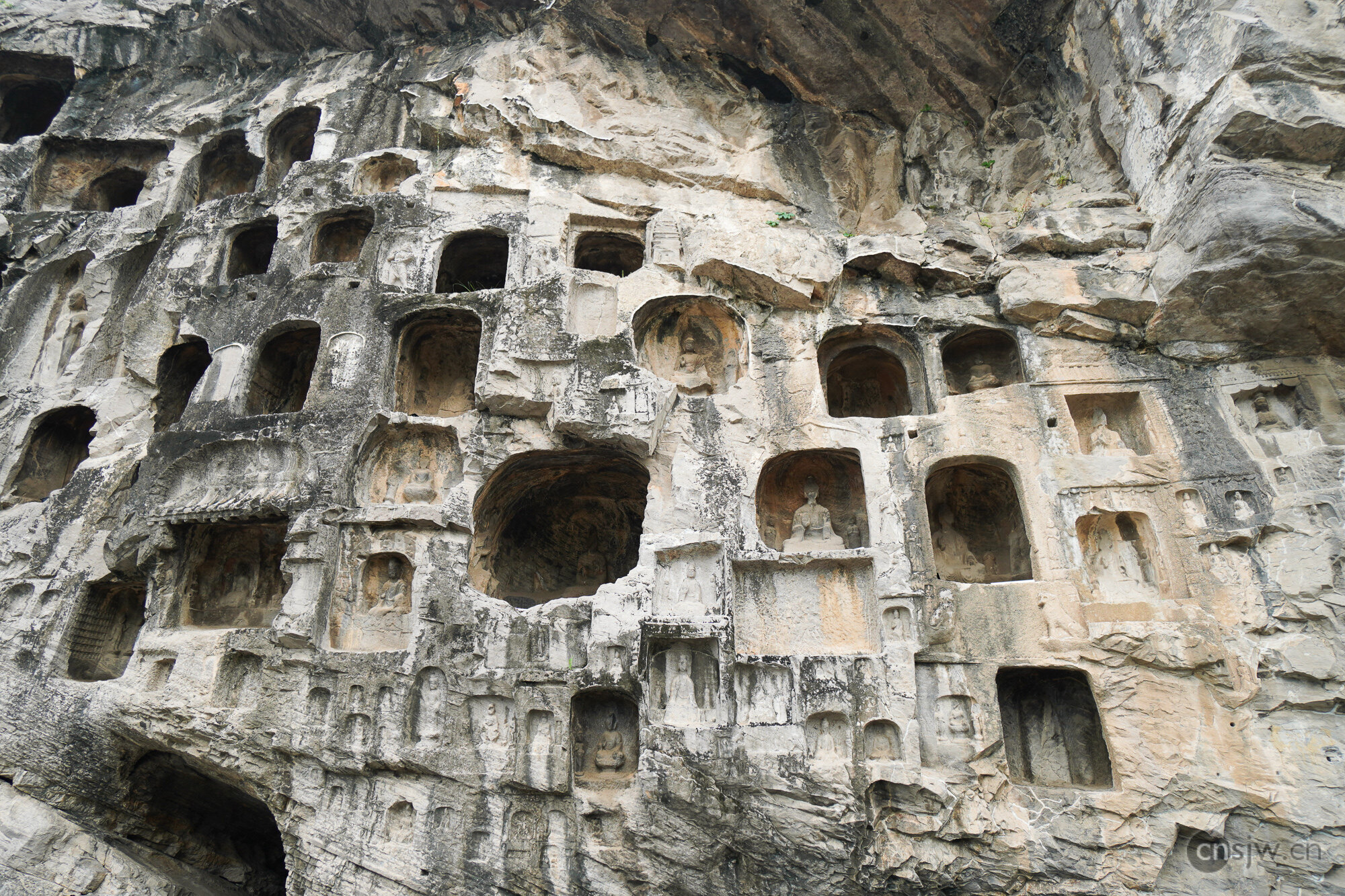
Overall, I had a very good impression of Luoyang during this trip using the “Fly at Will” pass. The city is quite commercially developed. The Longmen Grottoes are located in Luoyang, a bit far from the city center, but fortunately, ride-hailing services here are very affordable. The scenic area covers a vast expanse along both banks of the Yi River, with carvings on the cliffs of Longmen Mountain on the west bank and Xiangshan Mountain on the east bank. Excavation primarily took place over more than 400 years from the Northern Wei to the Northern Song dynasties. Today, there are still over 2,100 niches and more than 100,000 statues remaining, most of which are on Longmen Mountain, making it the largest collection of grottoes in China.
The Longmen Grottoes are one of China’s three famous treasure houses of stone carving art and are hailed as one of the world’s greatest treasure houses of classical art. Along with the Mogao Caves in Dunhuang (Gansu), the Yungang Grottoes in Datong (Shanxi), and the Maijishan Grottoes in Tianshui (Gansu), they are known as the Four Great Grottoes of China, all of which have been listed as World Cultural Heritage sites.
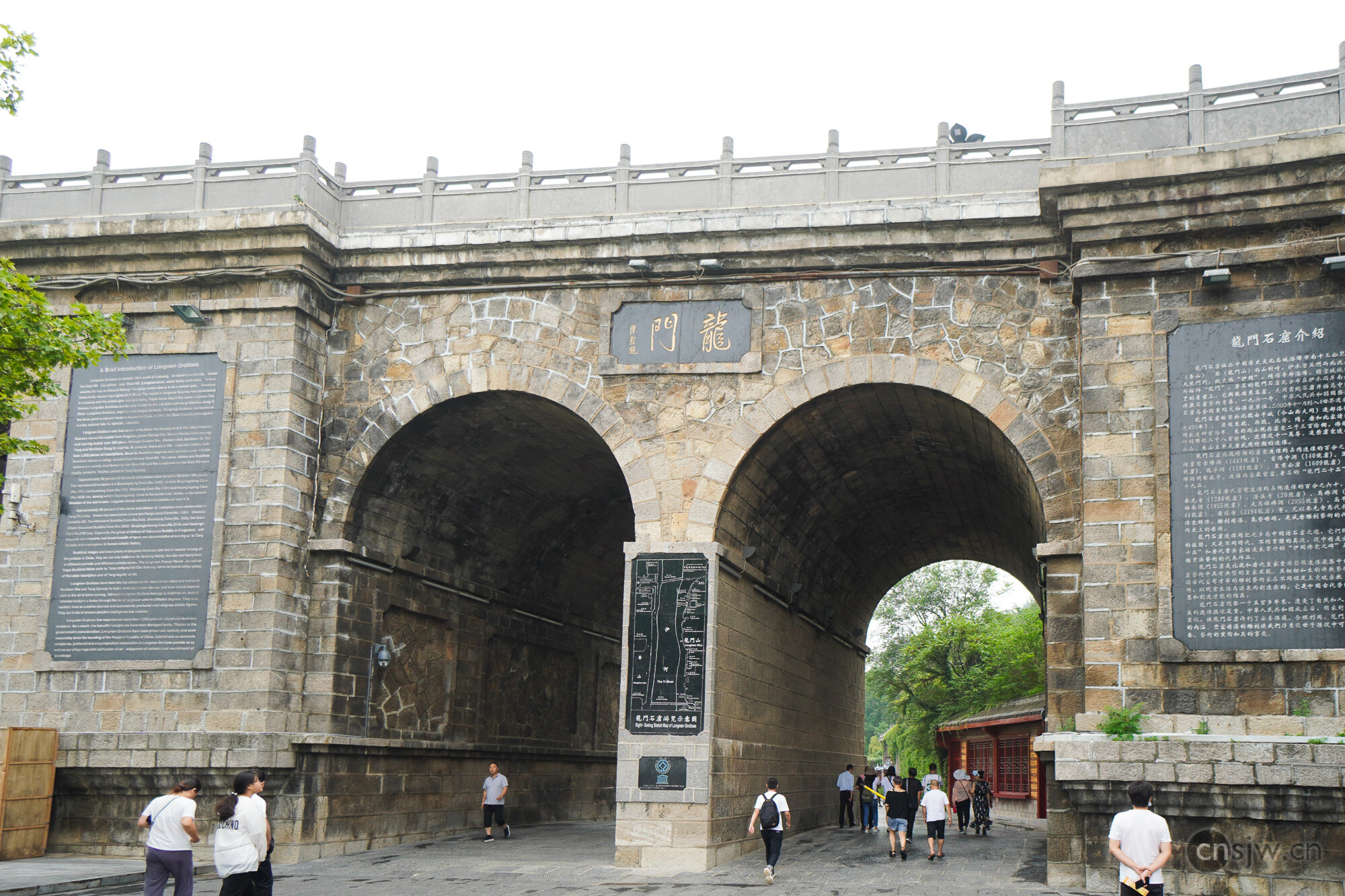
The scenic area has a Northeast Gate and a Northwest Gate, located on opposite sides of the river. The walking route through the area is essentially unidirectional. It is recommended to enter through the Northeast Gate, where there is a service center for luggage storage and a large commercial zone. However, the occupancy rate of shops seems low, and local specialty products and related merchandise are somewhat lacking. Upon entering the scenic area, you arrive at the Longmen Bridge; passing through it marks the beginning of your journey through the grottoes.
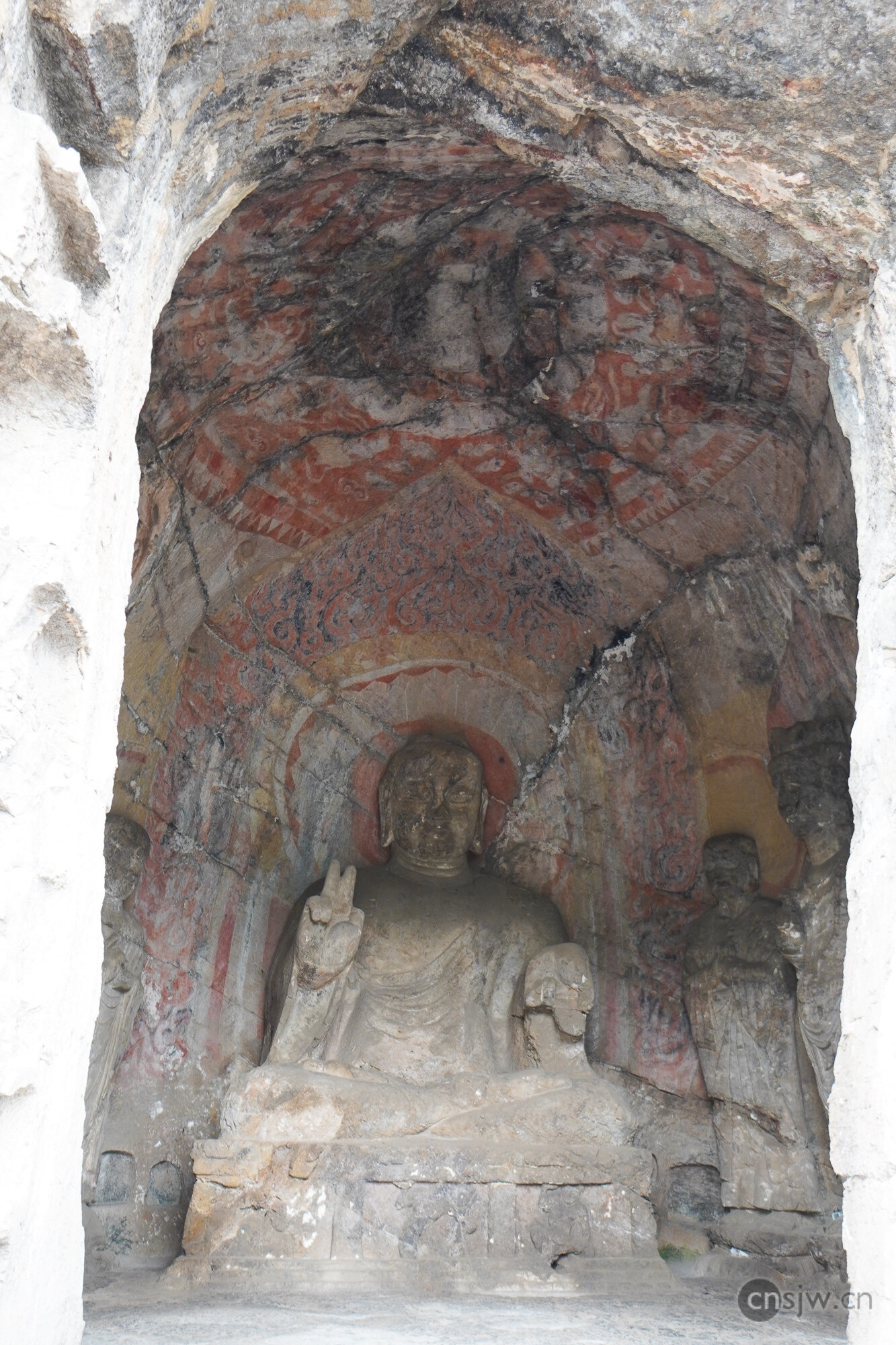
According to the “Book of Wei,” the excavation of the Longmen Grottoes began after that of the Yungang Grottoes. During this period, the Northern Wei unified the north, and Buddhism, an imported religion, became the spiritual pillar of ideological rule. To control the Central Plains region, in the 18th year of Taihe (494 AD), Emperor Xiaowen moved the capital from Pingcheng (present-day Datong, Shanxi) to Luoyang. In 499, Emperor Xiaowen passed away, and Emperor Xuanwu ascended the throne. In the early Jingming era (500 AD), Emperor Xuanwu ordered the carving of stone statues at Longmen (formerly known as Yique). Subsequent repairs and additions were made during the Eastern and Western Wei, Northern Qi and Northern Zhou, Sui, Tang, Five Dynasties, Northern Song, and Ming dynasties. Among these, the excavation activities during the Northern Wei and Tang dynasties were the largest in scale, spanning as long as 150 years.
Since their construction, the Longmen Grottoes have suffered severe man-made theft and destruction. The Buddhist persecution movement during the reign of Emperor Wuzong of Tang brought disaster upon the grottoes. Travelogues and historical records from the late Qing dynasty and early Republic of China document serious theft of statues at that time. Furthermore, when the Republic of China government relocated its capital from Nanjing to Luoyang, the construction of roads at the foot of West Longmen Mountain resulted in the blasting and destruction of numerous foothill niches. Due to wartime chaos and lack of management, the statues at Longmen Grottoes were frantically looted from the 1930s to the 1940s, with many heads, steles, and reliefs acquired by Japanese and American antique dealers.

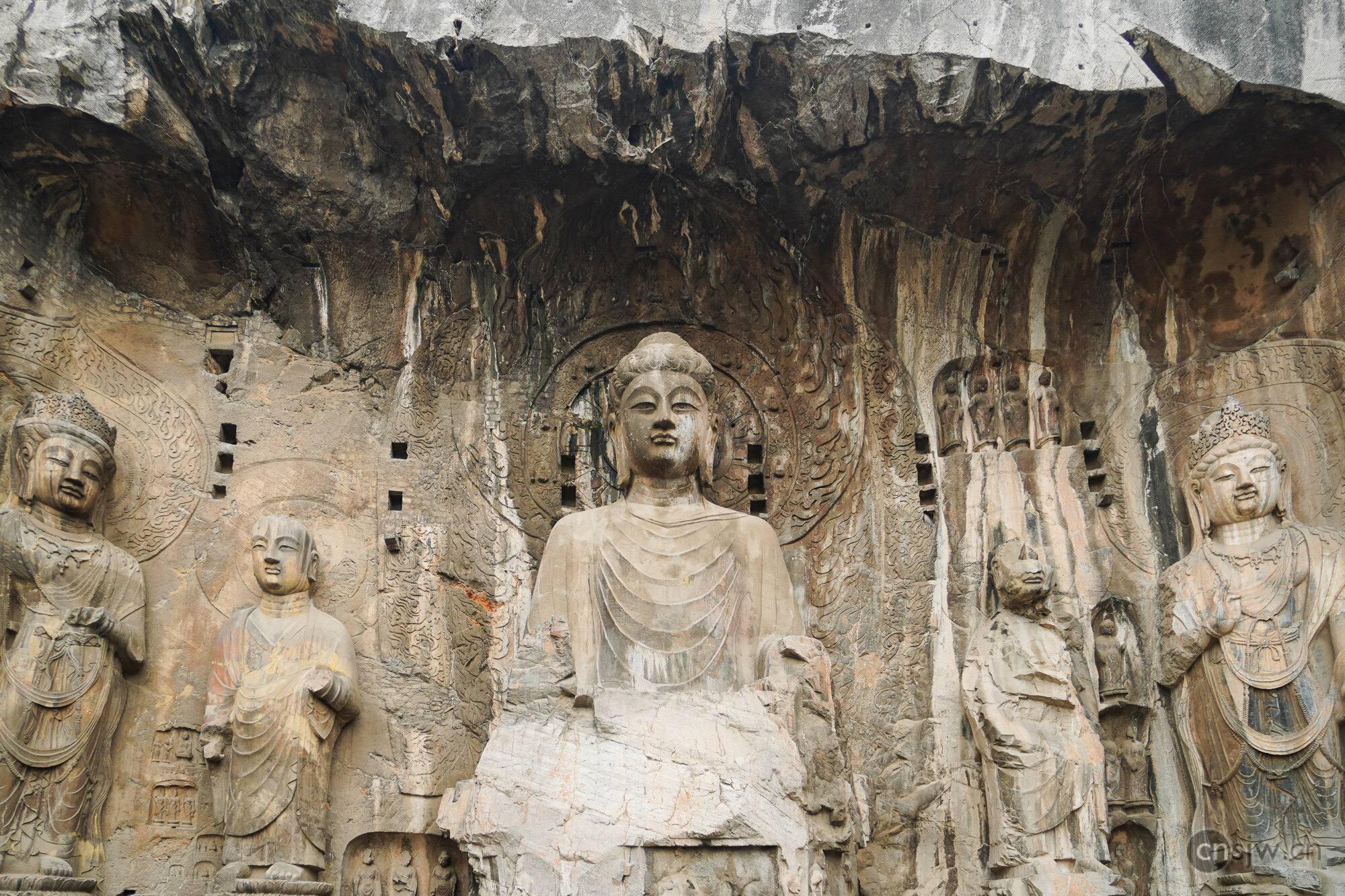
The most famous among them is the Vairocana Buddha, carved based on the appearance and demeanor of Wu Zetian herself. It represents the highest artistic level, most rigorous overall design, and largest scale of any statue in the Longmen Grottoes. Created in the third year of Xianheng under Emperor Gaozong of Tang (672 AD), the Vairocana Buddha stands 17.14 meters tall in total, with a head height of 4 meters and ears measuring 1.9 meters in length.
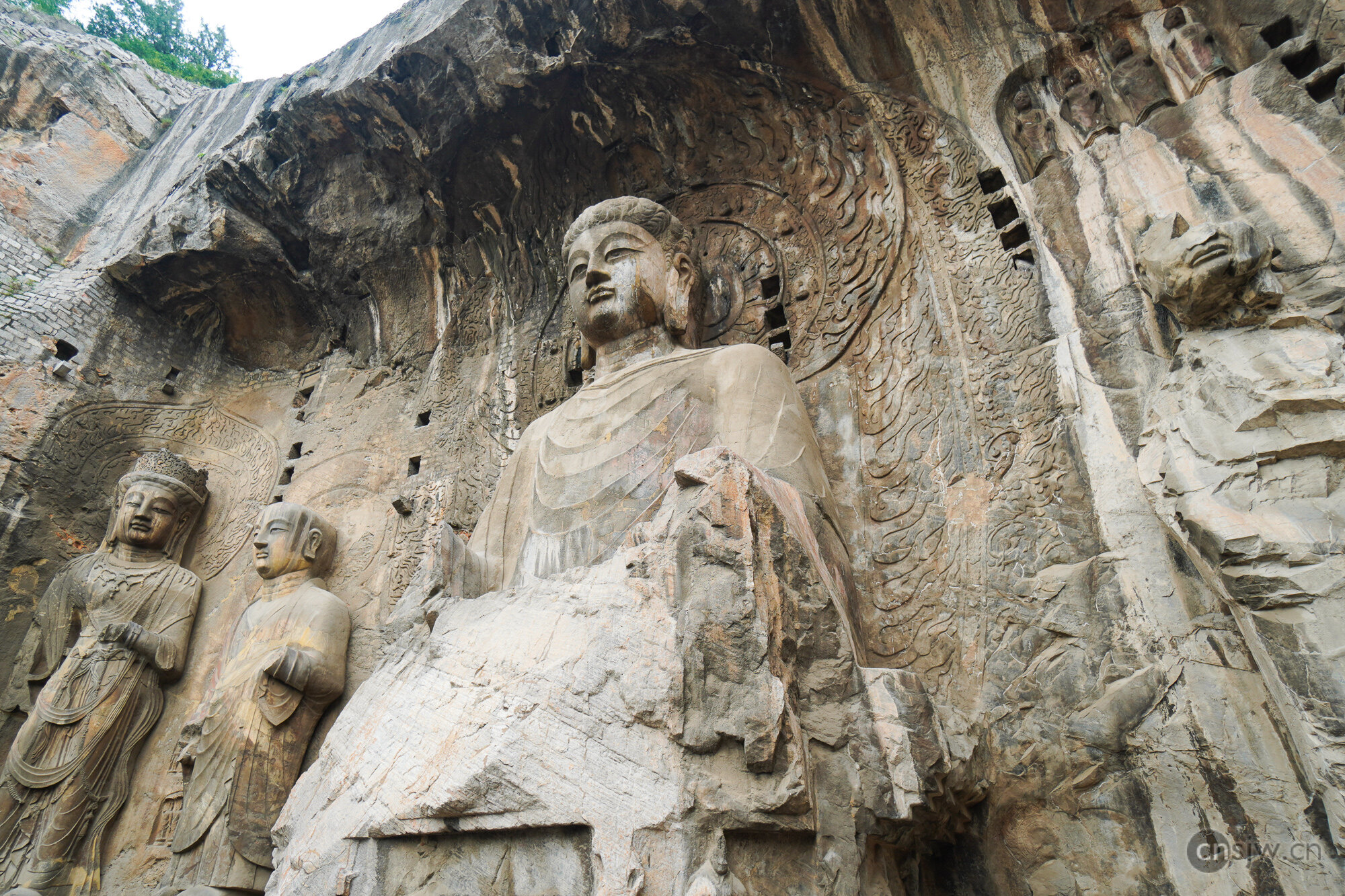
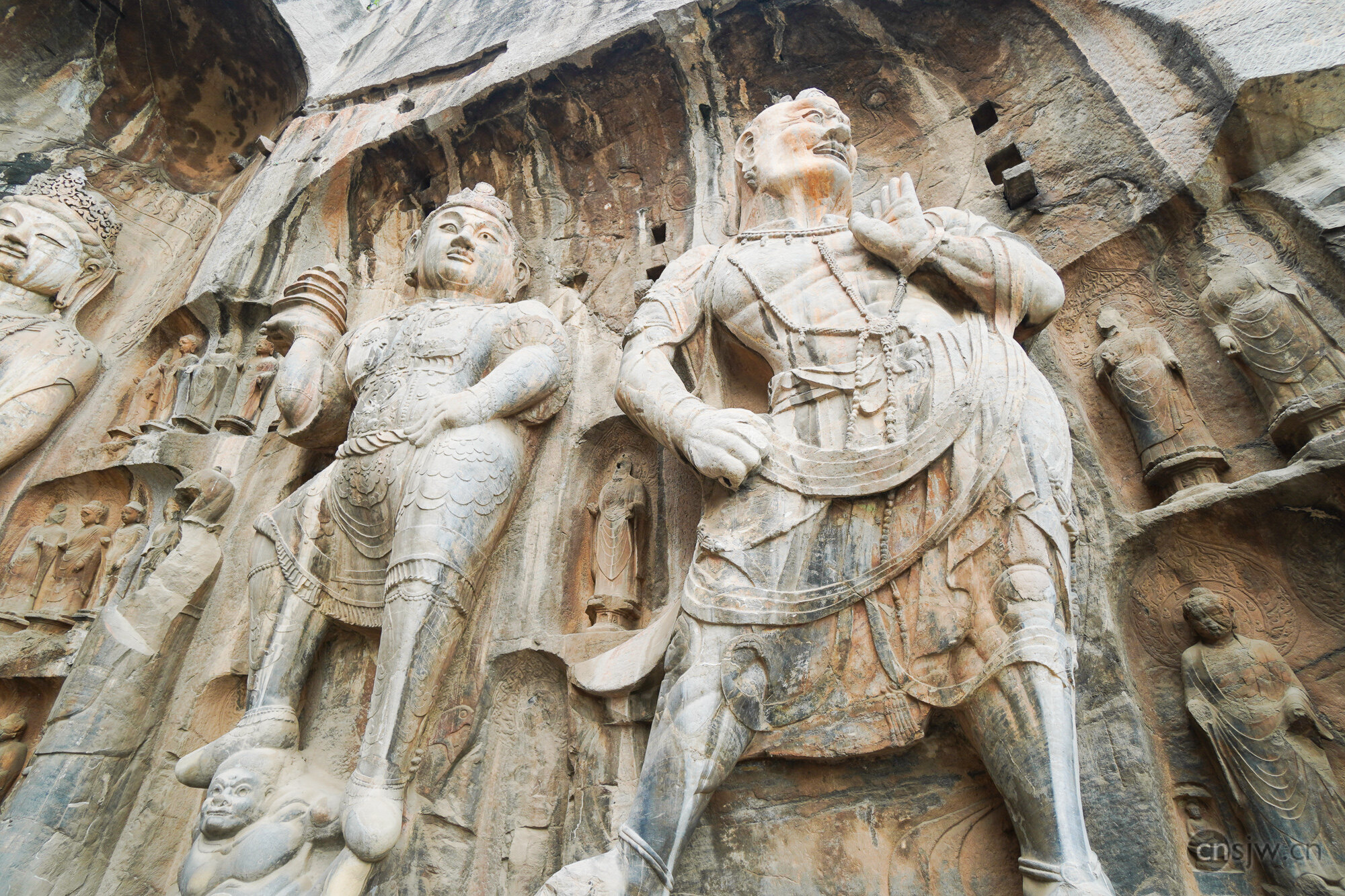
I have to say, the Vairocana Buddha is truly massive. Just how big is it? You can tell from this photo taken from across the river…
Earlier on, I was carefully examining those small statues one by one, but after passing the Vairocana Buddha, the tour was practically over… Hardly anyone looked at the statues beyond that point…


After crossing the river, the main attractions on the east bank are the Chiang-Soong Villa and Xiangshan Temple. In 1936, Chiang Kai-shek arrived personally in Luoyang to deploy military affairs under the pretext of “avoiding birthday celebrations.” To win the favor of Chiang Kai-shek and his wife Soong Mei-ling, Zhu Shaozhou, in collaboration with the Henan Provincial Government, built this fusion-style architecture blending Chinese and Western elements amidst the picturesque scenery of Xiangshan at Longmen, historically known as the “Chiang-Soong Villa.” On December 4 of that year, after residing in this villa for 36 days, Chiang Kai-shek departed for Xi’an.Eight days later, the “Xi’an Incident” broke out. After the incident was resolved peacefully, Zhang Xueliang accompanied Chiang Kai-shek and his wife back to Luoyang before flying onward to Nanjing.From then on, the Chiang-Soong Villa fell completely silent.
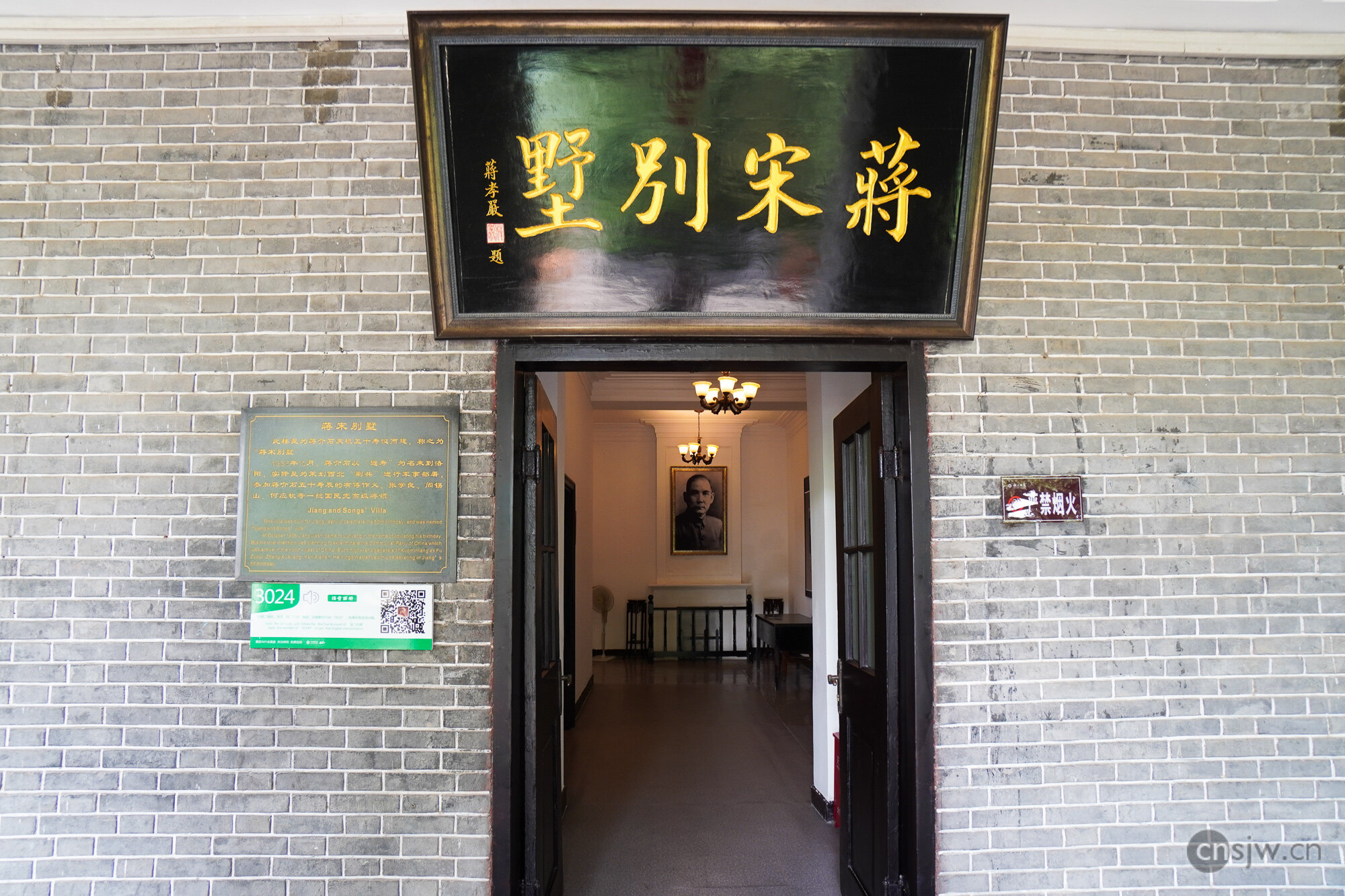
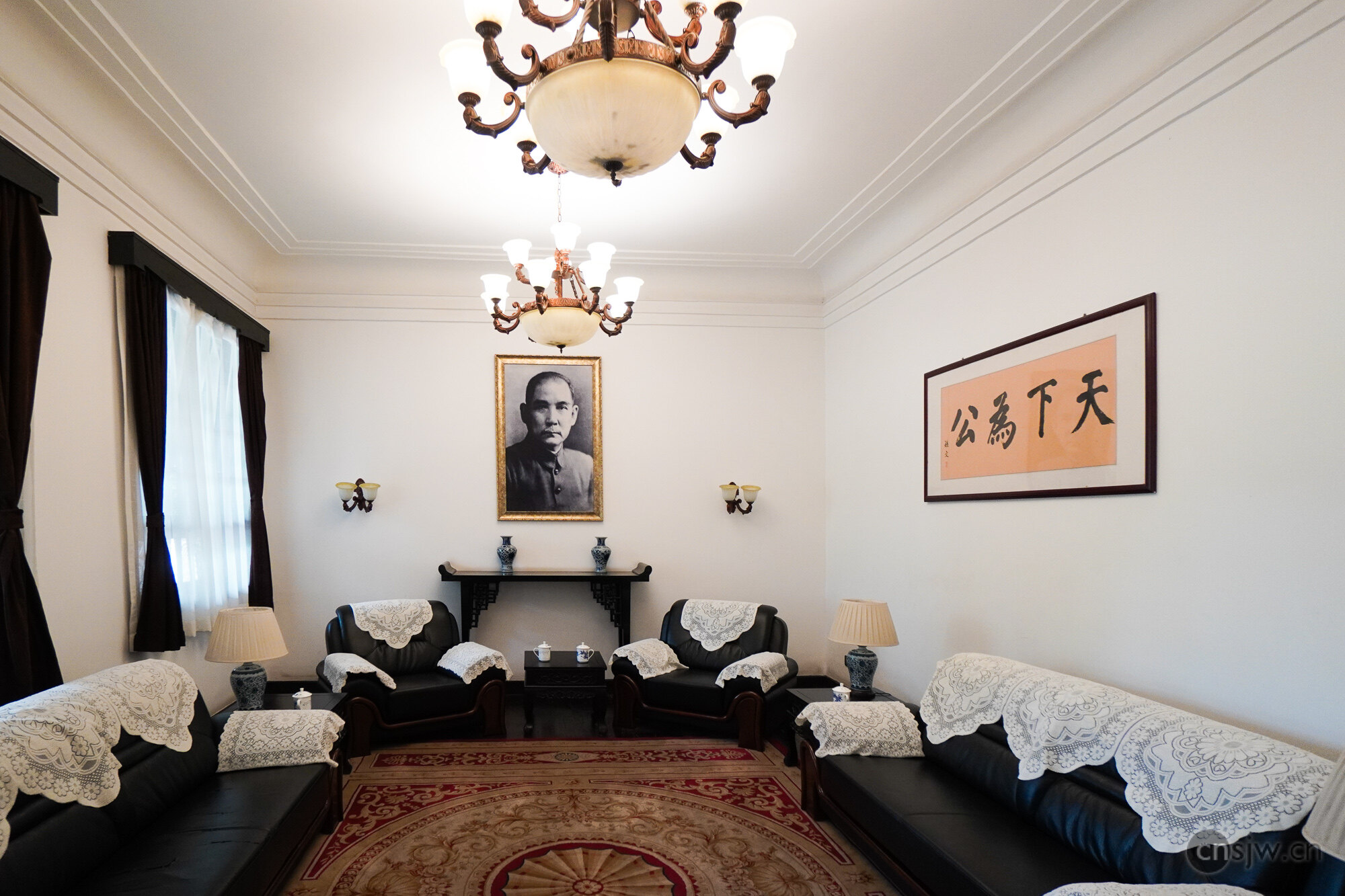
Near the exit, there is also the Tomb of Bai Juyi. It is a remarkably tranquil little garden that feels like a complete change of style.
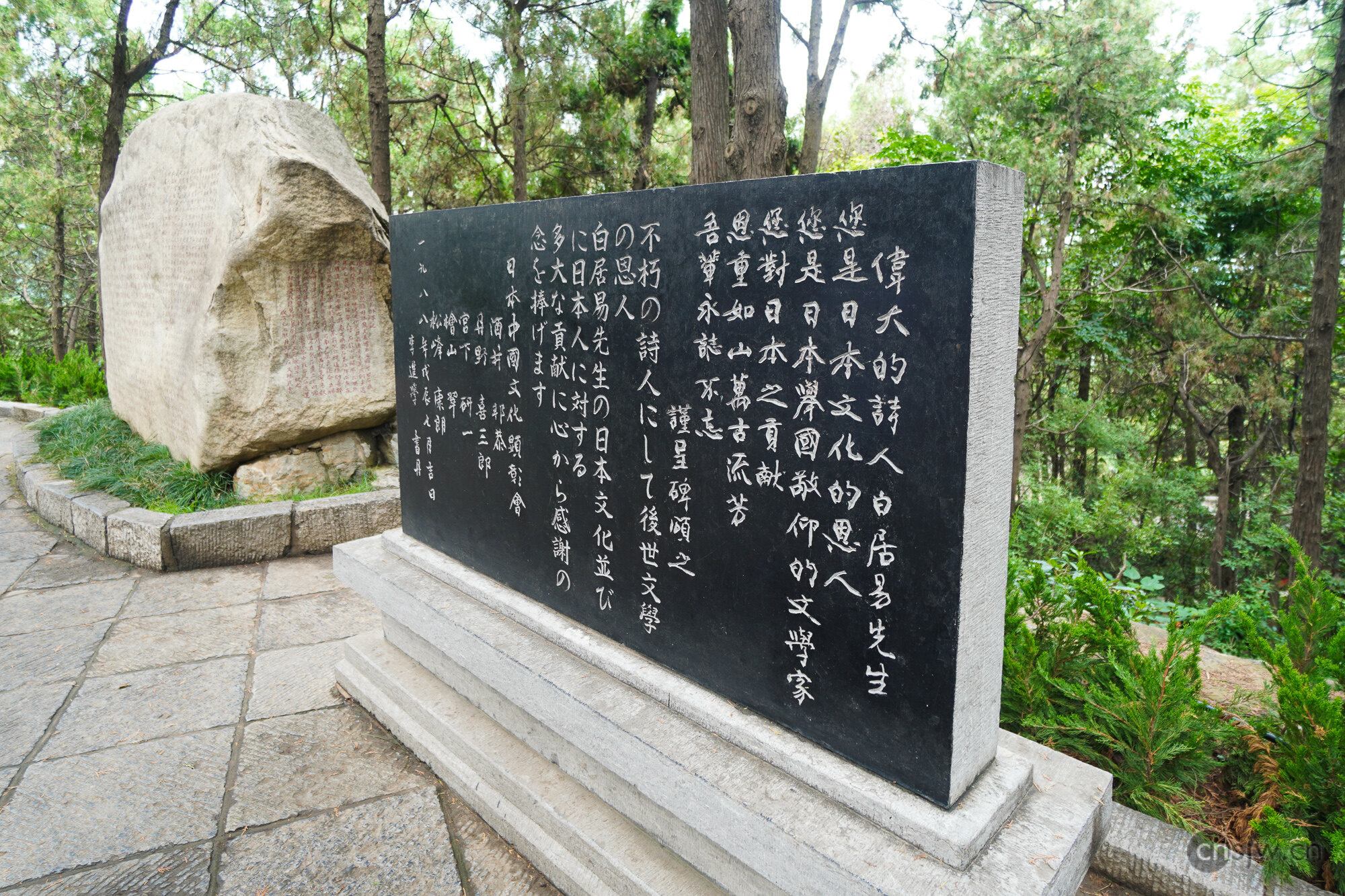
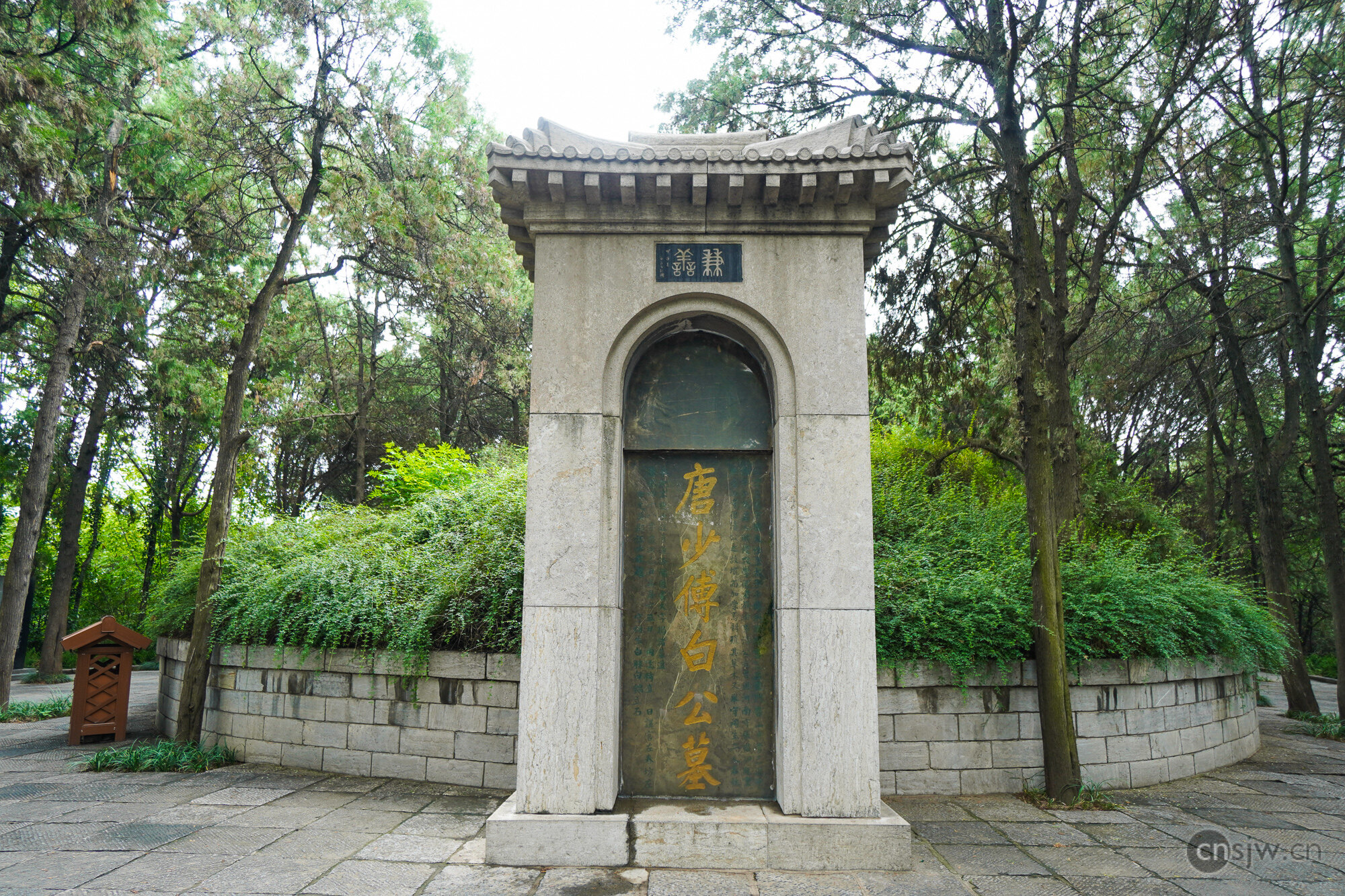
Finally, you will exit through the Northeast Gate, which can be a bit inconvenient. If you stored your luggage at the Northwest Gate, you’ll need to take an electric shuttle or walk to the Visitor Center at the Northwest Gate…
It takes about three hours to tour the entire scenic area, and it is definitely worth a visit.



Support



Read this article on WeChat