
Okayama Korakuen Garden is one of the most representative daimyo gardens of the Edo period in Japan. In 1687, Tsunamasa Ikeda, the lord of the Okayama Domain, ordered his retainer Nagatada Tsuda to begin its construction, and it was initially completed in 1700. Since then, although partial adjustments were made according to the preferences of successive domain lords, the garden has largely retained its original Edo-period appearance and has been preserved to this day. Korakuen Garden, along with Kairakuen in Mito and Kenrokuen in Kanazawa, is known as one of the “Three Great Gardens of Japan.” Originally called Gokoen or O-Gokoen, the garden was later renamed “Korakuen” after a line from Fan Zhongyan’s “Memorial to Yueyang Tower”: “Be the first to worry about the world’s troubles and the last to enjoy its joys.”
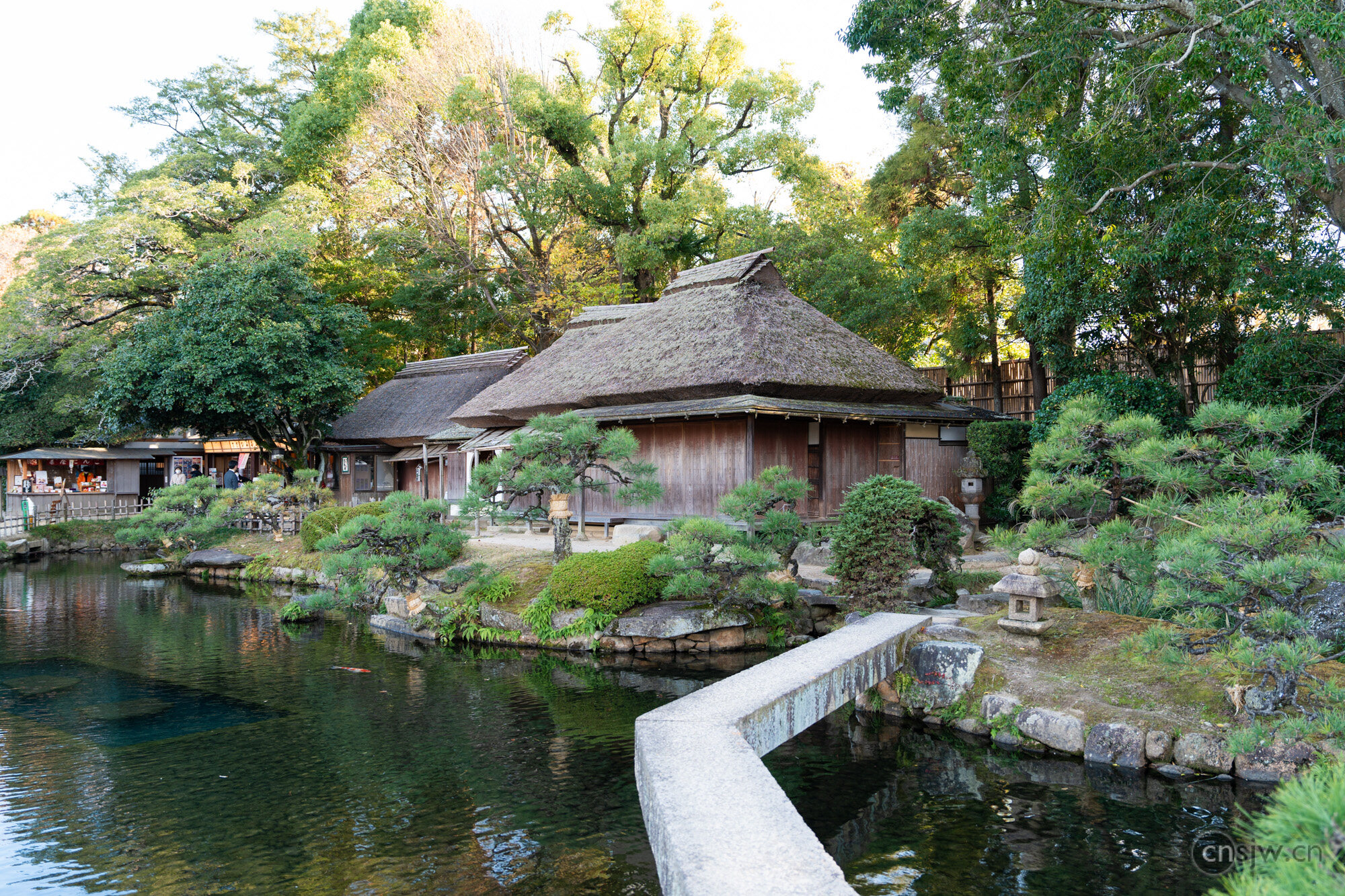
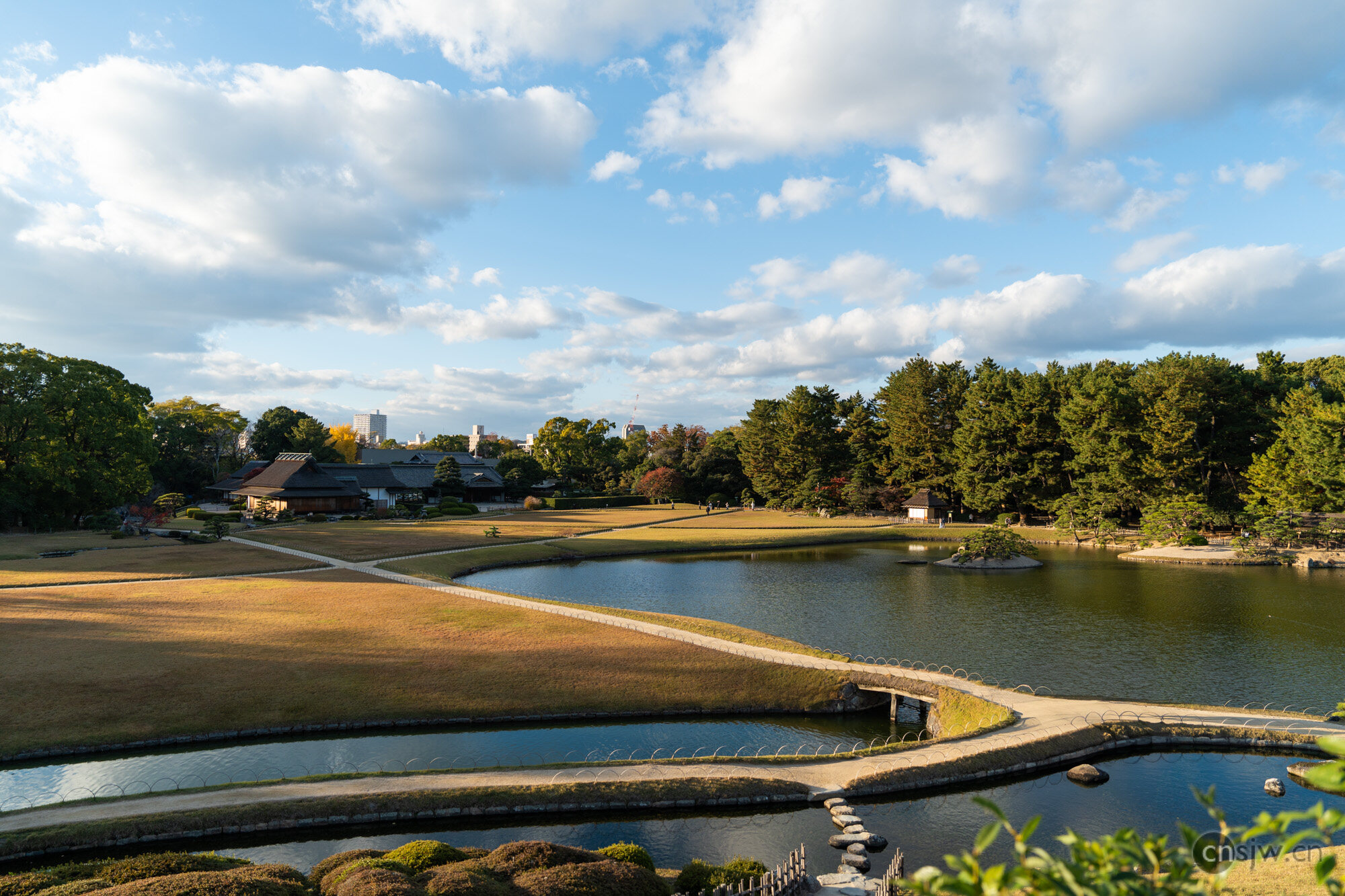
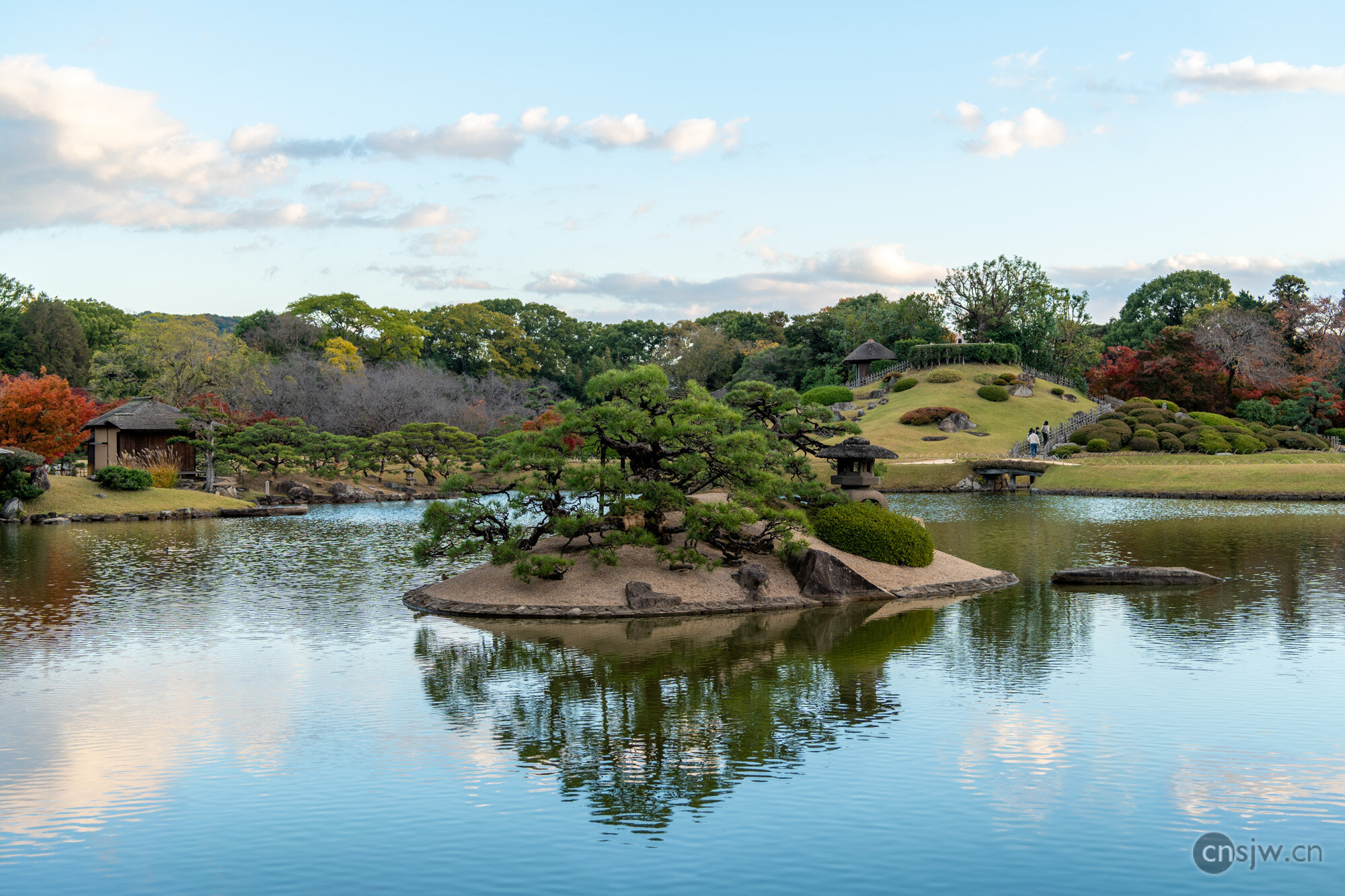
Korakuen is a stroll-style garden, ingeniously designed with paths and waterways connecting expansive lawns, ponds, artificial hills, and tea houses, allowing visitors to enjoy changing scenery as they walk. A winding stream approximately 640 meters long flows through the garden, forming ponds and waterfalls that create a beautiful waterscape.
Shortly before the construction of Korakuen Garden, the Okayama Domain was undertaking land reclamation projects in the vast shallow sea area between the Asahi River, east of the castle town, and the Yoshii River, located 13 kilometers away. Since the era of Mitsumasa Ikeda, father of Tsunamasa Ikeda and renowned as an enlightened ruler, efforts had been dedicated to developing new rice fields and preparing the Hyakken River to protect the castle town and rural areas in the Asahi River basin from flooding. To successfully reclaim this vast shallow area of Kojima Bay, it was urgent to construct the Hyakken River, a large-scale channel serving both drainage and water supply functions. Consequently, embankment construction commenced in full scale from 1685 (Jokyo 2) through the following year.
As a result of this project, Ohara, an area behind the castle previously prone to flooding, was transformed into stable, usable land. Against this backdrop, Tsunamasa Ikeda decided to temporarily suspend the land reclamation project and ordered the construction of Korakuen Garden in 1687 (Jokyo 4). For the next four years or so, resources were concentrated on building Korakuen, and it was not until 1692 (Genroku 5) that the Kojima Bay reclamation project resumed.
Ultimately, Okishinden—approximately 1,800 chobu in size—was created, becoming the largest reclaimed land in Japan during the Edo period. According to “The History of Okayama Korakuen,” the construction of Korakuen was not an independent project but rather part of a broader regional development initiative. All these large-scale projects were overseen by Nagatada Tsuda, a senior retainer of the Okayama Domain.
Thus, the lord’s place of repose was conveniently built behind the castle. Historical records such as “O-Gokoen Shoji Tomecho,” an Edo-period management log preserved in the Ikeda Family Archives at Okayama University Library, indicate that Korakuen was not merely an ornamental garden but also an essential space for the lord’s daily life, functioning practically as a “living space.” Moreover, Korakuen was occasionally opened to residents of the Okayama Domain, serving as a shared recreational venue for the public.
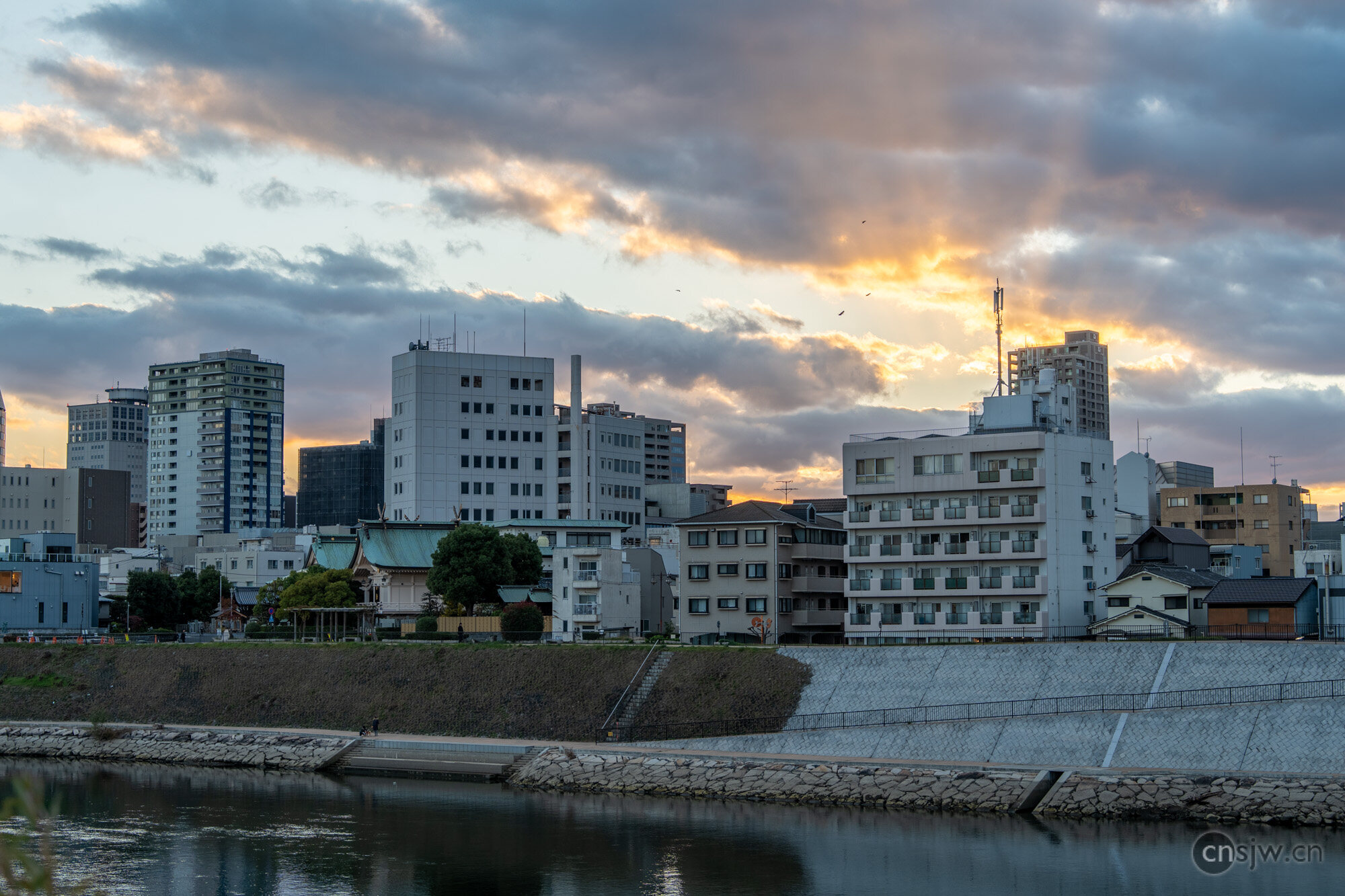
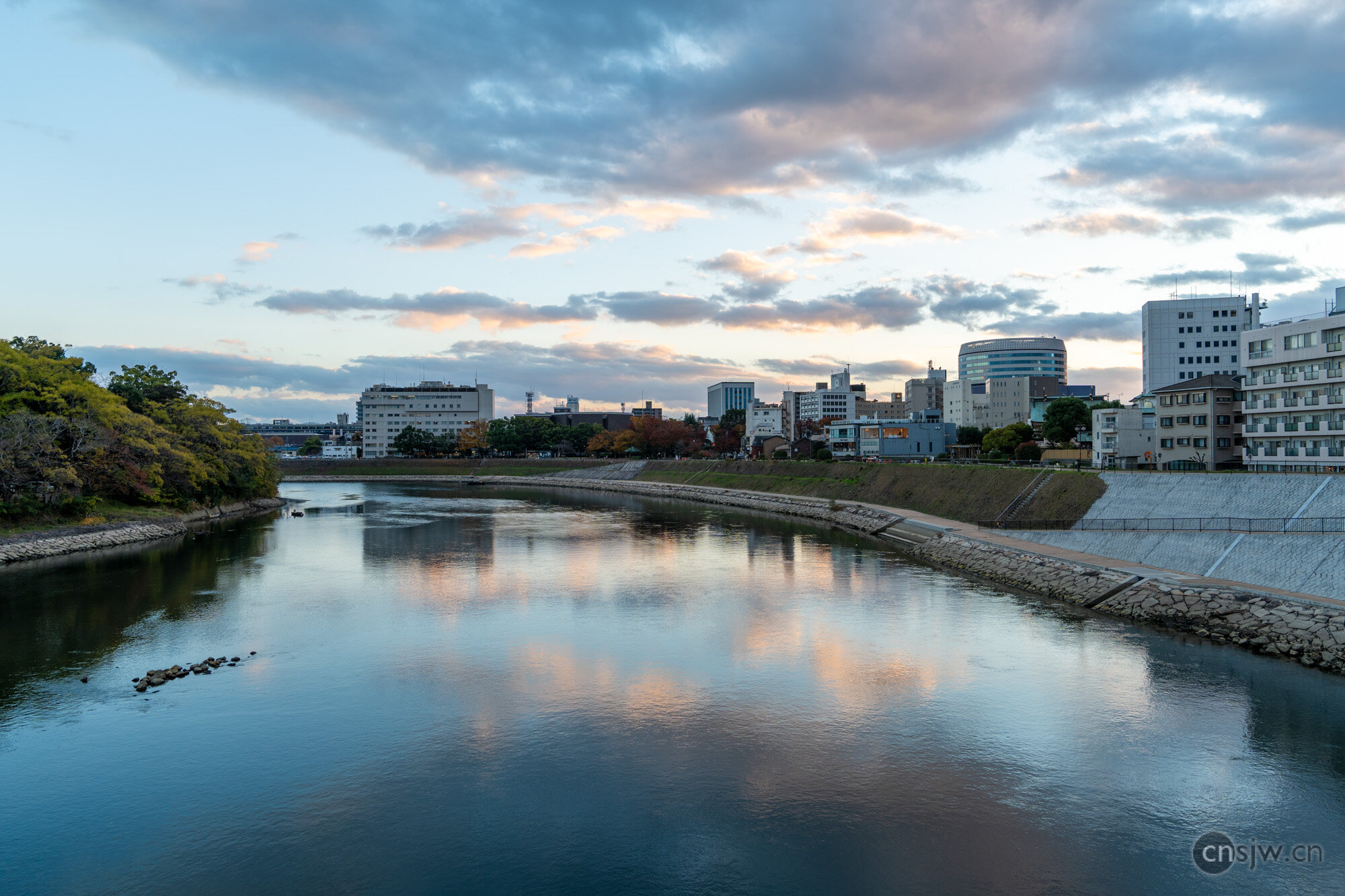
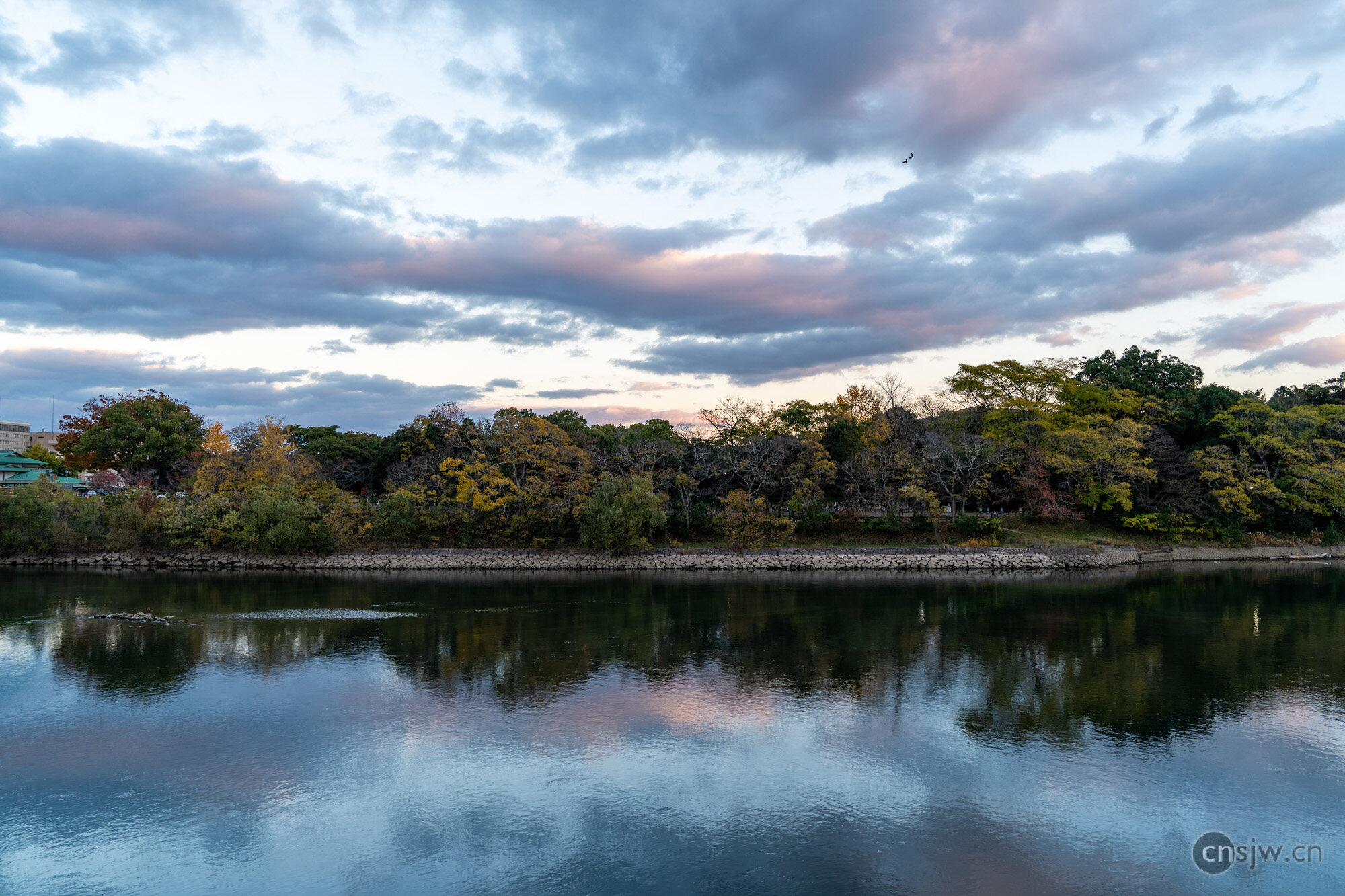
Okayama isn’t a very large place, but with China Eastern Airlines’ direct flights from Pudong, getting there has become much more convenient. This time, I combined it with nearby Naoshima and Himeji for a unique, off-the-beaten-path exploration trip. Overall, the impression was one of cleanliness—the glass everywhere was especially spotless—and high convenience. My hotel was just 200 meters from the JR station, which itself offers a variety of shops and amenities. The weather was fine, the air crystal clear, and since it was peak autumn foliage season, everything was absolutely beautiful. On the downside, being a smaller locale, English isn’t widely spoken, dining options are somewhat limited, and public transport runs less frequently, so it’s best to plan your itinerary carefully in advance.




Support



Read this article on WeChat